
Table of Contents
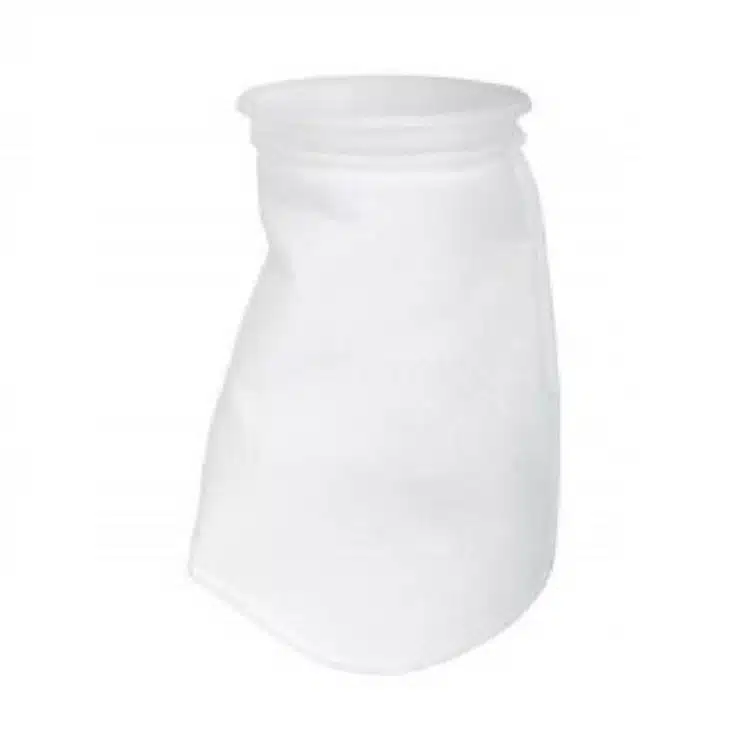
The expensive mess nobody wants to name
SKU chaos spreads.
I have seen three plants buy what was supposed to be the same bag, only to discover one line ordered a 5 µm nylon Size #2 with a steel ring, another ordered a 5 µm felt bag in the same length, and the third wrote “long bag, fine, stainless top” into the ERP like that was a specification instead of a cry for help. Why are so many teams still surprised when the shelf fills with duplicates?
GAO made this point decades ago in its Federal Catalog System report, which explained that cataloging exists so organizations do not buy items already in the network under different names or numbers, and traced the federal fix back to the 1952 Defense Cataloging and Standardization Act. I do not care that your plant is not the Pentagon. The failure mode is the same: different names, same function, wasted money.
And the current version of that logic is still brutally simple. The Defense Standardization Program’s Item Reduction Program exists to cut the number of items that are similar in form, fit, and function, because uncontrolled variety is not “flexibility.” It is overhead with a forklift.
My view is blunt. If Plant A calls the bag BFB-NY-005-02-SS, Plant B calls it NY 5um long ring, and Plant C calls it filter bag for blue line, you do not have three naming habits. You have one broken control system.
Stop standardizing labels and start standardizing decisions
Name follows spec.
A multi-plant filter bag SKU should never begin with branding, vendor habit, or whatever shorthand the maintenance supervisor likes this quarter; it should begin with a controlled technical identity, and that identity should be built from one approved filter bag specification sheet, one shared reading of what micron rating means for filter bags, one common interpretation of bag size standards, and one honest record of installed bag filter housing basics. Why let the SKU pretend to know more than the spec?
I would force every plant to agree on seven fields before I approved a single global item code: media, micron rating, rating basis, size, ring style, construction, and housing fit class. Then I would make procurement live with that discipline. Not love it. Live with it.
The fields I would not let any plant localize
| Control field | Example standard | What the code must say | What breaks when teams improvise |
|---|---|---|---|
| Media | NY, PP, PTFE | Nylon 66 mesh is not PTFE felt | Plants treat chemistry as “close enough” |
| Micron rating | 001, 005, 010, 025, 050, 100 | Numeric value in µm only | Buyers write “fine” or “polish” |
| Rating basis | NOM or ABS | 5 µm nominal is not 5 µm absolute-style intent | False equivalence between bags |
| Size | 01 / 02 / 03 / 04 or #1 / #2 / #3 / #4 | One plant language, one corporate language | Size drift hides in local shorthand |
| Ring style | PPL, GALV, SST304, SST316 | Ring material and seat logic must be explicit | Bypass, poor seating, ugly change-outs |
| Construction | SEWN, WELDED, MESH, FELT | Media form matters as much as micron | Same micron, different field behavior |
| Housing fit class | HSG-A, HSG-B, legacy code | Tie the bag to the installed vessel family | “Standard” bag fails in a nonstandard housing |
Here is the hard truth I wish more suppliers said out loud: a global SKU is not a clever code. It is a decision record. If your code cannot tell me the difference between a 10 µm Nylon 66 mesh Size 02 bag with a 304 stainless ring and a 10 µm PTFE felt Size 02 bag with a polypropylene ring, then your “standardization” is theater.
Best Filter Bag already has a natural internal path for this topic, and I would use it aggressively: start with the filter bag specification sheet, move into the filter bag RFQ template, then tighten warehouse and reorder discipline with packaging, labeling, and SKU control. That is a buying system, not a blog cluster.

One master catalog beats five local favorites
Common parts win.
The best real-world proof I found is not from filtration marketing at all; it is from a Defense Logistics Agency Common Parts Catalog case study, where four shipyards and the Navy used shared catalog management to reduce inventory, engineering, design, and life-cycle costs across the marine industry, which is exactly what a multi-plant buyer wants when the same bag serves the same duty across several sites. Why should a paint plant tolerate more SKU nonsense than a shipyard?
The Virginia-class submarine program is even less polite about it. DLA material says an upfront standardization effort prevented parts proliferation, cut bill-of-material parts to 27,014 from the 67,834 seen in the Seawolf comparison, and projected about $789 million in cost avoidance over the program life from a $27 million standardization investment. I know, submarines are not filter bags. But duplicate part numbers are duplicate part numbers, whether they sit in a naval depot or a coatings warehouse.
So here is my rule. One corporate master SKU should represent one form-fit-function identity, while supplier part numbers sit underneath it as approved cross-references. Do not reverse that logic. The moment you let supplier codes become the master record, you hand control to whoever quoted last.
The structure I would actually approve
I would use a format like this:
LFB-NY-005-NOM-02-SST304-MESH-REVB
That reads, in plain English, as liquid filter bag, nylon, 5 µm, nominal, Size 02, 304 stainless ring, mesh construction, revision B. It is not pretty. Good. Pretty codes usually hide missing decisions.
And yes, I would also keep a human-readable description in the item master: “Liquid filter bag, Nylon 66 mesh, 5 µm nominal, Size #2 / 02, 304 SS ring, approved for HSG-A housings, clean ΔP 0.08 bar, change-out at 0.35 bar.” Humans still receive, install, and reorder this stuff.
Micron alone is a trap
One number lies.
I have watched buyers standardize on “5 micron” as if that settled the job, while ignoring whether the bag was nominal or absolute-style, mesh or felt, Nylon 66 or PTFE, Size #1 or Size #2, polypropylene ring or stainless ring, and whether the housing seat was built for that collar in the first place, and then the same team called the result a supplier inconsistency instead of admitting they wrote a lazy standard. Why do smart plants keep doing dumb shorthand?
This is why your internal links matter. The page on what micron rating means for filter bags correctly pushes buyers past the fake comfort of one number, the bag size standards page forces the #1/#2 versus 01/02 conversation into something usable, and the bag filter housing basics page keeps dragging the reader back to housing fit, basket support, and service access, which is where many “bag failures” really start.
Let me say the rude part out loud. A 5 µm bag is not a SKU. It is one field inside a SKU.
That matters because downtime is not a spreadsheet ghost. NIST’s Annual Report on the U.S. Manufacturing Economy: 2024 says downtime accounts for 8.3% of planned production time and about $245 billion in discrete manufacturing, while defects add another estimated $32.0 billion to $58.6 billion. When a plant standardizes the wrong bag identity across four lines, it is not saving purchasing time. It is spreading failure faster.
The boring controls that actually keep the standard alive
Governance matters more.
I would assign one data owner for the item master, one engineering owner for approved technical attributes, and one procurement rule that forbids plant-level “equivalents” unless the alternate survives the same sample logic in the filter bag sample approval checklist. If that sounds strict, good. Loose alternates are how SKU control dies.
I would also map every old local SKU into one of three bins: keep, merge, or kill. Keep means it is truly unique. Merge means it is the same bag hiding behind local slang. Kill means it never should have existed. Most plants avoid this cleanup because it is dull, political, and slightly embarrassing. I think that is exactly why it pays.
And do not stop at ERP records. Audit cartons, shelf labels, maintenance binders, RFQ templates, and supplier pack marks too. Best Filter Bag’s own packaging, labeling, and SKU control page gets this right: the carton is where many technically correct products become operationally wrong.

FAQs
What is filter bag SKU standardization?
A standardized filter bag SKU across multiple plants is a single master item code that defines media, micron rating, rating basis, bag size, ring style, construction, and approved housing fit in one controlled record, so every site orders the same form-fit-function part instead of local substitutes that only look similar on paper.
That means one corporate code, many supplier cross-references underneath, and zero tolerance for vague descriptions like “5 micron long bag.”
What fields should a filter bag part number include?
A filter bag part number should include enough technical identity to separate truly different bags, which usually means media type, micron value, nominal versus absolute-style intent, size code, ring style, and construction method, with housing family or revision control added when local installed hardware still varies by plant.
If the code leaves out ring style or rating basis, I would not call it standardized. I would call it unfinished.
Should one global SKU cover multiple suppliers?
One global SKU can cover multiple suppliers only when those supplier parts have been proven interchangeable in form, fit, function, and documentation, with the supplier codes treated as approved alternates under the corporate master rather than as separate local identities created by whoever won the last quote.
That approval should sit on test data, fit checks, and sample control, not on sales language.
How do I handle Size #1 and #2 versus 01 and 02 across plants?
The cleanest method is to choose one corporate naming convention as the master language, map the alternate language as a controlled synonym in the item master, and force RFQs, warehouse labels, and purchase descriptions to show both during the transition until local confusion finally dies.
I would keep 01/02 or #1/#2 in the code, then show the alternate in the description. No mystery. No folklore.
Is micron rating enough to standardize a filter bag?
Micron rating by itself is not enough to standardize a filter bag because two bags with the same nominal micron number can still differ in media, felt versus mesh construction, ring material, bag size, and housing fit, which means they can behave very differently in pressure drop, service life, cleanliness, and sealing.
This is where buyers fool themselves most often. They standardize a number, not a product.
Your Next Move
Start smaller.
Do not try to clean the whole catalog in one heroic quarter, because heroic quarters usually end in half-finished masters and new duplicates. Start with the top 20 filter bag items by annual usage, build one approved filter bag specification sheet for each, rewrite the item descriptions using one shared code logic, and force every new inquiry through the filter bag RFQ template. Then merge the duplicates, freeze the junk names, and make the plants order like one company instead of five separate memories.
That is the move I would make first. Because in this business, SKU control is not clerical work. It is process control wearing a part number.


