
Three words first.
Buyers miss geometry because too many purchasing teams still treat filter bag compatibility as a media decision, even though the expensive failure usually begins at the top of the bag, where ring style, seal profile, basket fit, and closure force decide whether liquid goes through the media or sneaks around it. Why is the bag always blamed last, when the mistake was written into the PO first?
I have sat through enough shutdown reviews to say this plainly: ring and seal mismatch is not a maintenance nuisance. It is a procurement error with mechanical consequences. According to NIST’s 2024 manufacturing economy report, downtime still eats 8.3% of planned production time and costs discrete manufacturing about $245 billion, which is exactly why I get impatient when a buyer signs off on “5 µm PTFE bag, standard ring, fits existing housing” as if that sentence means anything at all.
Table of Contents
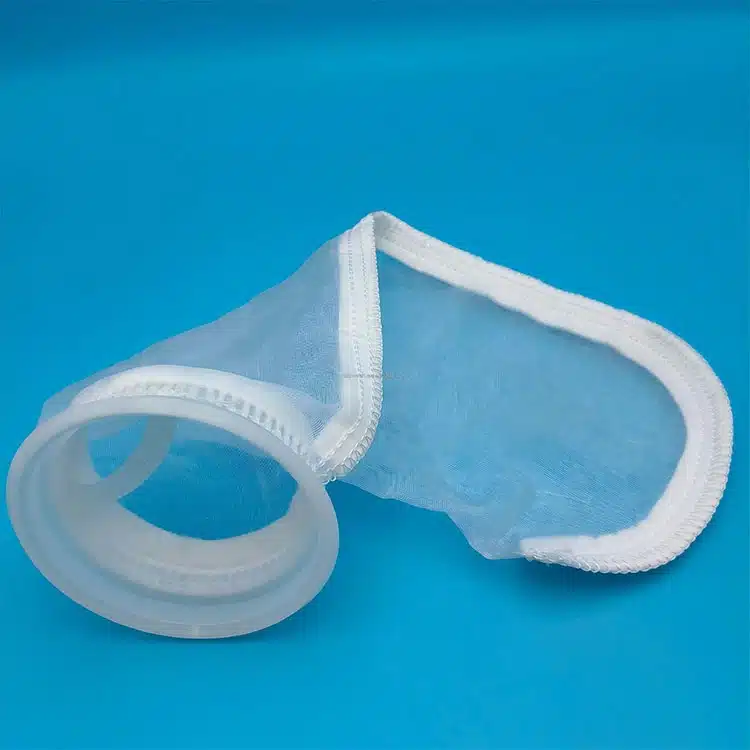
Micron did not fail you. Geometry did.
I know the industry habit.
A bag gets changed, solids show up downstream, operators complain about short life, and the meeting turns into a lazy argument about 1 µm versus 5 µm, nylon versus PTFE, or whether the last supplier was “better,” even though the real failure was filter bag housing compatibility that nobody verified before release. Does that sound familiar?
That is why I would naturally move a reader from this page into our guide on how to confirm filter bag compatibility before ordering, then into bag size standards for Size #1, #2, 01, 02, 03, and 04, and then into bag filter housing basics for industrial buyers, because that is the real buying sequence: fit first, geometry second, media third, and price last. That sequence already exists on this site, and frankly, it is stronger than what most filtration suppliers publish.
The misunderstanding that keeps repeating
Quotes lie.
Well, not exactly; people lie to themselves through incomplete quotes, because procurement documents love vague phrases like “standard ring,” “equivalent replacement,” or “same as current bag,” even though nobody attached the housing tag, the old-bag photo, the basket dimensions, the ring profile, or the seal material. Why do buyers act surprised when the supplier quotes the wrong thing clearly?
The government world has already punished this habit in public. The GAO decision in Kauffman and Associates sustained a protest because the RFQ was latently ambiguous about what vendors had to submit, and FAR 13.004 is blunt that a quotation is not an offer and does not become a binding contract by magic. Different sector, same procurement disease: if the request is muddy, the answer will be muddy too.
The mismatch table I wish every buyer saw before release
This table matters.
I do not care how polished the datasheet looks, because the hidden variables below decide whether the line gets runtime or rework, and most of them never make it into a lazy ERP description. Why are plants still buying “filter bags” instead of buying form-fit-function?
| Hidden variable | What purchasing often writes | What the plant actually gets | What I would lock down |
|---|---|---|---|
| Size code | “5 µm bag” | Wrong installed length, fold-over, bottoming out, bypass | Size #1/01 or #2/02, plus actual envelope: 179 mm × 419 mm or 179 mm × 813 mm |
| Filter bag ring style | “Standard steel ring” | Poor seating, movement at the top, inconsistent sealing force | Exact ring profile, ring material, and hold-down method |
| Seal material | “O-ring included” | Swell, flattening, chemical attack in NaOH, solvent, or hot wash | EPDM, FKM/Viton, NBR, or PTFE-envelope requirement |
| Housing seat and basket | “Fits existing housing” | Scuffing, collapse marks, dirty ΔP spikes, strange leakage | Housing model, seat diameter, basket photo, usable depth |
| Micron-only SKU | “1 µm PTFE” | Apples-to-oranges quotes across vendors | Micron value, rating basis, fluid, temperature, flow, and duty |
| Replacement history | “Same as last time” | Repeated bad orders with a cleaner paper trail | Previous failure mode, runtime, bypass evidence, and approved revision |
The raw geometry behind the size 1 vs size 2 filter bag fit debate is not mysterious. On this site’s own sizing guide, Size #1/01 is roughly 179 mm × 419 mm, while Size #2/02 is roughly 179 mm × 813 mm, which means same diameter, very different installed envelope, liquid hold-up, and service behavior. That is why I never accept “looks similar” as a compatibility test.

The top seal is where the money leaks
Seals fail quietly.
I have watched buyers obsess over nylon 66 versus PTFE felt, then skip the uglier question: does the filter bag ring style actually mate to the vessel seat, does the elastomer survive the chemistry, and can the lid apply even force across the seal under real differential pressure, not brochure pressure? Why is seal profile mismatch still treated like housekeeping?
A Nylon 66 Size #2 bag with a 304 SS ring in moderate water service is not the same purchase as a PTFE bag with an FKM seal in pH 2.5 acid wash at 95°C, and I think the industry does buyers a disservice when it pretends those differences are small. The problem is not only media. It is the whole stack: ring, seat, gasket, basket, closure, and change-out behavior. If you need a clean internal bridge from this topic to the paperwork, our clear filter bag specification sheet is the right next click.
And regulated plants have even less room for fantasy. The FDA’s CGMP equipment Q&A states that equipment must be appropriately designed for intended use and for cleaning and maintenance under 21 CFR 211.63, 211.65, and 211.67, which is a dry legal way of saying your housing, seal logic, and product-contact materials are part of the risk file whether procurement likes it or not.
Why bypass starts at the top
It is mechanical.
When liquid bypasses at the seal, the bag is often doing exactly what the vessel geometry allows: shifting under load, failing to seat cleanly, or tolerating a hold-down arrangement that was never truly matched to the bag collar, ring, or gasket design in the first place. Why do teams call that a media problem?
This is where I would send the reader into bag filter housing basics for industrial buyers and then back to how to confirm filter bag compatibility before ordering, because those two pages force the adult questions: housing model, basket top, seat area, ring style, old-bag photo, and actual dimensions. Once those are pinned down, then you can argue about micron. Not before.
The paperwork that prevents the second mistake
Bad names multiply.
I have seen three plants buy what was supposed to be the same replacement bag, only to find one site ordered 5 µm nylon mesh, another ordered 5 µm felt, and the third wrote “long bag, fine, steel top” into the ERP as if that was a specification instead of a confession. Why do companies tolerate SKU language that would fail a basic technical review?
The smartest case study I know is not from filtration marketing. It is the Common Parts Catalog for Industry Shipyards, which describes data-sharing and standardization used to reduce inventory, design, engineering, and life-cycle costs, and the Defense Standardization Program says a $27 million investment in Virginia-class parts standardization was projected to produce about $789 million in cost avoidance over the life of the program. No, that is not a filter-bag story. But it is exactly a parts-control story, and procurement people should pay attention when numbers that big are attached to naming discipline.
That is why I would never leave this article hanging by itself. The natural control chain on this site is already there: what micron rating means for filter bags, how to write a clear filter bag specification sheet, the filter bag RFQ template, and how to standardize filter bag SKUs across multiple plants. That is not decorative interlinking. That is a working purchasing system.
What I would force into every line item
Write ugly data.
I do not want a pretty ERP description; I want a line that tells the truth under pressure: 5 µm NOM, Nylon 66 mesh, Size 02, 304 SS ring, housing fit class HSG-02, seal EPDM, clean ΔP 0.08 bar, process water, 60°C max, approved for Line 4, and linked to one revision-controlled filter bag specification sheet. Why are buyers still pretending one micron number and a vendor nickname are enough?

FAQs
What is filter bag compatibility?
Filter bag compatibility is the verified form-fit-function match between bag size, ring style, seal profile, media, chemistry tolerance, and the installed housing’s basket, seat, lid, and operating envelope, so liquid is forced through the media instead of bypassing around it at the top seal. I treat it as a mechanical question first and a media question second.
What causes seal profile mismatch in a bag filter housing?
Seal profile mismatch happens when the bag’s collar, ring, or gasket geometry does not mate correctly with the housing seat or hold-down design, which reduces sealing force, opens a bypass path, accelerates dirt loading in the wrong places, and turns a normal replacement into a contamination and downtime risk. In plain English, the parts look close enough on paper and fail in the vessel.
Are Size 1 and Size 2 filter bags interchangeable?
Size 1 and Size 2 filter bags are not interchangeable unless the housing and basket were designed to accept both formats, because Size #1/01 is about 179 mm × 419 mm and Size #2/02 is about 179 mm × 813 mm, changing installed length, hold-up, support, and service clearance in ways buyers often underestimate. Same diameter does not mean same fit.
How do I confirm filter bag compatibility before ordering?
To confirm filter bag compatibility before ordering, verify the housing tag, basket depth, seat diameter, ring style, old-bag photos, fluid chemistry, operating temperature, target micron, flow rate, and acceptable dirty differential pressure, then force those details into one controlled specification line before any RFQ leaves purchasing. If the supplier has to guess, the plant will pay.
Why do filter bags bypass at the seal?
A filter bag bypasses at the seal when the bag is the wrong size, the ring style does not seat correctly, the elastomer swells or flattens, the basket support is wrong, or the lid closure cannot apply even sealing force across the top of the bag under operating load. Most bypass problems are system-fit failures wearing a consumables mask.
Your Next Step
Audit one SKU.
Pull the last PO, the last received bag, the housing tag, the used seal, and one photo of the basket seat, then compare that record against our clear filter bag specification sheet, our filter bag RFQ template, and our guide on standardizing filter bag SKUs across multiple plants. If your team cannot prove size code, filter bag ring style, seal material, housing model, and approved chemistry in one clean record, do not release the next order. I mean that literally.
If you want, I can turn this into a tighter 1,200-word version or a longer pillar-post version with schema-ready FAQ formatting.


