
Table of Contents

The cheap number fools people
Three words first.
Unit price lies, because the purchase order only shows the clean, polite part of the deal, while the real bill shows up later in operator labor, line stoppages, rising differential pressure, bag disposal, quality holds, and the ugly moment when a housing that looked fine in a quote becomes a nuisance at 2:10 a.m. on a wet floor. Why do buyers still pretend the housing price is the whole story?
I have sat through too many filtration reviews where a team celebrated saving a few hundred dollars on stainless steel and then quietly lost that “saving” in a month of extra bag changes, pump drag, and delayed restarts. According to DOE’s Pump Systems Matter, pumping systems account for 25% of the total energy consumed by electric motors in U.S. industry and more than 50% of electricity use in pumping-intensive industries, while NIST’s 2024 Annual Report on the U.S. Manufacturing Economy says downtime equals 8.3% of planned production time and about $245 billion in discrete manufacturing losses. That is the real backdrop for bag filtration system cost.
And when filtration failure crosses into wastewater or regulated production, the bill gets nastier. In the EMD Millipore Clean Water Act settlement, EPA said the company had to upgrade its on-site wastewater treatment system, pay a $385,000 civil penalty, and carry injunctive relief valued at $3.5 million; on regulated pharma lines, 21 CFR 211.67 is plain that equipment must be cleaned and maintained at appropriate intervals to prevent malfunctions or contamination. So no, filtration is not just a consumables conversation.
Where bag filter total cost of ownership really lives
Start ugly.
The real total cost of ownership for bag filtration systems sits in six places buyers keep understating: housing fit, bag consumption, labor minutes, downtime exposure, energy drag from rising ΔP, and failure spillover into pumps, nozzles, cartridges, membranes, or discharge compliance. If your spreadsheet has only “housing + bag price,” it is not a TCO model. It is a guess.
I would use this formula before I approved any RFQ: TCO = housing CAPEX + annual bag spend + change-out labor + downtime cost + waste/disposal + utility penalty + quality/compliance cost + downstream damage risk. That formula looks blunt because it is blunt. Filtration economics should be blunt.
Here is the hard truth I would publish even if a few vendors hate it: if you have not read what micron rating for filter bags really means and bag size standards for #1, #2, 01, 02, 03, and 04 before comparing quotes, you are shopping blind, because 1 µm versus 10 µm, nominal versus tighter retention language, and Size #1 versus Size #2 change service life, hold-up volume, lid clearance, seal behavior, and change frequency far more than buyers like to admit.
Your own site already has the right technical path for this topic, and I would use it exactly that way: send readers first to bag filter housing basics for industrial buyers, then to single-bag vs multi-bag filter housing, then split media choice between nylon filter bags for broad water, coatings, ink, and resin duty and PTFE filter bags for more aggressive chemistry, cleaner service, and higher-temperature work. That is not decorative internal linking. That is sales engineering.
The bag is rarely the cheap part
Do the math.
If a Size #2 bag costs $18, the change-out takes 25 minutes, and two operators cost $35 per hour loaded, that bag is not an $18 decision. It is already about $47 before you count line delay, drain-down, startup loss, and waste handling. Still think unit price is the story?
And that is before media mistakes. A nylon bag can be a sensible answer in general aqueous service, paint, ink, and resin duty, but it is not where I want to get clever with hot solvent, 10% HCl, or 30% NaOH at 60°C; that is where PTFE earns its keep, and where a cheap substitution turns into short bag life, repeat change-outs, and operator contempt. Buyers who treat nylon and PTFE like interchangeable line items usually learn the lesson twice.
Pressure drop sends a monthly invoice
That part hurts.
When a bag runs from a clean ΔP of 0.15 bar to a dirty ΔP of 0.9 bar, the pump does not become philosophical about it; it works harder, the flow gets twitchy, and the operator starts stretching change-outs because nobody wants to open the vessel yet. According to DOE’s Pump Systems Matter, pumping energy is already a big industrial cost center, which is exactly why I do not let anyone call a “longer bag run” a win unless the flow, quality, and kWh stay sane.
And upstream solids control changes the whole argument. The California Energy Commission’s study on raw wastewater filtration found estimated annual energy savings of $22,000 to $35,000 per million gallons per day of capacity by removing more load earlier and easing the downstream aeration burden; that is a municipal example, yes, but the logic carries straight into industrial bag filtration systems: remove solids earlier, and the expensive downstream step works less. Why is that still a controversial statement in so many plants?
Single-bag vs multi-bag is the wrong first argument
Flow first.
Most buyers start with bag count because bag count is visible, easy, and lazy, while the real choice is about run length, operator time, floor space, maintenance access, future throughput, and whether the plant can afford stoppages more than it can afford stainless steel. Why do so many projects still shop by silhouette?
I am not anti multi-bag housing. I am anti fake certainty. A single-bag housing is often the honest answer for batch service, moderate flow, pilot skids, point-of-use filtration, and plants that value easy service over parallel capacity. A multi-bag housing becomes the better economic choice only when longer runs and fewer interventions truly offset the extra vessel cost, added valves, larger cleaning envelope, and more complicated maintenance routine. That distinction is exactly why your single-bag vs multi-bag filter housing page belongs inside this article instead of buried three clicks away.
I will say it even more directly: a multi-bag vessel does not fix bad solids data, a bent basket, the wrong bag size, or a poor micron call. It only makes the wrong decision larger. That is why I like your bag filter housing basics for industrial buyers page as the technical anchor; it keeps pulling the conversation back to fit, seal logic, support basket, service access, and real-world maintenance rather than shiny stainless photos.
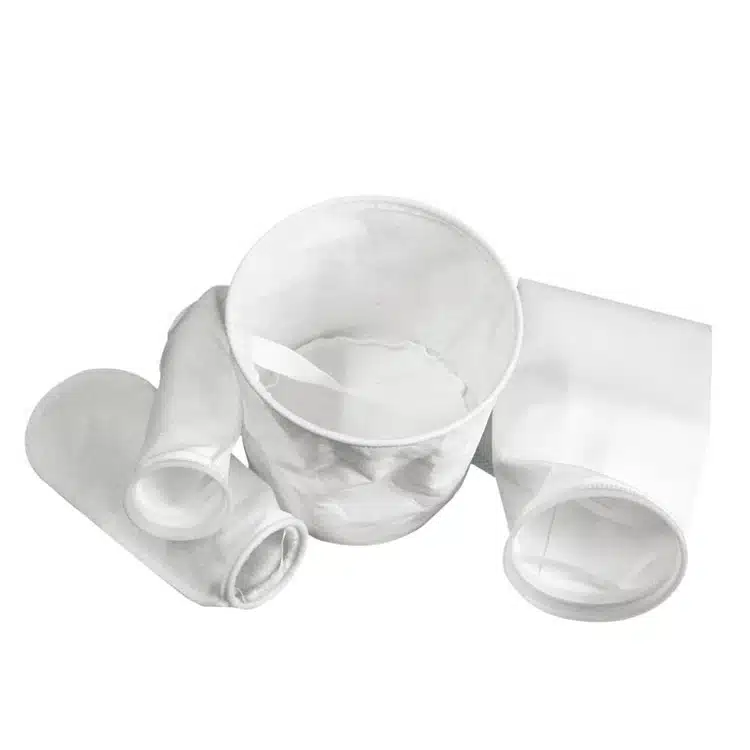
The table I would put in front of a plant manager
No fluff here.
| Cost Driver | What Purchasing Thinks It Is | What Operations Actually Pays | What Usually Fixes It |
|---|---|---|---|
| Housing CAPEX | One-time steel price | Wrong format, poor access, bad seal support, extra labor every change | Match housing to flow, bag format, and service routine |
| Filter bag spend | Price per bag | Extra bag usage from wrong micron, wrong media, or undersized area | Set the right micron, media, and Size #1 or #2 format |
| Change-out labor | Maintenance overhead | 15–45 minutes per event, plus drain-down and restart | Simpler housing, better access, longer honest run length |
| Downtime | “Not a filtration cost” | Lost production, delayed batches, operator bottlenecks | Size for real solids load, not catalog flow fantasy |
| Energy | Hidden in utility bill | Pump drag as ΔP rises from 0.15 to 0.9 bar | Earlier bag change, better media choice, less blinding |
| Waste / disposal | Per-bag disposal fee | Wet solids handling, contaminated media, cleanup time | Stabilize upstream load and use the right bag material |
| Compliance / quality | Separate department problem | QA holds, contamination risk, wastewater trouble | Better media fit, cleaning discipline, documented maintenance |
| Downstream protection | “Nice to have” | Fouled cartridges, plugged nozzles, membrane pain | Bag stage matched to what it is protecting |
That table looks severe because the cost structure is severe. NIST’s downtime numbers, DOE’s pumping-energy numbers, and EPA’s enforcement history all point to the same nasty conclusion: the cheapest filtration system is often the one that asks the plant to subsidize it later.
How I would calculate bag filtration system TCO before approving a quote
Five steps.
First, lock the operating facts: fluid, pH, temperature, normal flow, peak flow, solids type, approximate particle size, and current clean-versus-dirty ΔP. If those are fuzzy, the quote is already weak.
Second, price bag consumption honestly. I want annual bag count, not bag unit price. A “cheap” 10 µm felt bag that changes daily is usually worse economics than a slightly more expensive option that runs three days without wrecking flow or quality.
Third, price labor like adults. I count isolation, drain-down, lid opening, removal, cleanup, reassembly, venting, and restart. I do not accept fantasy change-out times written by someone who has never stood in front of the skid.
Fourth, attach downtime value. Use your plant’s actual cost per hour. Do not use a polite number. Use the number that makes production care.
Fifth, add failure cost. If the bag stage protects a cartridge vessel, spray nozzle, filler, membrane, or wastewater discharge target, then any bypass, collapse, wrong-ring seating, or chemistry failure belongs in filtration TCO, not in somebody else’s department budget.
This is also where your internal content earns its place. What micron rating for filter bags really means handles capture logic; bag size standards for #1, #2, 01, 02, 03, and 04 handles physical fit; nylon filter bags versus PTFE filter bags handles chemistry and cleanliness duty. Put those three decisions in the wrong order, and your industrial bag filter operating cost goes sideways fast.
FAQs
What is total cost of ownership for a bag filtration system?
Total cost of ownership for a bag filtration system is the full yearly or lifecycle cost of buying, operating, servicing, and replacing the system, including housings, bags, labor, downtime, power, waste disposal, compliance work, and failures that hit downstream pumps, nozzles, cartridges, membranes, or finished product quality.
I care about that definition because it kills the fake idea that the lowest quote is automatically the lowest cost.
How do I calculate bag filtration system TCO?
To calculate bag filtration system TCO, add annual housing depreciation, filter bag spend, change-out labor, lost production time, pump-energy penalties from rising differential pressure, waste handling, cleaning and validation work, and the cost of rejects, leaks, bypass, or downstream fouling caused by bad media or bad housing fit.
If your worksheet does not include downtime and failure spillover, it is not finished.
Is a multi-bag housing always cheaper to run?
A multi-bag housing is not automatically cheaper to run; it becomes cheaper only when longer run length, fewer operator interventions, and lower downtime offset the extra steel, valves, seals, cleaning time, and floor space, which is why flow pattern, solids loading, and maintenance labor decide the answer.
I have seen plenty of plants buy more vessel than they needed because one overloaded single-bag unit scared them.
What is the best bag filtration system for low operating cost?
The best bag filtration system for low operating cost is the one that meets particle-removal and chemistry targets with the fewest bag changes, the lowest stable differential pressure, and the least maintenance pain, which usually means matching bag size, media, housing design, and upstream solids control instead of buying the finest bag available.
In plain English, the “best” system is the one that stays boring in production.
Your next move
Do this today.
Stop comparing bag filtration systems by carton price, and start comparing them by twelve-month pain: bag count, minutes per change, clean-to-dirty ΔP, real downtime cost, and what the bag stage is protecting downstream. Then force your next supplier conversation through six facts only: fluid, chemistry, temperature, flow, solids load, and installed housing details.
That is the move.
And if your team cannot answer those six questions yet, they are not ready to debate single versus multi-bag housing, and they are definitely not ready to claim they know the true bag filter total cost of ownership.


