
Сначала три слова.
Average temperature lies, because EPA’s baghouse chapter says fabric filters generally collect particles at efficiencies above 99% or 99.9% and some configurations can routinely handle gas up to about 500°F with surges to about 550°F, while EPA’s monitoring guidance warns that the same systems can be damaged by high temperatures and wrecked by low-temperature acid condensation that blinds bags and corrodes equipment. Why are buyers still shopping by one neat “max temp” line on a datasheet?
I have seen this movie before, and it usually ends the same way: the team buys “high temp filter bags,” the quote looks clean, the plant runs through one ugly startup, one wet upset, or one chemistry swing, and suddenly the bag is being blamed for a system that was never honestly specified.
And here is the first split that matters. A hot corrosive liquid line and a hot gas baghouse are not the same purchase, even if both buyers type “high-temperature filter bags” into Google. If you want to keep this article tied to real operating decisions, start with что на самом деле означает рейтинг микронов фильтровального мешка, then move to основы корпуса рукавного фильтра для промышленных покупателей, and if your service is chemistry-heavy liquid duty, go straight into Фильтровальные мешки из ПТФЭ для работы в коррозионных и высокотемпературных условиях.
Оглавление

Stop Buying the Average
Bad shortcut.
What I want from a supplier is not “operating temperature: 220°C.” I want continuous temperature, normal upset range, startup peak, shutdown low point, acid dew point risk, moisture behavior, cleaning method, and how long the bag actually sits in each zone, because the bag does not live in the average; it lives in the worst hour of the month.
The first question I ask
I ask whether the process is truly dry.
EPA is plain about this: when acid gases are present, lower temperatures can condense corrosive species and blind the bag, and when the stream gets too hot the media itself can be damaged. That is why a buyer who knows only the “normal” temperature is still buying blind. Do you know the real window, or just the number people like to repeat in meetings?
This is also where hardware starts killing good media. A bag that “should fit” is how bypass, collapse, and operator anger begin, so I would naturally pull a reader into how to confirm housing fit before ordering filter bags and, if the line already has a history of ugly failures, into Почему разрушаются фильтровальные мешки и как это предотвратить. I do not trust temperature-only buying because fit, seal, cage support, and pressure-drop discipline are where too many “media failures” are born.
The Material Argument Buyers Keep Getting Wrong
Same label. Different reality.
EPA’s fabric-filter fact sheet draws a hard line between lower-temperature fabrics in the roughly 95–150°C class and more thermally stable materials such as fiberglass, Teflon, and Nomex for hotter flue gas; Donaldson positions aramid bags for dry, high-heat duty up to 191°C; Gore positions PTFE-based low-emission bags with chemical resistance up to 260°C; and Evonik positions P84 polyimide fibers for hot-gas dedusting up to 260°C. That is the map I start with, not the quote sheet. Why pretend Nomex filter bags, PTFE filter bags, and P84 filter bags are just three logos for the same problem?
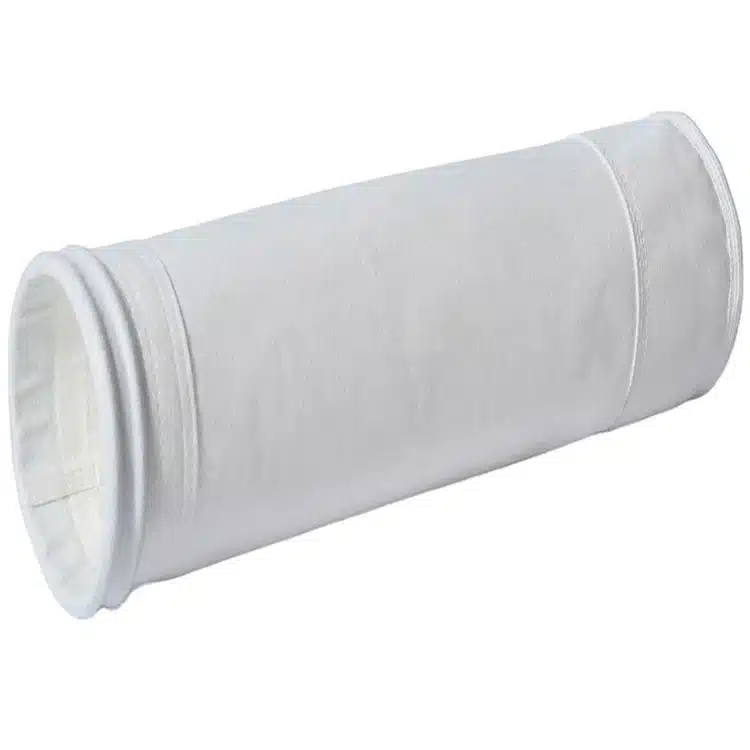
The Table I Would Put in Front of a Plant Manager
| Service reality | Media I start with | Why I start there | What usually kills the choice |
|---|---|---|---|
| Dry, high-heat baghouse duty in the aramid class | Nomex / aramid filter bags | Good place to start when the stream is dry, hot, and not asking for premium PTFE money | Moist acidic gas, chemistry drift, or buyers pretending “dry” always stays dry |
| Corrosive, wet, or emissions-sensitive high-temperature duty | Фильтровальные мешки из ПТФЭ | Strong chemical resistance, strong seam and surface behavior, better odds in punishing service | Price panic followed by a cheap decision |
| Hot-gas dedusting where fine-particle behavior and 100–260°C duty matter | P84 filter bags or blends | Proven hot-gas dedusting media with a strong fit in waste-to-energy, cement, and metallurgical service | Buying the media without checking the rest of the system |
| Hot service with aggressive liquid chemistry rather than dry dust | PTFE liquid bags | Better choice when chemistry and heat punish ordinary polymer media | Treating a liquid job like a baghouse job |
| Temperature spikes nobody wants to admit are real | Move one class up or stabilize the process first | Because bags fail on excursions, not just averages | Buying to the budget instead of the actual upset profile |
My opinion is not polite here: the best filter bags for high-temperature service are rarely the cheapest media that survives the average day. They are the bags that survive the ugly day, seal correctly, clean correctly, and do not turn your emissions, downtime, or reject rate into a finance problem.
The Specification Sheet That Separates Adults From Tourists
Paper matters.
EPA’s 2023 bag leak detection guidance defines a BLDS as an instrument that monitors particulate matter in the exhaust stream of a fabric filter to detect bag failure or media degradation, and the eCFR shows that some regulated sources must run bag leak detection continuously, alarm on rising relative particulate loadings, and initiate corrective action within 30 minutes. That is not brochure talk. That is operating reality. So why do so many RFQs still read like somebody copied one micron number out of a 2018 purchase order?
What I force into every RFQ
I force the buyer to state the actual process phase, continuous temperature, maximum excursion, chemistry, particulate profile, moisture condition, cleaning method, housing model, bag size, ring or cuff details, emissions target, and replacement trigger. Then I make them say what failure costs. Product loss? Opacity spike? Unplanned shutdown? Burn risk? Until that is on paper, you are not buying high-temperature dust collector bags. You are buying hope.
This is exactly why I would send the reader to the site’s filter bag RFQ template for faster quoting. Most suppliers do not need more drama. They need a spec that tells them what the bag must catch, survive, fit, and prove.
The Failure Files That Should Make Buyers Less Relaxed
Real damage. Real names.
I still use CSB’s Imperial Sugar investigation when I talk to skeptical operations teams because it is brutally concrete: the February 7, 2008 explosion and fire in Port Wentworth, Georgia killed 14 people and injured 38 others, and CSB tied the disaster to combustible dust accumulation, equipment design, maintenance, and housekeeping failures. That was not bad luck. That was a chain of ignored details.
And no, this is not some dead issue from a different era. OSHA’s combustible dust overview still points to the CSB count of 281 combustible-dust incidents between 1980 and 2005 that killed 119 workers and injured 718, which is exactly why I reject the lazy habit of treating baghouse media, pulse cleaning, spark risk, and dust accumulation as separate purchasing conversations. They are one conversation, whether procurement likes it or not.
The compliance pressure is getting tighter too. In February 2024, EPA lowered the annual PM2.5 standard from 12.0 to 9.0 µg/m3, and Агентство Рейтер сообщило that EPA projected $46 billion in health benefits while industry groups moved quickly to challenge the rule. That is the world your bag spec lives in now. If ambient particulate rules tighten, nobody gives you extra patience for a sloppy high temp filter bag decision.

Вопросы и ответы
What are high temperature filter bags?
High temperature filter bags are filtration media designed to hold collection performance, mechanical strength, and sealing integrity under sustained heat, short spikes, and process chemistry inside a baghouse or filter housing, which means the real buying target is stable operation under duty, not just a printed maximum temperature. I buy them by duty profile, not by adjective.
How do I choose between Nomex, PTFE, and P84 filter bags?
Nomex, PTFE, and P84 filter bags are three different high-temperature media families with different limits on heat, chemistry, moisture tolerance, dust release behavior, and price, so the right choice comes from matching the actual gas or liquid stream, cleaning method, and failure cost rather than shopping by brand familiarity. Aramid is often the workhorse. PTFE is the expensive survivor. P84 is the specialist I take seriously.
Are PTFE filter bags always the best filter bags for high-temperature service?
PTFE filter bags are premium high-temperature and chemical-resistance media used when corrosive species, moisture, emissions sensitivity, or long-term durability make cheaper fabrics a false bargain, but they are not automatically the best answer for every hot-service line because some duties are better served by aramid, P84 blends, fiberglass, or metal mesh. I like PTFE a lot. I just do not worship it.
What information should I send before requesting a quote for high temp filter bags?
A usable RFQ for high temp filter bags defines the process phase, continuous temperature, excursion temperature, chemistry, particulate or solids profile, flow, cleaning method, housing model, bag size, sealing style, emissions or clarity target, and documentation requirement so the supplier is quoting the real duty instead of hiding risk inside a neat unit price. Leave out any of those, and the quote gets prettier while the risk gets uglier.
Can I buy high-temperature filter bags based only on maximum operating temperature?
No, you should not buy high-temperature filter bags based only on maximum operating temperature, because average temperature ignores acid dew point, startup spikes, shutdown condensation, pulse-cleaning stress, pressure drop, abrasion, and housing fit, and those neglected variables are exactly where bags blind, crack, leak, or collapse long before budget expected them to. That is the industry’s favorite shortcut, and I think it is one of its dumbest habits.
Ваш следующий шаг
Сделайте это сегодня.
Write one honest line for your next purchase: gas or liquid, continuous temperature, peak excursion, chemistry, moisture condition, particle or solids profile, housing model, cleaning method, emissions or clarity target, and replacement trigger. Then run that line through что на самом деле означает рейтинг микронов фильтровального мешка, pressure-test the hardware against основы корпуса рукавного фильтра для промышленных покупателей, and send the final version through the filter bag RFQ template for faster quoting.
If your supplier still wants to quote “high temperature filter bags” without asking about dew point, excursion duration, cleaning energy, seal fit, and failure response, do not reward that behavior with a PO.


