
Mục lục
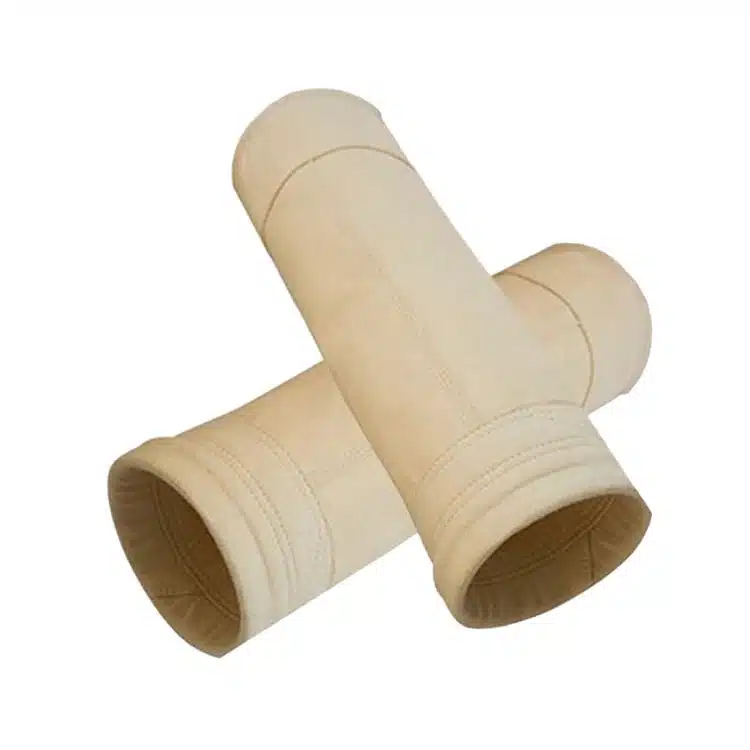
PPS is not a magic fabric
Trước hết là ba từ.
I keep seeing buyers treat PPS filter bags like a generic “hot service” answer, even though PPS, or polyphenylene sulfide, is a very specific baghouse media choice that pays off when flue gas chemistry is ugly, moisture is real, and operators need a fabric that can survive acid-heavy service without folding early under ordinary heat stress. Why are so many RFQs still written like temperature is the only line that matters?
PPS, often sold under the Ryton name, usually lives in the rough 375°F / 190°C class in industrial dust collection; Sly positions it for coal-fired boilers, incinerators, fluidized bed systems, cement mills, asphalt plants, and similar duty, and says it performs well in high moisture and dew-point-crossing service with oxygen content up to about 9%, while Donaldson markets PPS and PPS with ePTFE membrane for high-temperature applications where chemical and alkaline resistance matter. But the part I do not let buyers ignore is the materials science: an ITS-indexed 2019 study on PPS degradation by NO2 at high temperature found falling tensile strength, falling elongation, cracking, splitting, and oxidation damage in PPS media under exposure. That is not brochure language. That is failure language.
And here is the hard truth. A baghouse may be able to run much hotter than a PPS bag can. The EPA baghouse chapter says fabric filters generally collect particles at efficiencies above 99% or 99.9%, and some configurations can routinely handle gas up to about 500°F with surges to about 550°F, but that does not mean every media class belongs there. I have watched operators confuse system capability with fabric capability, and that mistake gets expensive fast.
Where PPS filter bags really earn their keep
Bad assumptions fail.
If I were mapping this article to the strongest internal paths on bestfilterbag.com, I would push readers first into the site’s high-temperature filter bag buying guide, sau đó vào Độ lọc (micron) của túi lọc thực sự có ý nghĩa gì, and then into Những kiến thức cơ bản về vỏ bộ lọc túi dành cho người mua trong ngành công nghiệp, because that sequence matches how serious buyers actually think once they stop pretending one catalog adjective settles the job. Why send them straight to a quote before they even know the duty window?
The jobs PPS baghouse filter bags handle well
I like PPS when the gas stream is hot but not insane, acidic but not wildly oxidizing, damp enough to punish weaker media, and steady enough that the plant can honestly control excursions instead of lying about them in a meeting. That is why PPS dust collector bags keep showing up in boiler service, waste handling, cement, asphalt, and other baghouse lines where acid resistance and moisture tolerance matter more than flashy sales talk.
The thing buyers get wrong
Oxidation counts more.
Too many people hear “acid resistant” and assume “chemically invincible,” but PPS is not built to laugh at every oxidizing condition forever, especially when NO2, oxygen, and high temperature start working together over time, which is exactly why academic degradation work and field experience keep pointing to oxidation damage as the quiet killer. Why do buyers keep calling this a heat problem when it is usually a chemistry-plus-time problem?
The blunt operating map I would hand a plant manager
This is the version I trust more than most supplier decks, and it lines up with the technical behavior described by Sly’s PPS media page, Donaldson’s PPS pleated bag page, và ITS-linked PPS degradation study.
| Duty signal | PPS verdict | Why I say it | What usually kills the choice |
|---|---|---|---|
| 140–170°C flue gas with acid-forming species and meaningful moisture | Strong fit | PPS handles acidic, wet service better than many buyers expect | Lazy oxygen tracking, weak cage support, false “average temperature” specs |
| 170–190°C baghouse duty with stable operation and O₂ controlled around the media’s service window | Viable fit | PPS can still work if excursions are disciplined and chemistry is honest | Repeated spikes, underreported NOx, poor pulse tuning |
| Frequent over-temperature events or highly oxidizing gas chemistry | Weak fit | PPS loses mechanical strength when oxidation damage accumulates | Pretending short spikes do not count |
| Emissions-sensitive service where release and leakage control matter more than base media cost | Compare PPS + ePTFE against PTFE-class options | Membrane choices can change dust release and capture behavior | Buying on fabric price alone |
| Baghouse duty with sloppy fit data, vague dimensions, or unknown seal details | Do not buy yet | Hardware mismatch ruins good media | “Should fit” purchasing |
The enforcement files procurement people hate
Real names matter.
I still bring up the CSB’s Imperial Sugar investigation because skeptics listen when the facts are brutal: the February 7, 2008 explosion and fire in Port Wentworth, Georgia killed 14 people and injured 38 others, and the CSB tied the event to massive combustible dust accumulation and control failures. No, it was not a PPS story. Yes, it still belongs in this conversation, because dust collection failures do not stay inside maintenance meetings for long.
And the legal pressure is not fading. In June 2024, EPA’s Smith Foundry settlement required continuous pressure-drop monitors, recording equipment, and a bag leak detection system on the main baghouse for finishing operations; in September 2024, EPA’s Federal Cartridge settlement said upgraded controls would cut more than 1,700 pounds of particulate matter and more than 400 pounds of lead per year, while imposing a $349,471 penalty. That is what happens when filtration hardware stops being treated as discipline and starts being treated as a line item.
Then there is the rulebook. Under 40 CFR 60.124, certain sources must initiate corrective-action procedures within 30 minutes of a bag-leak alarm, and those actions can include inspecting for air leaks, sealing off defective bags, replacing media, or shutting down the process. So when somebody tells me a PPS quote can be written with nothing but bag size and temperature, I know I am listening to a person who has never been the one standing there when the alarm sounds.
The outside air bar tightened too. On February 7, 2024, EPA lowered the annual PM2.5 standard from 12.0 to 9.0 µg/m3, and EPA said the revision could deliver public-health net benefits as high as $46 billion in 2032, while Reuters đưa tin that industry groups immediately warned of harder permitting and compliance costs. That is the environment your PPS filter bag spec now lives inside. Why would anyone still write a lazy RFQ?
What I would force into every PPS filter bag RFQ
Paper first.
Before I approve any PPS baghouse filter bags, I want continuous temperature, peak excursion temperature, oxygen percentage, SOx and NOx profile, moisture condition, acid dew point risk, dust abrasiveness, grain loading, cleaning method, air-to-cloth ratio, cage dimensions, bag diameter, bag length, top and bottom construction, seam style, finish, membrane choice, target ΔP window, leak-alarm logic, and the actual changeout trigger on paper. Anything less is not engineering. It is wishful buying.
And this is where the site’s strongest internal links should do real work, not decorative work. If the reader is still shaky on fit, send them to how to confirm housing fit before ordering filter bags. If the spec is still vague, send them to how to write a clear filter bag specification sheet. If procurement wants speed without stupidity, end the sequence with the filter bag RFQ template for faster quoting. I would rather slow the quote by one hour than speed up a shutdown by one week.

Câu hỏi thường gặp
What are PPS filter bags?
PPS filter bags are industrial dust-collection filter media made from polyphenylene sulfide fiber, usually needle felt, designed for hot, chemically harsh gas streams where acid resistance, moisture tolerance, and stable particulate capture matter more than low purchase price alone in baghouse service.
I use them when the process is honest about chemistry, moisture, and oxygen, not when the RFQ is trying to hide those details.
Are PPS filter bags the best high temperature filter bags?
PPS filter bags are often the best-value high temperature filter bags when flue gas runs roughly in the 140–190°C band, carries acid-forming species, and does not punish the media with extreme oxidizer load, long over-temperature excursions, or chemistry that points you toward PTFE or another premium media.
They are not the automatic winner. They are the media I choose when the duty fits, not when the budget wants a comforting story.
How do PPS baghouse filter bags fail?
PPS baghouse filter bags usually fail through oxidation, chemical attack, mechanical abrasion, seam damage, cage-related wear, or collapse after pressure-drop control, oxygen level, NOx exposure, dew-point behavior, and cleaning energy drift outside the service window the media was actually chosen for.
Most “bad PPS” stories I hear are really bad-spec stories wearing a fabric label.
When should I choose Ryton filter bags over Nomex or PTFE?
Ryton filter bags, which use PPS fiber, are the right middle-ground option when you need more acid and moisture tolerance than aramid commonly offers but do not need to pay PTFE money for the nastier oxidizing, corrosive, or ultra-low-emission duties that destroy cheaper assumptions.
That middle ground is where a lot of real plants live, which is why PPS stays relevant even when buyers obsess over more famous media names.
What should be in a PPS filter bag quote request?
A PPS filter bag quote request should define the gas composition, continuous and peak temperature, oxygen percentage, SOx/NOx content, moisture condition, dew point, dust loading, particle profile, cleaning method, dimensions, cage style, finish, membrane option, target differential pressure, and replacement trigger before any supplier prices the job.
If those data points are missing, the quote may look neat, but the risk is simply being moved off the page and into your baghouse.
How do I choose PPS filter bags for high-temperature dust collection?
Choosing PPS filter bags for high-temperature dust collection means matching polyphenylene sulfide media to a real baghouse duty profile, not a sales adjective, by checking continuous temperature, upset temperature, oxygen, acid gases, moisture, dust abrasiveness, cleaning style, emissions target, and hardware fit before the PO ever leaves procurement.
The best PPS filter bags for baghouse dust collectors are not the cheapest bags on the quote sheet. They are the bags specified to the ugly day, not the average day.
Bước tiếp theo của bạn
Hãy làm điều này ngay hôm nay.
Write one line that tells the truth: process, continuous temperature, upset temperature, O₂ %, SOx/NOx, moisture condition, acid dew point risk, dust loading, particle profile, bag dimensions, cage data, finish, membrane option, ΔP range, and replacement trigger. Then route that line through the site’s high-temperature filter bag buying guide, housing-fit checklist, Và Mẫu yêu cầu báo giá.
And if a supplier still wants to sell you PPS filter bags after asking only for “temperature” and “size,” walk away. I would.


