
Mục lục

“Food grade” is the most abused phrase in filtration
Trước hết là ba từ.
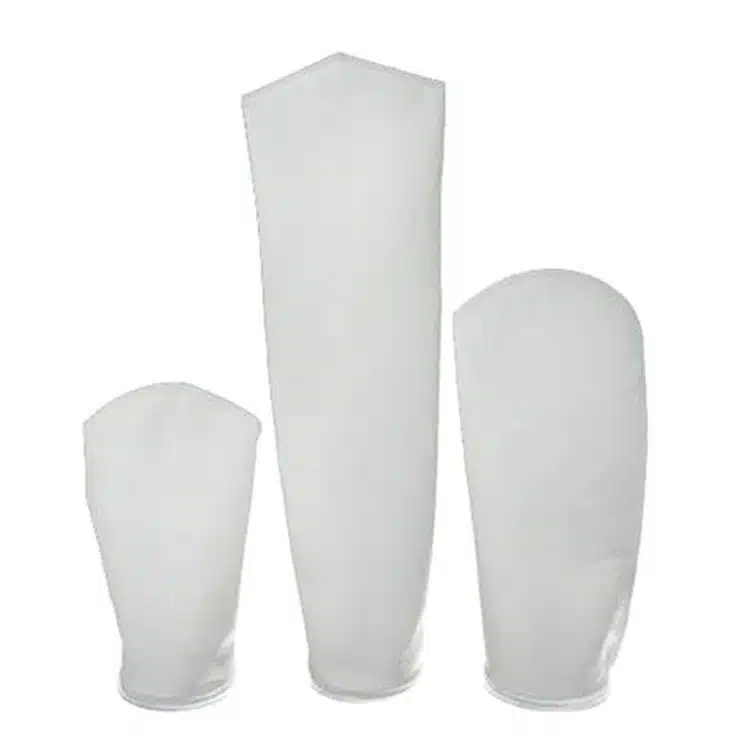
I have watched too many suppliers stamp “food grade” onto a 1 µm, 5 µm, or 25 µm bag as if that settles resin identity, additive control, ring construction, migration risk, cleaning chemistry, and lot traceability, when the truth is uglier: a food contact filter bag is only as defensible as the document pack behind the exact SKU you are buying. Want the hard truth?
A generic certificate is weak. What I want for food grade filter bags is a chain of proof tied to the actual build: media polymer, seam method, support ring, gasket contact, process temperature, contact time, food type, and sanitation regime. In the U.S., FDA’s framework is not a magic badge; the agency says the regulatory status of a food contact material depends on each individual substance in the article, and those substances must be covered by 21 CFR, GRAS, a threshold-of-regulation exemption, or an effective FCN. Worse for lazy vendors, FDA also says FCNs are specific to the manufacturer and the intended use. That kills the industry’s favorite trick: waving around somebody else’s paperwork. See the FDA’s explanation of food-contact material regulatory status and its overview of how FDA regulates substances that contact food.
The documents that actually matter
Bắt đầu từ đây.
If a supplier offers FDA compliant filter bags, food-safe liquid filter bags, or food contact filter bags, I do not ask for a pretty PDF first; I ask for the one document that forces precision, then the papers that prove it was not written by marketing. Why would I trust a slogan over a controlled document set?
| Document | Tại sao tôi quan tâm | U.S. relevance | EU relevance | Điều đầu tiên tôi kiểm tra |
|---|---|---|---|---|
| Material compliance statement | Ties the exact bag media and components to a legal basis | Must cite applicable 21 CFR, GRAS, TOR, or effective FCN | Must connect to EC 1935/2004 and, for plastics, EU 10/2011 | Exact polymer, additives, ring material, intended conditions of use |
| Declaration of Compliance (DoC) | Turns vague claims into named, signed accountability | Helpful, but not the core U.S. legal form | Essential for plastics and plastic components under EU 10/2011 | Issuer identity, product identity, date, limitations, food types, simulants |
| Supporting migration or extraction test report | Shows whether the bag or its food-contact components move substances into food simulants | Often needed to support a defensible claim | Central to EU 10/2011 logic | Test method, simulant, time, temperature, result units, pass criteria |
| GMP statement or quality-system evidence | Proves the bag can be made the same way every time | Strong practical evidence | Built into EU GMP expectations | Revision control, batch records, change control |
| Lot traceability, CoC, or CoA | Lets QA trace one shipment, not just one brochure | Đúng | Đúng | Lot number, SKU, production date, release criteria |
| Sample approval record | Stops the classic “golden sample, weak production lot” problem | Đúng | Đúng | Approved sample vs shipment equivalence |
| Supplier change-notification policy | Protects buyers when nylon, PP ring, thread, or coating changes quietly | Đúng | Đúng | Named triggers, notice period, re-approval rule |
The legal spine is not mysterious. The European Commission’s food-contact materials legislation page says Regulation (EC) No 1935/2004 sets the general EU safety and inertness rules, including compliance documentation and traceability, while the EU GMP rules in Regulation (EC) No 2023/2006 require an effective and documented quality-assurance system. For plastic materials and plastic components, the consolidated text of Regulation (EU) No 10/2011 lays out the Declaration of Compliance content in Annex IV.
The U.S. and EU are not asking the same question
That matters.
In the U.S., buyers search “FDA 21 CFR 177 filter bags” and think the job is finished, but that search is only a doorway because FDA does not judge a finished food-contact article by optimism; it judges the regulatory status of the substances that can reasonably migrate to food, and that status is tied to the actual intended use. In practice, that means a nylon media claim without additive disclosure, ring disclosure, and use-condition limits is not a serious compliance claim. Is your supplier selling a bag, or selling a sentence?
According to the FDA packaging and food contact substances page, the agency maintains inventories for 21 CFR-authorized substances, food-contact notifications, and food types and conditions of use. The FDA’s nylon inventory also points buyers to 21 CFR 177.1500 among other sections, which is why “FDA compliant” should always be tied to exact chemistry and use conditions, not recycled buzzwords.
In Europe, the paperwork burden is usually heavier. EC 1935/2004 filter bags live under the general framework, but EU 10/2011 food-grade filter bags and plastic bag components pull you into the more detailed plastics regime: food simulants, migration logic, and a written DoC with named information fields. That is why declaration of compliance filter bags keep showing up in serious EU purchasing conversations. Not because Europe likes paper. Because Europe likes defined accountability. See the European Commission summary và EU plastics regulation text.
The market has already moved. Many suppliers have not.
Watch this.
In February 2024, the FDA announced that PFAS grease-proofing substances were no longer being sold for food-contact use in the U.S. market, and in December 2024, the European Commission adopted its BPA ban for food-contact materials. That is not background noise. That is the compliance environment telling you that yesterday’s acceptable chemistry can become today’s commercial problem.
And the exposure argument is not academic. Reuters reported in January 2024 that Consumer Reports found plasticizers in 84 of 85 foods it tested, while the CDC still estimates 48 million foodborne illnesses, 128,000 hospitalizations, and 3,000 deaths each year in the United States. I am not pretending a filter bag caused those numbers. I am saying food-contact materials now live in a harder trust market, and loose documentation is a bad bet. Read the Reuters report và CDC data, then tell me generic “food grade” language still sounds professional.
What I would demand before approving food-grade filter bags
No shortcuts.
If I were approving food grade filter bags for edible oil, dairy, glucose syrup, starch slurry, or beverage prefiltration at 1 µm, 5 µm, 10 µm, or 25 µm, I would demand seven things before the first real PO: a named compliance statement, an EU DoC where applicable, supporting migration data, full construction disclosure for media and ring, GMP evidence, lot traceability, and a change-control promise in writing. Why let procurement buy a headache in cartons of 50?
This is exactly where your internal linking should do real work. If the buyer is still stuck on basic selection, send them to the Hướng dẫn lựa chọn túi lọc chất lỏng và Hướng dẫn về độ lọc của túi lọc (theo micron). If the RFQ is still vague, move them into a clear filter bag specification sheet. If QA wants proof instead of adjectives, route them into the supplier audit checklist for filter bag manufacturers và Danh sách kiểm tra phê duyệt mẫu túi lọc. And if engineering keeps blaming the bag for bypass or collapse, force the team through Những kiến thức cơ bản về vỏ bộ lọc túi dành cho người mua trong ngành công nghiệp. That is not blog decoration. That is a B2B qualification funnel.
The certificate trap buyers keep falling for
I see it weekly.
A supplier sends a one-page “FDA certificate,” no lot reference, no ring disclosure, no use-condition limits, no migration report, no note on whether the claim covers Nylon 6, Nylon 66, PET felt, PP support parts, PTFE seam components, or 316 stainless hardware, and somehow the buyer relaxes. Why?
My rule is blunt: if the document does not tell you exactly what the bag is made from, what legal basis supports each food-contact component, what foods it can touch, at what temperature, for how long, and under what cleaning or sanitizing regime, it is not a compliance pack. It is a sales prop.
The document I trust most
Not the prettiest one.
The most important paper is the document that binds the exact SKU to the exact build. Sometimes that is the DoC. Sometimes it is the regulatory statement plus test pack plus lot traceability. But it always has the same job: stop the supplier from quietly swapping media, additive package, or ring hardware after sample approval.
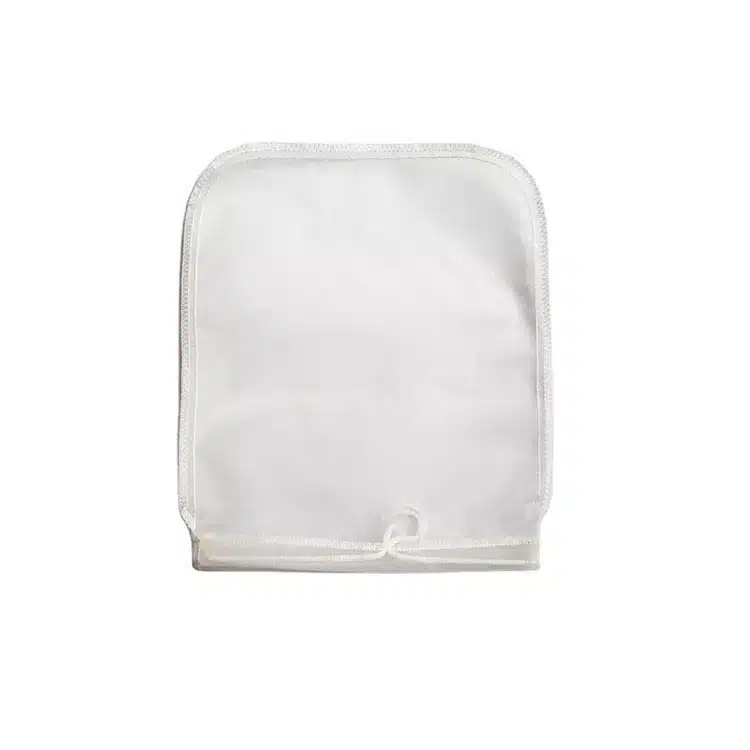
That is also why I care about sample control more than brochure language. A 7-inch diameter Size 2 bag with a PP ring, a steel ring, or a sewn collar is not the same commercial risk, and a 5 µm food-contact bag used in 80°C syrup service is not the same paperwork problem as a 100 µm prefilter in ambient wash water. The industry loves generic names because generic names make quoting easy. They also make blame easy later.
Câu hỏi thường gặp
What are food-grade filter bags?
Food-grade filter bags are liquid filtration bags made from materials and components documented as suitable for their intended food-contact use under defined time, temperature, chemistry, and cleaning conditions, with supporting paperwork that matches the exact construction rather than a generic marketing claim. I treat them as controlled food-contact articles, not commodity consumables.
What compliance documents are needed for food-grade filter bags?
The core compliance documents for food-grade filter bags are a material compliance statement tied to the exact SKU, supporting test data for migration or extractables where applicable, a Declaration of Compliance for EU plastic scope, GMP and traceability records, and shipment-level release documents such as a CoC or CoA. If one of those blocks is missing, I assume the claim is incomplete.
What is the difference between FDA compliant filter bags and EU 10/2011 food-grade filter bags?
FDA compliant filter bags rely on U.S. food-contact authorization pathways for the substances in the article, while EU 10/2011 food-grade filter bags sit inside a stricter plastics framework that pushes buyers toward written declarations, migration logic, and detailed supply-chain documentation tied to the actual intended use. Same commercial promise. Different proof burden.
Do declaration of compliance filter bags need lab testing?
Declaration of compliance filter bags often need supporting lab data because a Declaration of Compliance is only as strong as the evidence behind it, especially when plastic media or plastic components must be defended under defined food simulants, temperatures, contact times, and foreseeable use conditions. I do not accept a DoC that floats free from test logic.
Is a generic food-grade certificate enough for food-safe liquid filter bags?
A generic food-grade certificate is not enough for food-safe liquid filter bags because it usually fails to identify the exact bag construction, the legal basis for each relevant component, the intended food types, the time-temperature limits, and the lot-level traceability needed to defend the claim when QA, auditors, or customs start asking sharper questions. Pretty paper does not equal usable evidence.
Your next move before you publish or buy
Hãy làm ngay đi.
Rewrite the page so it says something stronger than “food grade.” Tell the buyer which documents you provide, which markets they support, which materials they cover, and what conditions of use they actually match. Then make the page earn the click: move readers from selection, to specification, to audit, to sample approval, to housing fit.
And one more thing. I would not bury this article in soft language. Say it plainly: if a supplier cannot provide a defensible compliance pack for food grade filter bags, that supplier is not selling certainty. It is selling your team more paperwork later, at the worst possible time.


