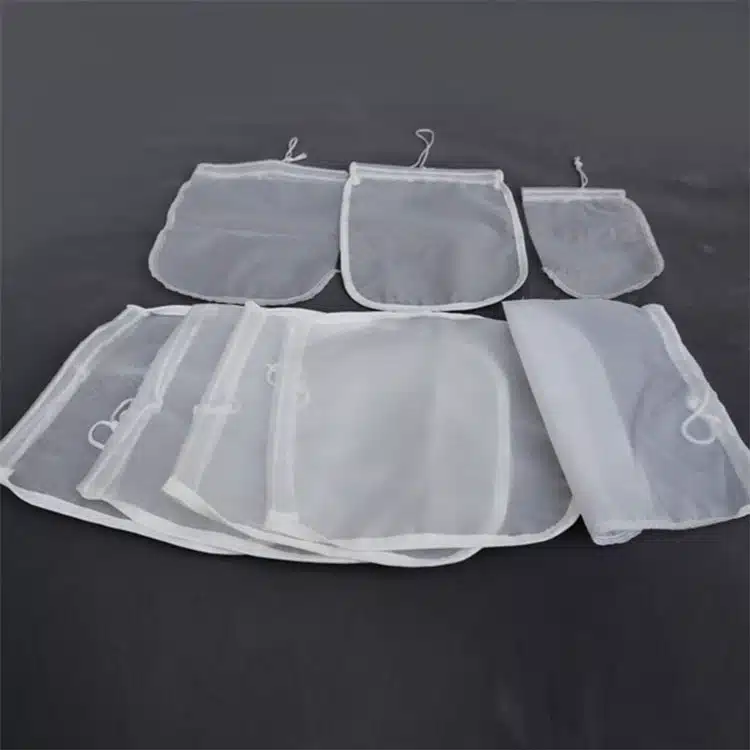
Most bags lie.
I have watched too many plants talk about filter bag lifespan as if the calendar were the villain, even though PET polyester, PP polypropylene, nylon, and PTFE usually fail because moisture, heat, oxidizers, solvents, pressure spikes, bad baskets, and sloppy installation gang up on them long before anyone in procurement says the bag was “old.” Why are we still blaming time for damage that process conditions clearly caused?
And let me be blunt.
If this page is going to work on bestfilterbag.com, it should not sit there like a lonely glossary entry. Readers who are still arguing polymer choice should be pushed into PTFE vs polypropylene vs polyester filter bags, readers who still think capture size answers everything should hit Độ lọc micron của túi lọc là gì?, and readers who already see distortion, bypass, or ugly ΔP drift should go straight to Tại sao túi lọc bị xẹp và cách phòng ngừa. That is not decorative internal linking. That is how real operators think when a line starts misbehaving.
Mục lục

Filter Bag Lifespan Is Usually a Chemistry Story
Age is chemical.
The U.S. EPA says fabric filters are damaged by high temperature, and that lower temperatures in acid-gas service can cause condensation, corrosion, and bag blinding; in other words, the same bag can be attacked from both sides if the operating window is sloppy enough. Do people really still believe “run it cooler” is always safer when dew point, condensate, and acid attack are sitting right there waiting? See the EPA’s fabric-filter monitoring guidance.
The best raw data I found is ugly.
A 2023 cement-plant bag filter study tracked plant-level bag filter performance over 15 years and found collection efficiency falling from 99.998% in the early years to 95.05% in the 15th year, with reliability holding up best around years 10 to 12 before declining sharply later. That is not a universal replacement interval for every single bag on earth, and I would never pretend it is, but it is a clean reminder that filter media systems age in measurable ways when operators normalize drift instead of correcting it.
This is where buyers get fooled.
They hear “filter bag service life” and want one clean number, even though service life is really the outcome of pH, temperature, oxidizer exposure, solvent content, moisture loading, particle shape, air-to-cloth ratio or liquid-side ΔP, cleaning severity, and mechanical support. Why does industry keep begging for a simple answer to a messy engineering question?
How Polyester, Polypropylene, Nylon, and PTFE Really Age
Materials age differently.
That sounds obvious, but I keep seeing specs written as if polyester vs polypropylene filter bags were a budget debate, nylon were a default, and PTFE were just the expensive version of everything else, which is nonsense once the SDS, the temperature curve, and the actual maintenance record hit the table. Why do so many RFQs still read like somebody chose media by habit instead of by punishment? If your team has not done that work yet, the page to read next is How to Use SDS to Choose Filter Bag Materials.
| Vật liệu | What ages it first | First ugly symptom | Mistake I see most | My hard rule |
|---|---|---|---|---|
| Polyester (PET) | Hot moisture, acidic or alkaline condensate, abrasion, hydrolysis | Blinding, stiffness loss, seam fatigue, early tears | Treating it as universal because it is familiar | Use it as a workhorse, not as a miracle |
| Polypropylene (PP) | Heat creep, oxidizers, deformation under load, ring distortion | Softening, fit problems, short runs in hotter service | Pushing temperature harder than the quote sheet admits | Strong wet-chem choice, weak “do everything” choice |
| Nylon | Water absorption, chemistry mismatch, rough cleaning, over-reuse | Stretch, mesh behavior drift, repeatability loss | Washing and reusing without checking damage | Great in honest service, bad in fantasy service |
| PTFE | Mechanical abuse, bad basket support, startup shock, poor seating | Wrinkling, collapse, wasted premium, false confidence | Paying for fluoropolymer media to cover hardware mistakes | Buy it when failure cost is worse than media cost |
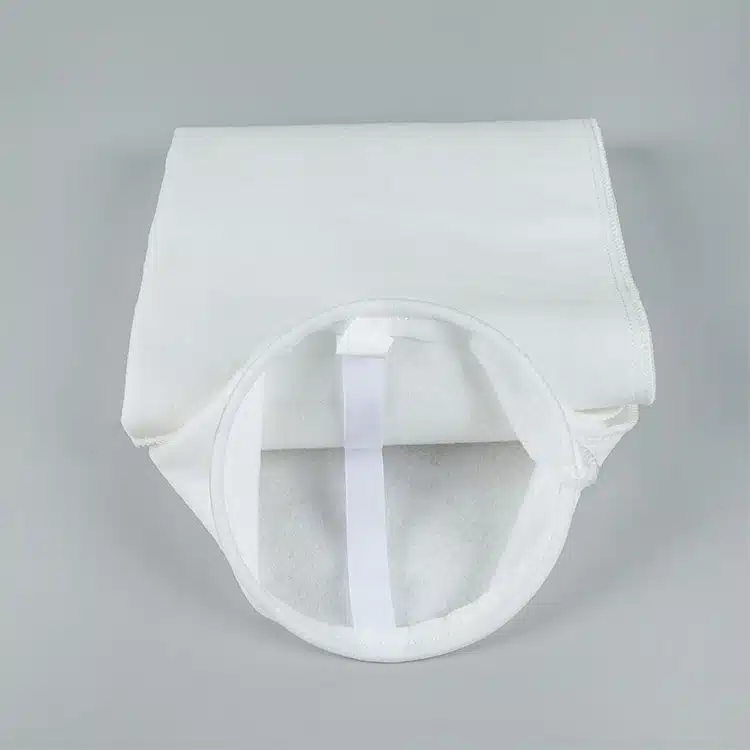
Polyester is the overworked veteran
PET gets punished.
Polyester still earns its place, especially in dry-duty service, but hot wet chemistry is where the romance ends because moisture plus heat plus acidic or alkaline exposure can start the kind of degradation that buyers insist on calling “unexpected” even after they were warned. Why does the industry keep forcing polyester into duties that are obviously trying to hydrolyze it? Your own Polyester Filter Bags for Industrial Filtration page already points readers toward the right conclusion, and the broader PTFE vs polypropylene vs polyester filter bags comparison makes the split even clearer.
Polypropylene wins more wet fights than people admit
PP has limits.
I will still take polypropylene seriously in many wet chemical services before I take polyester, because once aqueous acids, caustics, and general liquid duty start driving the spec, PP often becomes the more honest answer per dollar, but buyers get careless when they see the lower price and start pretending oxidizers and heat do not count. Why do cheap bags always look smartest right before they become expensive? The internal logic on Best Filter Bag already nudges readers the right way through PTFE vs polypropylene vs polyester filter bags Và How to Use SDS to Choose Filter Bag Materials.
Nylon is honest, not immortal
Nylon still works.
In water, paint, ink, and resin, nylon can be the practical adult choice, yet operators wreck perfectly usable mesh by cleaning it too hard, reusing it too casually, or pushing it into chemistry that was never mild in the first place. Why do plants boast about reusability without tracking what each wash cycle is doing to mesh stability, collar fit, and repeatability? The natural internal handoff here is Hướng dẫn lựa chọn túi lọc chất lỏng: Độ lọc (micron), chất liệu và kích thước túi, then the narrower nylon application content if the duty is clearly general liquid filtration rather than aggressive chemistry.
PTFE resists chemistry, not stupidity
PTFE is stubborn.
It is usually the least-wrong answer when the stream is hotter, more corrosive, more purity-sensitive, or less forgiving, but I keep seeing the same lazy move: a plant upgrades to PTFE, keeps the bent basket, ignores startup shock, overlooks seal fit, and then acts shocked when premium media fails inside a bad mechanical stack-up. Why buy a better polymer to protect a worse system? That is exactly why Những kiến thức cơ bản về vỏ lọc túi dành cho người mua trong lĩnh vực công nghiệp Và Tại sao túi lọc bị xẹp và cách phòng ngừa should sit close to any PTFE decision page, not miles away in some forgotten blog archive.
The Data That Kills the “Just Run It Longer” Argument
The numbers hurt.
In October 2023, EPA’s Best Practices for Bag Leak Detection Systems defined BLDS monitoring as a way to detect bag failures or filter media degradation, and it said operators should continuously monitor and record indicators like pressure differential, inlet temperature, exhaust flow, and PM emissions. Why does half the industry still act as if trend data were optional when the regulator is practically begging people to watch degradation before it becomes a violation?
And then there is enforcement.
In September 2024, EPA said its Federal Cartridge settlement would reduce emissions by more than 1,700 pounds of particulate matter per year and more than 400 pounds of lead per year, while imposing a $349,471 penalty and requiring new baghouses with secondary HEPA filtration. I am not claiming one tired filter bag caused that whole story. I am saying filtration neglect stops being “maintenance” once regulators and neighbors are involved.
The June 2024 Smith Foundry settlement is even more revealing to me.
EPA said the facility allegedly failed to properly operate pollution-control equipment and, as part of the settlement, had to install continuous pressure-drop monitors, recording equipment, and a bag leak detection system while updating its operations and maintenance plan. Why do so many plants wait for a legal document to force the monitoring discipline they should have had on day one?
One more number.
CDC/NIOSH reported that a mini-baghouse control reduced airborne respirable dust by 85% to 98% and respirable crystalline silica by 79% to 99% in field testing, which is a reminder I never get tired of repeating: when media, housing, and duty are matched honestly, filtration performs like engineering; when they are mismatched, it performs like denial. Read the CDC/NIOSH field evaluation summary if you want the sharp version.
What Smart Operators Track Before the Bag Fails
Watch the trend.
Aging does not usually announce itself with one cinematic failure, because more often it shows up as rising ΔP, unstable flow, wrinkling at the collar, a weird change in cleanability, strange polishing quality, visible bypass, or a bag that suddenly “feels wrong” during changeout. Why are teams still making replacement calls from calendar habits when the machine has already been talking for weeks?
I trust five signals.
I want the exact chemistry from the SDS, not the plant nickname; I want actual operating temperature and any CIP spike; I want clean and dirty ΔP trends; I want the bag size, ring style, and basket condition; and I want somebody to tell me whether the process is really changing faster than the spec sheet admits. That is why the best internal route on your site is How to Use SDS to Choose Filter Bag Materials, then Độ lọc micron của túi lọc là gì?, then Hướng dẫn lựa chọn túi lọc chất lỏng: Độ lọc (micron), chất liệu và kích thước túi, then Những kiến thức cơ bản về vỏ lọc túi dành cho người mua trong lĩnh vực công nghiệp. That chain mirrors the real order of failure: chemistry, capture target, service duty, then mechanics.
And yes, collapse matters.
If a bag is folding inward, rubbing the basket, or losing shape at the collar, I stop talking about consumables first and start talking about support, fit, startup shock, reverse flow, and hardware wear, because collapsed bags are usually system problems wearing a consumables mask. That line is not mine originally, but I agree with it hard enough to repeat it. If the reader is already in that failure mode, the page that should catch them is Tại sao túi lọc bị xẹp và cách phòng ngừa.
Câu hỏi thường gặp
What is filter bag lifespan?
Filter bag lifespan is the usable operating period in which a filter bag still seals correctly, holds shape, maintains acceptable differential pressure, and delivers the particle retention the process requires without bypass, collapse, chemistry-driven damage, or performance drift severe enough to make continued use more expensive than replacement. I do not define lifespan by calendar alone, because the calendar does not know your pH, temperature spikes, solvent content, or startup abuse history.
How long do filter bags last?
Filter bags can last from a single shift to many months in liquid service and from scheduled shutdown cycles to longer campaigns in dust collection, because actual service life is determined by chemistry, moisture, temperature, solids loading, cleaning intensity, mechanical support, and the plant’s tolerance for rising pressure drop or declining emissions performance. My hard answer is annoying but true: the bag lasts exactly as long as the duty stays honest.
How often should filter bags be replaced?
Filter bags should be replaced when trend data shows they can no longer hold the required duty at sane pressure drop, flow, cleanliness, or emissions performance, which makes replacement a condition-based decision tied to ΔP drift, visible wear, chemistry changes, and process risk rather than to hope, habit, or a lazy monthly schedule. I do not trust calendar-only replacement plans unless the process is unusually stable and very well characterized.
Is polypropylene better than polyester filter bags?
Polypropylene is better than polyester in many wet, chemically active services because PP often handles aqueous acids and caustics more honestly, while polyester loses the argument faster when hot moisture, hydrolysis, or harsher chemistry enters the system; polyester still remains a strong answer in many dry, moderate-temperature dust duties. The mistake is asking which one is better in general instead of asking which one is less wrong for this exact stream.
What warning sign usually matters first?
The first warning sign is usually not a ripped bag but a trend change, meaning rising differential pressure, unstable flow, altered cleaning behavior, visible wrinkling, seating distortion, or emissions drift that shows the media and the system are no longer behaving like one controlled unit. I trust the trend more than the post-mortem, because the trend gives you a chance to act before the bag becomes a blame object.
Bước tiếp theo của bạn
Đừng đoán mò nữa.
If you want this article to do real business instead of collecting polite traffic, push the reader toward a spec, not a shrug: get the exact fluid name, concentration, pH, operating temperature, viscosity, solids profile, target micron, bag size, ring style, housing model, clean ΔP, dirty ΔP, and a photo of the basket before anyone asks for price. Why keep buying ambiguity when you already know ambiguity ages bags faster than chemistry alone? If you want the clean procurement handoff, the final click should be Mẫu yêu cầu báo giá túi lọc: Những điều nhà cung cấp cần để báo giá nhanh chóng.