Mục lục
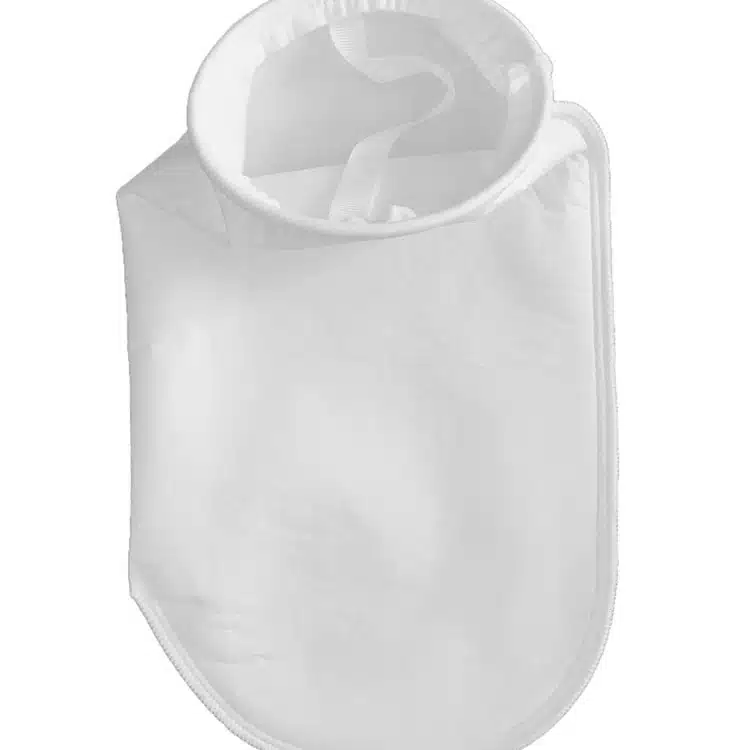
Material matters less than people think
Most plants guess.
I have watched too many buyers stare at a spent filter bag, identify the fabric, and act as if they have solved the disposal problem, even though the real answer sits in the captured dust, the liquid residue, the TCLP result, the SDS, the waste code, and the state rule that somebody in operations swears “probably doesn’t apply.” Why are we still pretending the polymer label is the legal answer?
Here is the hard truth I trust: material type is the starting point, not the verdict. A used polypropylene bag from a mild water line can be an ordinary solid-waste problem. A baghouse bag loaded with metal-bearing dust, acid condensate residue, or toxic ash can become an EHS and legal problem the minute it leaves the system. That is exactly why this topic should connect naturally to your own pages on how filter bag materials age over time, Hướng dẫn lựa chọn túi lọc chất lỏng, what micron rating for filter bags, Túi lọc lưới nylon dùng cho nước, sơn, mực in và nhựa, Cách chọn túi lọc PTFE cho các hóa chất ăn mòn, Và how to write a clear filter bag specification sheet. That internal chain matches how real engineers think: material, chemistry, fit, failure, then paperwork.
And I am going to say something suppliers often avoid. Clean filter bag recycling is real in theory and patchy in practice. EPA says overall plastics recycling in the U.S. was just 8.7% in 2018, PET bottles and jars reached 29.1%, and textiles as a whole recycled at 14.7%, while 11.3 million tons of textiles still went to landfill. GAO added that U.S. textile waste rose by more than 50% from 2000 through 2018. So when somebody tells you every spent polyester or polypropylene bag can be “recycled,” I would ask one rude question: recycled by whom, under what contamination profile, and at what transport cost?
The case files that kill the lazy disposal story
This is where it gets real.
EPA’s position on baghouse dust is not vague: the agency says RCRA applicability for baghouse dust is generally determined when the material is removed from the baghouse, and in certain hard-piped silo setups, when it is removed from the silo. EPA also finalized land-disposal restrictions for K061 electric arc furnace dust, a listed hazardous waste stream tied to steelmaking dust handling. That means baghouse filter disposal can become a hazardous-waste question before anyone finishes arguing about whether the bag itself was polyester, fiberglass, or something more exotic. The dust can outrank the fabric. It often does. See EPA’s memo on baghouse dust point of generation, EPA’s hazardous waste definitions, Và EPA’s K061 rule.
Then there is the kind of case plant managers remember after legal calls start. In a 2013 government record assembled by Connecticut DEEP around the management of used baghouse bags at waste-to-energy facilities, New Hampshire regulators described how Wheelabrator facilities had previously removed spent baghouse filters and burned them with incoming municipal solid waste, but later TCLP testing found 26 mg/L cadmium and 16 mg/L lead at one site and 12 mg/L cadmium at another, after which the spent filters were disposed off-site as D006 and D008 hazardous waste. That is not a theory problem. That is a paperwork-and-liability problem with numbers attached. Read the Connecticut DEEP letter on used baghouse bags.
And now the fluorinated headache. Reuters reported on April 19, 2024 that EPA designated PFOA and PFOS as hazardous substances under Superfund, a move that can pull owners, operators, transporters, and disposal arrangers into cleanup liability, while lawsuits tied to PFAS contamination had already produced more than $11 billion in settlements the prior year. I am not saying every PTFE filter bag is automatically hazardous waste because it is PTFE. I am saying that if your spent bags were used in PFAS-bearing lines, fluorochemical service, or heavily contaminated high-purity systems, the disposal conversation is no longer “trash versus recycle.” It is “who owns the risk if this comes back?” See Reuters on the EPA’s PFAS Superfund rule.
The disposal matrix most buyers should have seen years ago
Stop simplifying.
I do not trust disposal tables that pretend material type alone decides fate, but I do trust a table that shows where each polymer usually starts, where it can go wrong, and when recycling becomes more brochure than reality.
| Loại vật liệu | What I would assume first | When recycling is plausible | When I stop calling it ordinary waste | My blunt take |
|---|---|---|---|---|
| Polypropylene (PP) | Usually the most practical wet-service disposable bag for mild to moderate chemical duty | Only if the bag is clean, mono-material, and accepted locally | Oil, solvent, toxic sludge, listed waste, or hazardous characteristics in captured residue | PP is cheap to buy and often expensive to misunderstand |
| Polyester (PET) | Common workhorse for dry duty and selected mild liquid service | Possible on paper; weak in real industrial collection systems once contaminated | Metal-bearing dust, hydrolysis damage, process contamination, mixed construction | PET gets oversold as recyclable and undersold as contamination-sensitive |
| Nylon (PA) | Strong candidate for reusable mesh duty in water, paint, ink, and resin service | Best chance of reuse or controlled recycling when mesh is intact and chemistry was mild | Resin fouling, biofouling, solvent attack, hazardous residues, distorted seams | Nylon earns reuse only when operators are disciplined |
| PTFE | Premium media for aggressive chemistry, cleanliness-sensitive service, and ugly process conditions | Rarely a casual recycling stream; usually a controlled disposal conversation | PFAS-bearing service, corrosive residues, regulated contamination, high-liability industries | PTFE is where bad disposal assumptions get reputationally expensive |
The logic behind that table is simple. Recycling works best on clean, sorted, predictable inputs. Industrial spent bags are usually dirty, mixed, and annoying. EPA’s plastics and textiles data, plus GAO’s review of rising textile waste and immature recycling systems, say the quiet part out loud: the circular-economy story still breaks down when collection, sorting, contamination, and economics get ugly.
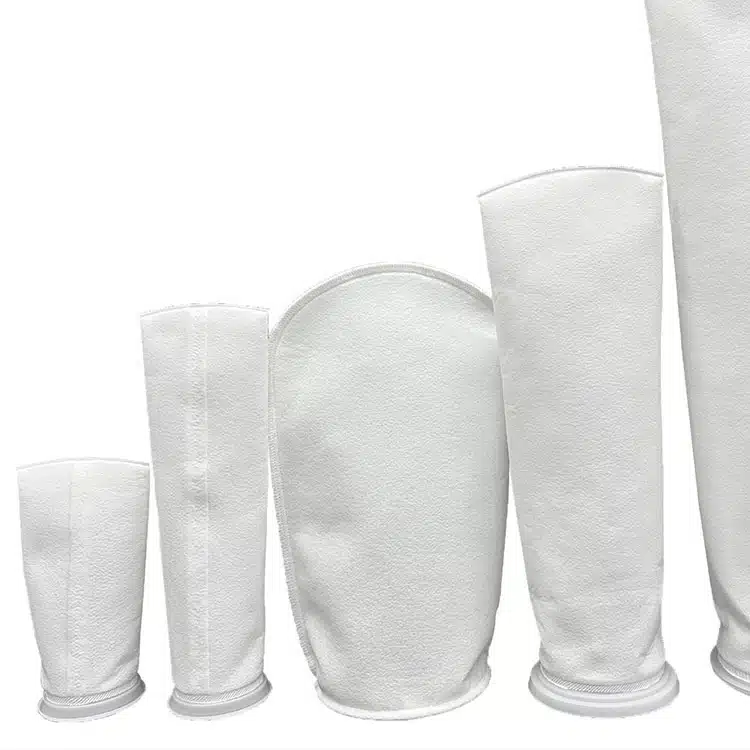
Polypropylene disposal is usually a contamination fight
PP gets the easy reputation.
That reputation exists because polypropylene is often the practical answer in broad aqueous service, and plants treat it like the safe default long after the captured material stopped being safe. I do not hate PP. I hate lazy assumptions. If a spent PP bag came off a mild water, neutral cleaner, or nonhazardous slurry line, ordinary solid waste may be the answer. But if it came out wet with solvent, loaded with toxic fines, or tied to a listed waste stream, the bag is carrying the waste story, not escaping it. Your internal handoff here should be the Hướng dẫn lựa chọn túi lọc chất lỏng because material choice and disposal logic start separating the moment the chemistry gets specific.
Polyester disposal looks cleaner than it is
PET fools people.
Buyers hear “polyester” and picture a recyclable plastic family, which is technically true and operationally misleading, because EPA’s own numbers show even clean PET bottles only reached a 29.1% recycling rate in 2018, and industrial filter bags are far dirtier, less standardized, and much harder to aggregate than beverage containers. That is why I would use your how filter bag materials age over time article and what micron rating for filter bags as internal bridges: one resets expectations on degradation, the other stops readers from treating a micron number like a full specification.
Nylon disposal is where reuse can still make sense
Nylon is different.
In mesh applications, nylon sometimes deserves a second life before it deserves a dumpster, especially in water, paint, ink, and resin service where the mesh can be washed, inspected, and put back into duty without pretending it is immortal. But I would only say that when the bag is not blinded, not chemically softened, not torn at the seam, and not contaminated with regulated residue. Once any of those show up, “reuse” turns from thrift into denial. That is why your Túi lọc lưới nylon dùng cho nước, sơn, mực in và nhựa page belongs naturally in this article.
PTFE disposal deserves slower thinking
This one is touchy.
PTFE bags are expensive enough that good plants try to avoid wasting them, but the bigger issue is not purchase price. It is service context. In corrosive lines, high-purity production, electronics, pharmaceutical work, or any stream with fluorinated compounds, I would document chain of custody, contamination history, and disposal vendor acceptance before anyone labels the bag “nonhazardous.” Your internal move here is obvious: send readers to Cách chọn túi lọc PTFE cho các hóa chất ăn mòn and then into how to write a clear filter bag specification sheet. If the bag lived in a highly regulated line, the disposal file should be just as disciplined as the purchase file.
What I would document before a spent bag leaves the site
Paperwork saves money.
I would not approve disposal on the phrase “used filter bag.” I want the bag material, process name, fluid or dust identity, SDS, temperature range, pH, batch or line ID, changeout reason, visible condition, and whether the residue has any reason to trigger TCLP, listed-waste review, or fluorinated-waste concern. Why let the hauler guess when your site already has the bones of a better system?
That is why this article should keep feeding readers into how to write a clear filter bag specification sheet và Hướng dẫn lựa chọn túi lọc chất lỏng. Disposal gets easier when specification was honest at the beginning. Plants that document badly usually dispose badly too.

Câu hỏi thường gặp
What is filter bag disposal?
Filter bag disposal is the controlled handling, classification, packaging, transport, treatment, and final disposition of a spent filter bag based on both its base material and the contaminants it captured, rather than the lazy assumption that every used bag is ordinary trash once it leaves the housing.
That is why I treat “filter bag disposal” as an operations-and-compliance question, not a janitorial one. In practice, the bag material matters, but the residue usually decides the legal path.
Can used filter bags be recycled?
Used filter bags can be recycled only when the bag material is identifiable, reasonably clean, and accepted by a recycler, but most industrial bags fail one or more of those tests because mixed fibers, embedded solids, oils, solvents, metals, or regulated residues destroy the economics and the compliance comfort.
That is the part glossy sustainability copy skips. EPA and GAO data show that even broad plastics and textile recycling systems remain limited, so contaminated industrial filter bags face worse odds than ordinary consumer materials.
How do I dispose of contaminated baghouse filters?
Contaminated baghouse filters should be managed as process waste first and fabric second, which means you classify the captured dust or residue, check for listed or characteristic hazardous-waste triggers, containerize the bags to prevent releases, and ship them only under the rules that match the actual contamination profile.
If the captured material resembles metal-bearing dust, toxic ash, or another regulated stream, stop calling it routine baghouse filter disposal. EPA’s K061 framework and baghouse-dust guidance exist for a reason.
Are PTFE filter bags hazardous waste?
PTFE filter bags are not automatically hazardous waste just because the polymer is PTFE, but they deserve extra review when they handled PFAS-bearing streams, corrosive chemistry, high-purity pharma or electronics service, or any contamination that could trigger hazardous-waste, cleanup, reporting, or transporter liability under federal or state law.
I would be especially cautious where PFAS contamination is part of the process history, because EPA’s 2024 Superfund action raised the stakes for parties tied to disposal and cleanup.
What is the best way to dispose of used filter bags?
The best way to dispose of used filter bags is to classify them by material and contamination, isolate them in suitable packaging, document the process residue, confirm whether hazardous-waste rules apply, and then send them to a permitted recycler, incinerator, landfill, or hazardous-waste outlet that actually accepts that exact waste profile.
The best way is not the cheapest dumpster. It is the path you can defend six months later when purchasing, EHS, and the hauler start asking what, exactly, left the site.
Your next move before a disposal mistake becomes a legal one
Hãy làm ngay đi.
If you are publishing this on bestfilterbag.com, end the reader’s uncertainty with one hard ask: send the bag material, process fluid or dust name, temperature, pH, micron rating, bag size, ring style, housing model, and the reason for changeout before anyone asks for a disposal answer or a replacement quote. That single move will make your content sharper, your leads better, and your buyers harder to fool.
And my opinion is blunt. The smartest filter bag disposal decision usually starts long before disposal day. It starts when the plant stops buying “a 5-micron bag” and starts documenting what the bag is actually being asked to survive.