
Table of Contents

The workhorse that buyers keep misusing
Three words matter.
Polyester filter bags still earn serious respect in industrial filtration because they sit in the sweet spot between cost, abrasion resistance, and usable temperature range, yet too many buyers flatten the story into “cheap versus premium” and then act shocked when a bag that performs well in dry dust collector bags or baghouse filter bags falls apart in hot, wet, chemically aggressive service. Why are so many plants still buying felt like it is office stationery instead of a process-control component?
My view is blunt. Polyester felt filter bags are still a strong answer for plenty of dry-duty industrial filter bags, especially where dust cake release, abrasion resistance, and reasonable temperature tolerance matter more than exotic chemistry resistance. Donaldson’s polyester felt guidance puts common baghouse-grade polyester at up to 135°C continuous and 149°C surge, while EPA warns that fabric filters can lose performance when condensation and acid gases enter the picture, causing blinding and damage. That is the line buyers keep crossing. Donaldson’s polyester felt data and EPA’s fabric-filter monitoring guidance say it plainly enough.
And that is why this topic should not sit alone. On your site, the smartest internal handoff is not a random product page but a decision chain: start with the PTFE vs polypropylene vs polyester filter bags comparison, move readers into the liquid filter bag selection guide, then tighten the spec with your micron rating guide. That is how this H1 stops being a dead-end keyword target and starts acting like a sales engineer.
Where polyester wins, and where it quietly burns your budget
Dry dust collection is still polyester country
Short sentence first.
If the service is dry, abrasive, and operationally ordinary, polyester still deserves the first look because it gives buyers a realistic balance of price, wear resistance, and usable heat tolerance without forcing them into PTFE pricing or specialty-media lead times. In plain language: for many baghouse filter bags and dust collector bags, polyester is not the compromise choice. It is the honest choice.
And the macro data still backs the technology. EPA says fabric filters are generally capable of collection efficiencies greater than 99%, while a CDC/NIOSH field evaluation on sand movers found a mini-baghouse assembly cut airborne respirable dust by 85% to 98% and respirable crystalline silica by 79% to 99%. That is not marketing copy. That is what properly matched filtration hardware can do in the real world. CDC/NIOSH’s field evaluation is worth reading with a cold eye.
Wet chemistry is where polyester gets oversold
Hard truth here.
Polyester is often sold as a “general-purpose” media, and that phrase causes trouble because general-purpose in a dry baghouse is not the same thing as safe in liquid filter bags handling heat, water, acids, alkalis, or long residence time. Celanese states that polyesters may be subject to hydrolysis under extended exposure to high-temperature acidic aqueous solutions and can be attacked by strong mineral acids. That single sentence explains a shocking number of bad purchases. Celanese’s polyester technical manual is dry reading, but it tells the truth.
So where does that leave the polyester vs polypropylene filter bags argument? My answer is not polite: polypropylene usually gets the first look in a lot of wet acids and caustics, while polyester keeps its advantage in many dry-duty dust applications and in some chemically honest liquid services where the temperature and moisture profile stay under control. Pretending those two media are interchangeable because the quote sheet says both are “industrial filter bags” is how plants create their own downtime.
Internal links should solve the next argument, not repeat the last one
This matters now.
If a reader is still confused about whether the failure risk is capture size or material choice, send them to What Is Micron Rating for Filter Bags? before they ever request a quote. If they are already in hardware territory, route them into Bag Filter Housing Basics for Industrial Buyers. And if procurement is slowing everything down, the right follow-up is How to Write a Clear Filter Bag Specification Sheet. Why make the buyer guess when your site already has the next pages they need?
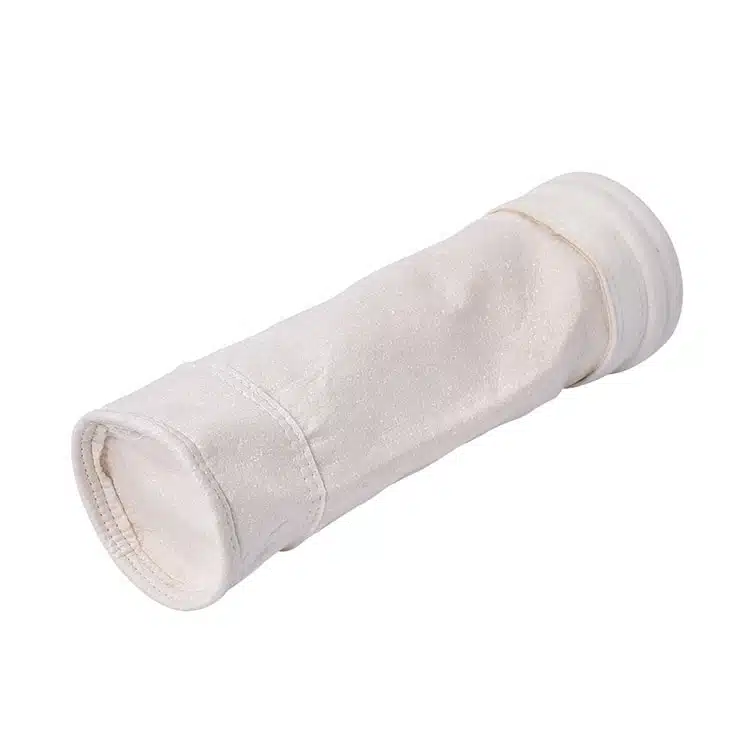
The selection table I would actually use before signing a PO
I do not trust vague spec sheets. The table below compresses the ugly part into a buying view: polyester is strong when the duty is dry and boring, conditional when liquid service is mild and controlled, and dangerous when moisture, acid, alkali, or heat start working together. That read is grounded in EPA’s warnings on condensation and bag damage, Donaldson’s polyester bag media data, and Celanese’s hydrolysis warning.
| Service condition | Polyester verdict | Why I say that | Better move when the duty turns ugly |
|---|---|---|---|
| Dry nuisance dust at or below about 135°C | Strong fit | Good abrasion resistance, acceptable dust-cake release, cost discipline | Stay with polyester felt baghouse filter bags |
| Dry dust with temperature spikes toward 149°C | Conditional fit | Surge tolerance exists, but margin gets thin fast when process discipline is weak | Consider higher-spec media and tighter monitoring |
| Hot, wet gas with condensation or acid dew-point risk | Poor fit | Condensation blinds bags, acid exposure and moisture raise failure risk | Move toward PTFE or a media built for harsher duty |
| Neutral or mild liquid filtration | Conditional fit | Polyester felt filter bags can work when chemistry and temperature stay honest | Validate with SDS, pilot data, and housing fit |
| Strong acids, strong alkalis, oxidizers, or hot aqueous service | High risk | Hydrolysis and chemical attack turn “cost savings” into repeat failure | Check polypropylene or PTFE based on actual chemistry |
| Cleanliness-sensitive, purity-sensitive filtration | Usually not first pick | Fiber control and chemical margin matter more than purchase price | Use a cleaner-service media with documented compatibility |
Compliance bills are real, and they are rarely caused by one bad bag alone
Not theoretical anymore.
When filtration discipline breaks down, the cost is not limited to changeouts and pressure drop; sometimes it spills into enforcement, monitoring upgrades, and public scrutiny. In September 2024, EPA said its settlement with Federal Cartridge in Minnesota would reduce emissions by more than 1,700 pounds of particulate matter per year and more than 400 pounds of lead per year, while imposing a $349,471 penalty and requiring three new lead-controlling baghouses with secondary HEPA filtration plus scavenger hooding. EPA’s settlement notice is the kind of document every procurement team should read before calling filtration “just a consumables cost.”
I am not saying one polyester bag caused that case. I am saying the industrial habit of under-specifying filtration is expensive, and the bill eventually reaches operations, EHS, and legal. That is also why your article should naturally point readers toward Why Filter Bags Collapse and How to Prevent It once they start describing distorted rings, bypass, unstable ΔP, or premature bag failure. Failure analysis is not a side topic. It is where credibility is won or lost.
What polyester filter bags are really for in 2026
Here is my answer.
Polyester filter bags for industrial filtration are still best treated as tough, cost-aware workhorses for dry particulate service and selected mild liquid duties, not as universal media that can be pushed into every hot, wet, or chemically aggressive line simply because the unit price looks comfortable on a spreadsheet. Why keep paying for the same predictable mistake?
If I were writing this for a plant manager, I would say it even more plainly. Use polyester when the job is honest. Use polypropylene when wet chemistry starts winning the argument. Use PTFE when failure costs more than the premium. And if the reader is close to a purchase, the most natural internal path from this page is your liquid filter bag selection guide, then your bag filter housing basics for industrial buyers, then your clear filter bag specification sheet guide. That sequence mirrors how real buyers decide.
FAQs
What are polyester filter bags for industrial filtration?
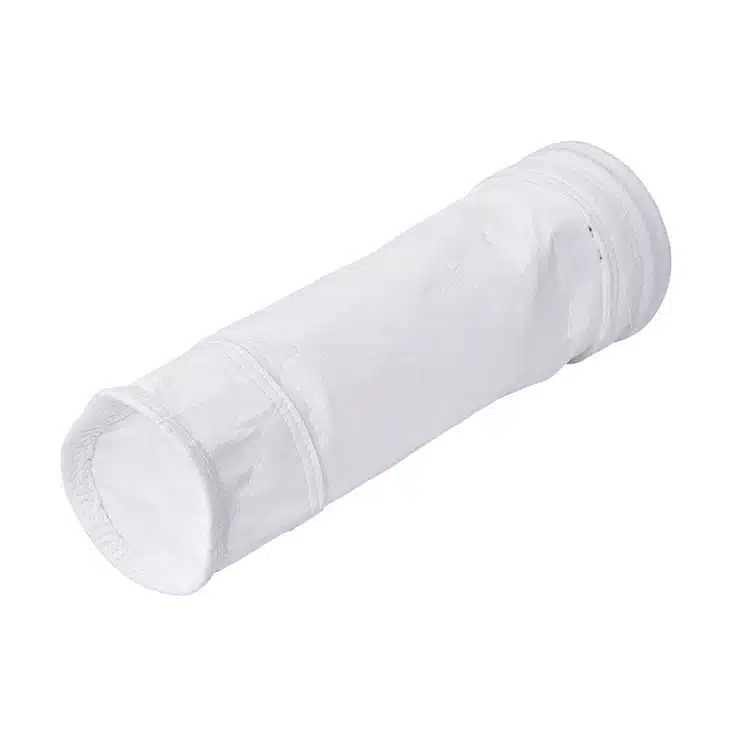
Polyester filter bags for industrial filtration are industrial felt or woven bag media, usually built from PET polyester, designed to capture particulate in dust collectors or liquid-bag housings where users need abrasion resistance, stable dimensions, and moderate heat tolerance without paying PTFE money or pretending the chemistry is harsher than it is.
In practice, they fit best when the process is dry or chemically mild, the service temperature is controlled, and the plant is not asking one bag to solve moisture, corrosion, and fine-particle polishing at the same time.
When should I choose polyester felt filter bags instead of polypropylene?
Polyester felt filter bags should be chosen over polypropylene when the duty is mainly dry particulate capture, temperature runs above ordinary PP comfort zones, abrasion matters more than wet-chemistry resistance, and the process does not expose the bag to prolonged hot aqueous acid, alkali, or hydrolysis conditions that punish polyester fibers.
My blunt answer is this: if the fight is dry dust and wear, polyester is often the cleaner answer; if the fight is wet chemistry, polypropylene usually deserves the first hearing.
Are polyester filter bags good for liquid filter bags?
Polyester liquid filter bags can work in industrial liquid filtration when the fluid is chemically honest, temperature is controlled, particle loading suits depth felt, and the plant is not confusing a low purchase price with universal compatibility, because polyester performs far better in some neutral or mild services than in aggressive wet chemistry.
That is why I would never approve a polyester liquid bag from micron size alone; I would want the SDS, pH range, temperature profile, and exposure time before I signed anything.
How do I choose polyester filter bags for industrial filtration?
To choose polyester filter bags for industrial filtration, define the particle size target, service temperature, pH or solvent profile, moisture exposure, bag size, ring style, housing seal design, allowable pressure drop, and replacement interval before comparing prices, because polyester succeeds only when the duty cycle matches the fabric instead of the buyer’s budget wish.
On your site, that buying logic is already supported by the right pages: micron rating first, then bag size and housing fit, then a clean specification sheet, then the RFQ. That is the order I would trust.
Your next move before another bad PO gets approved
Do this next.
Take this article and make it pull readers into decision pages, not generic category pages. Inside the body, keep the natural anchors to PTFE vs polypropylene vs polyester filter bags, What Is Micron Rating for Filter Bags?, Liquid Filter Bag Selection Guide, Bag Filter Housing Basics for Industrial Buyers, How to Write a Clear Filter Bag Specification Sheet, and Why Filter Bags Collapse and How to Prevent It. Then close with one clear ask: send fluid name, temperature, pH, micron target, bag size, ring style, and housing model before asking for price. Why let procurement buy ambiguity one more time?


