
Jadual Kandungan
The honest answer buyers usually do not get
Yes, sometimes.
I have watched too many suppliers answer this question with a cheerful “of course” because it makes the product sound economical, even though the real answer depends on Nylon 66 chemistry, particle load, bag construction, differential pressure, wash method, and whether the bag is doing rough screening at 100 µm or protecting a touchy downstream step at 5 µm. Why do vendors keep pretending reuse is a moral virtue instead of a process decision?
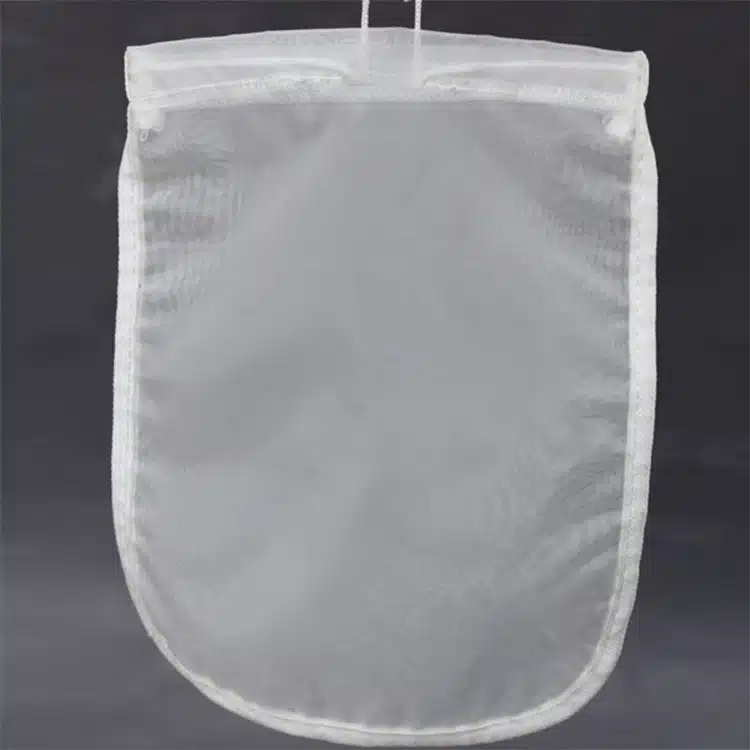
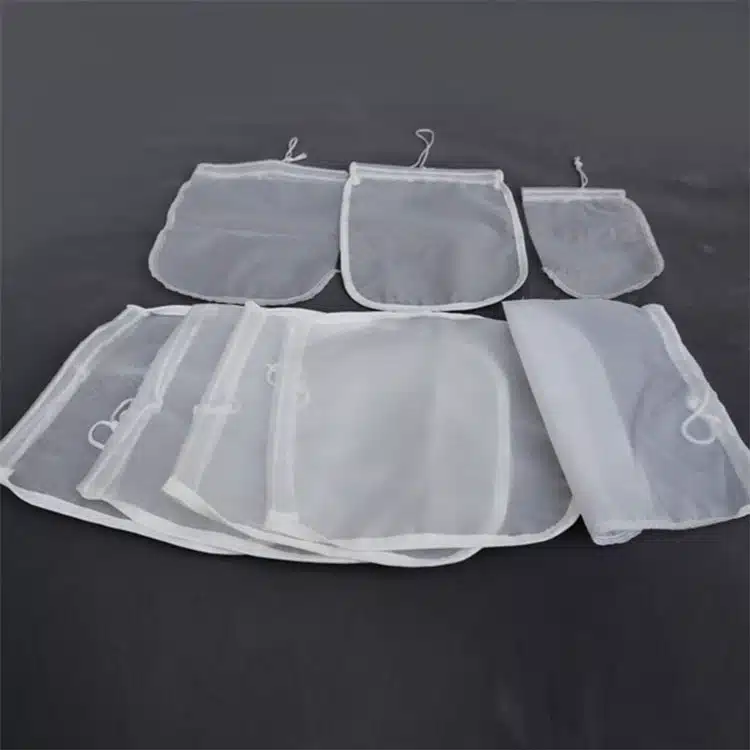
My view is blunt: nylon mesh filter bags are often reusable, but not endlessly reusable, and not safely reusable in every service. If the bag is a monofilament surface-media style, the liquid is chemically compatible, the solids release cleanly, and the seams, collar, and mesh openings still hold shape, washing can make sense. If the bag is blinded, stretched, chemically softened, biofouled, or tied to a sanitary line, reuse turns from thrift into self-sabotage.
That distinction matters more now than buyers admit. Standard kebangsaan pertama EPA untuk PFAS dalam air minuman set enforceable limits of 4.0 parts per trillion for PFOA and PFOS and 10 parts per trillion for PFNA, PFHxS, and GenX chemicals, and Reuters melaporkan that public water systems were given three years to monitor and five years to reduce exceedances. In other words, filtration decisions that looked “good enough” in 2019 do not look so clever in 2026.
If you want the fast internal path before we go deeper, your own Panduan pemilihan beg penapis cecair dan Panduan penarafan mikron beg penapis are the right starting points, because most bad reuse decisions begin when people obsess over washing and ignore micron, solids loading, and bag duty.
When reusable nylon mesh filter bags are actually the smart choice
Three tests first.
I reuse nylon mesh bags only when the bag is doing honest surface filtration, the captured solids can be removed without tearing up the mesh, and the cleaning method is gentler than the process itself, because that is the only version of “reusable nylon mesh filter bags” that saves money instead of moving failure to next week. Does that sound less romantic than the sales pitch? Good.
In real plants, reusable nylon mesh filter bags tend to make the most sense in utility water, process water, paint, ink, and resin prefiltration where the goal is visible solids control, pump protection, nozzle protection, or upstream load reduction rather than final sterile polishing. That lines up with your own site architecture: the nylon mesh filter bag application guide for water, paint, ink, and resin positions nylon where broad liquid compatibility and practical screening matter, while Beg penapis PTFE untuk bahan kimia agresif are clearly separated for nastier chemistry.
Here is the version I would actually put in an SOP:
| Service condition | Reuse decision | Bacaan terus terang saya |
|---|---|---|
| Clean water or utility water, 50–200 µm, low sticky solids | Yes, often | This is where washable filter bags can earn their keep |
| Paint, ink, or resin prefiltration with removable gels or clumps | Conditional | Reuse works only if the mesh releases solids fully and the bag is inspected under light |
| Fine capture below 10–25 µm with unstable solids load | Biasanya tidak | The tighter the capture target, the faster “washed” becomes “unreliable” |
| Hot caustic, oxidizers, strong acids, solvent-heavy streams | No, unless fully validated | This is where nylon gets blamed for a chemistry mistake |
| Food, beverage, pharma, or hygiene-sensitive duty | Only with strict validation | “Looks clean” is not a sanitation standard |
| Bags showing seam fatigue, stretched mesh, warped collar, or blind spots | Tidak | Stop negotiating with scrap |
And let me say the rude part out loud. Most filter bags are not retired too early. They are retired too late. By the time operators start asking whether they can wash and reuse a bag, the bag has often already told them the answer through rising ΔP, uneven staining, bag wrinkling, or ugly change-outs.
That is exactly why your own Asas rumah penapis beg untuk pembeli industri dan Mengapa beg penapis runtuh dan cara menghalangnya belong in this article’s internal path. I have seen too many “dirty bag” complaints that were really bent baskets, bad ring seating, reverse-flow shocks, or housings that never supported the bag correctly in the first place.
How to clean nylon mesh filter bags without killing them early
Start gently.
The best way to clean nylon mesh filter bags is to remove the bag carefully, turn it inside out if construction allows, rinse from the clean side toward the dirty side, use mild compatible detergent only when needed, avoid aggressive brushing, avoid hard creasing, and dry it completely before reinstalling, because the whole point is to remove lodged solids without enlarging the mesh openings or weakening the seams. Why do so many plants clean filter bags like they are punishing them?
My preferred sequence is boring, which is exactly why it works:
Rinse direction matters more than people think
I flush opposite the normal contamination path whenever possible. If solids entered from the dirty side, I want wash water to push them back out, not deeper into the weave. This is basic, but people still ignore it.
Mild chemistry wins
Warm water is usually enough for many water-based services. For tougher deposits, I use only cleaning chemistry that is already confirmed against nylon compatibility and the actual contaminant. Not “probably okay.” Confirmed.
Compressed air is where smart people get careless
Yes, air can help dry or dislodge light debris. But I do not like watching operators turn a reusable nylon mesh bag into a test specimen with shop air. OSHA’s compressed-air cleaning rule is plain: compressed air used for cleaning must be under 30 psi and used with effective guarding and PPE. That rule is about worker safety, but the engineering lesson is the same: violent cleaning is not disciplined cleaning.
Hot, harsh cleaning is not a free lunch
Nylon is a polyamide. Polyamides do degrade. A 2023 comparative study on polyamide hydrolysis notes that polyamides can suffer thermal, hydrothermal, oxidative, UV, and hydrolytic degradation, and older NIST work on polyamide degradation reported that heating nylon in concentrated hydrochloric acid for 12 hours can cause almost complete hydrolysis under severe conditions. That does not mean your bag dies on contact with warm water. It means hot acid, strong alkali, and repeated harsh wash cycles are not harmless just because the bag survived the first one.
Inspect under light, not by optimism
I hold the clean bag to light. I look for distorted openings, shiny blinded patches, seam separation, ring damage, embedded color, and local stretching. If the bag looks “mostly fine,” I assume it is already on probation.
The food-contact trap and the chemistry trap
This part matters.
A lot of people hear “nylon” and assume food-safe, washable, reusable, done. That is lazy thinking, and in regulated service it can get expensive fast, because material identity is only one piece of the answer while bag construction, additives, seals, contamination history, and cleaning validation decide whether repeat use is defensible. Isn’t that exactly where sloppy procurement gets embarrassed?
The legal baseline is real. 21 CFR 177.1500 on nylon resins says listed nylon resins may be safely used to produce articles intended for processing, handling, and packaging food, subject to the regulation’s conditions. That is not the same thing as saying every nylon mesh filter bag in every plant can be washed with whatever is handy and reused forever in a food line.
So here is my rule. If the bag has touched edible oil, syrup, beverage intermediate, biotech broth, or any line where validation and traceability matter, I stop treating “washable filter bags” like a maintenance trick and start treating them like a documented quality decision. That is also where your Sempadan beg penapis RFQ becomes useful, because a serious supplier should be told the chemistry, temperature, micron target, bag size, ring style, cleaning method, and reuse expectation before quotation, not after the first failure.
And chemistry still rules everything. If your process is creeping from neutral water service toward 10% HCl, 30% NaOH, oxidizers, or hotter solvent-rich duty, stop trying to bully nylon into a job that belongs to fluoropolymer media. That is where your internal bridge to Beg penapis PTFE untuk bahan kimia agresif is not just good SEO. It is process honesty.
The hard rule I would give any plant
Count cycles.
I do not believe in “reusable until it looks bad.” I believe in counted wash cycles, recorded clean ΔP, visual inspection criteria, and a rejection rule the operator does not have to invent during a rushed change-out, because informal reuse programs almost always drift into wishful thinking. Why leave bag life to mood?
My own shop-floor rule would look like this:
Reuse only when all four boxes stay checked
- The bag returns to stable flow and acceptable clean ΔP.
- The mesh openings remain uniform under light.
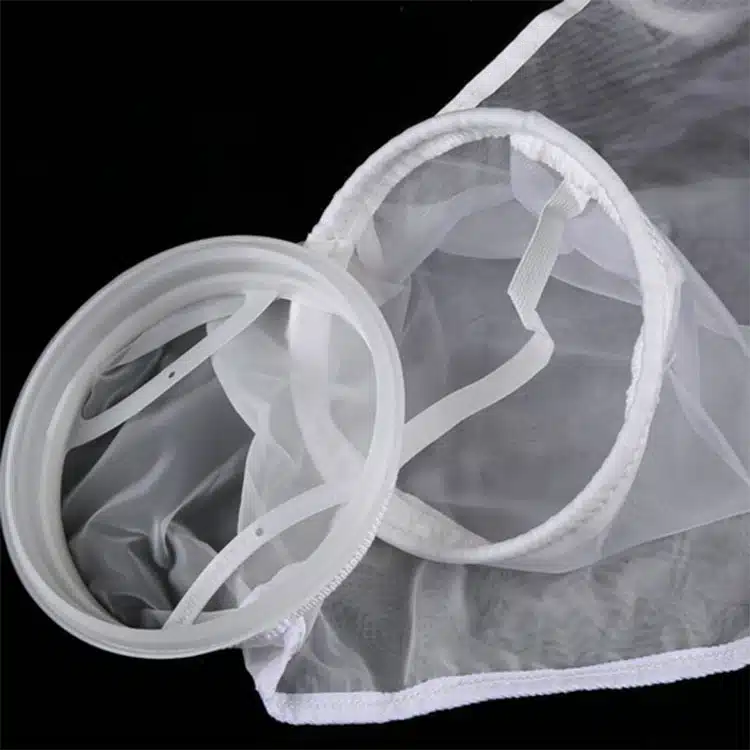
- The seams, collar, and ring show no fatigue or distortion.
- The process risk from one escaped particle is still low enough to tolerate reuse.
If even one box fails, I scrap the bag. No debate. No heroic second chances.
That is also why I dislike reuse conversations that ignore total cost. A washed bag that saves $8 but causes one defect, one nozzle blockage, one membrane foul, or one unscheduled stop was never the cheaper choice in the first place.
Soalan Lazim
Can you wash and reuse nylon mesh filter bags?
Yes, nylon mesh filter bags can often be washed and reused when they are monofilament surface-media bags used in chemically compatible liquid service, the captured solids can be removed without damaging the mesh, and the bag shows no seam fatigue, distortion, blinding, or contamination risk that would make repeat use unreliable.
I would still put guardrails around that answer. Reuse makes the most sense in coarse-to-medium screening, prefiltration, and stable liquid service. It becomes much less attractive in fine filtration, sanitary duty, or aggressive chemistry.
How many times can reusable nylon mesh filter bags be washed?
Reusable nylon mesh filter bags do not have one universal wash-count limit because the real answer depends on mesh grade, solids abrasiveness, wash chemistry, temperature, handling damage, and how tight the process tolerance is, which means the only honest number is the one your plant validates and tracks under real operating conditions.
My practical answer is less glamorous: count every wash, inspect every cycle, and retire the bag at the first sign of stretched openings, seam wear, ring distortion, or unstable clean ΔP. Plants that refuse to count cycles usually over-reuse.
What is the best way to clean nylon mesh filter bags?
The best way to clean nylon mesh filter bags is to rinse them from the clean side toward the dirty side, use mild compatible cleaning chemistry only when required, avoid excessive pressure, avoid sharp brushing or folding, dry them fully, and inspect the mesh, seams, and collar before reinstalling the bag into service.
I do not recommend “whatever the operator has nearby.” That is how bleach, caustic, solvent overexposure, and high-pressure air turn a reusable bag into a damaged one that still looks acceptable from two meters away.
When should you replace a nylon mesh filter bag instead of washing it?
You should replace a nylon mesh filter bag instead of washing it when the bag is blinded, chemically attacked, permanently stained by process residue, stretched at the mesh openings, damaged at the seams or ring, linked to sanitary or high-purity service, or no longer returns to an acceptable clean pressure-drop baseline after cleaning.
The hard truth is simple: if you are asking whether the bag is still trustworthy, it often is not. Filter bags are cheap compared with scrap, downtime, and argument.
Langkah Anda Seterusnya
Lakukan ini hari ini.
Pull one used nylon mesh bag from your line, document its micron rating, chemistry, temperature range, wash method, clean ΔP, and visible condition, then decide whether your current reuse habit is engineering or just folklore. After that, tighten the decision path on your site by linking this page to the Panduan pemilihan beg penapis cecair, Panduan penarafan mikron beg penapis, Asas rumah penapis beg untuk pembeli industri, Mengapa beg penapis runtuh dan cara menghalangnya, Beg penapis PTFE untuk bahan kimia agresif, dan Sempadan beg penapis RFQ.
That chain does something most B2B blogs fail to do. It moves the reader from a simple question into a buying decision with fewer excuses, fewer bad assumptions, and a much better chance of getting the right bag the first time.


