
Оглавление
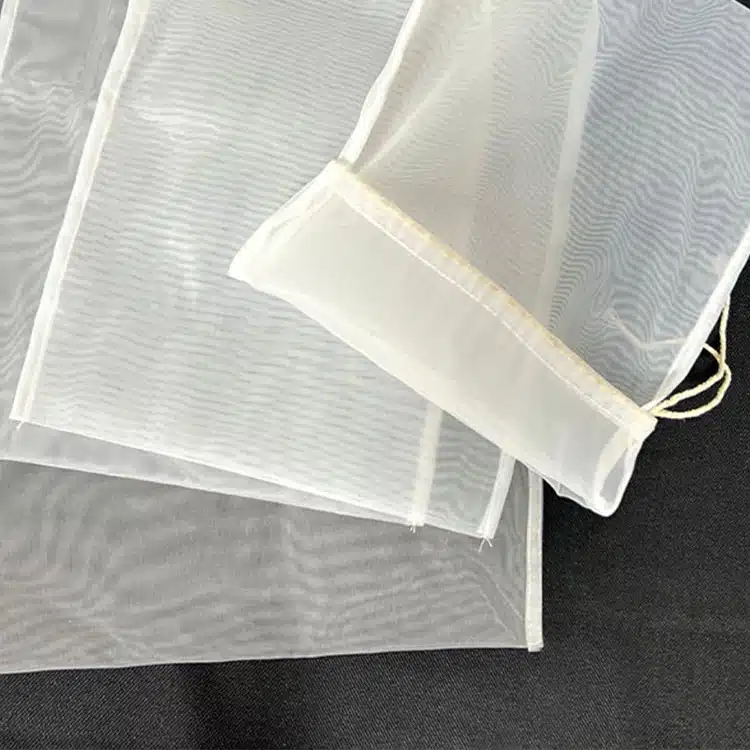
Clean Means Yield
Clean means yield.
In electronics filtration, a filter bag is not a cheap fabric sack with a micron sticker on it; it is a contamination-control part that sits uncomfortably close to wet-process chemistry, rinse loops, plating baths, recirculation systems, and the sort of purity-sensitive workflows where one bad choice can turn an ordinary consumable into a scrap generator. Why do so many buyers still pretend otherwise?
I have a blunt view. The phrase “cleanroom filter bags” gets abused. Buyers hear it and think they are buying some vague premium version of a standard product, when what they should be asking is much less glamorous: Does the media shed? What does it extract? How was it packaged? What ring touches the liquid? What happens at 40°C, 80°C, or 180°C? What happens when the bag is installed in a tired housing with a scratched basket and a lazy seal?
The hard evidence is not subtle. According to an OSTI analysis of semiconductor manufacturing yield, particulate and chemical contamination directly affect device yield, and a second OSTI paper on contamination control in semiconductor manufacturing states that particles as small as 0.05 µm can create killer defects. Reuters has also documented real contamination events at TSMC, including a 2019 chemical defect that hit production at Fab 14B и 2021 gas contamination issue affecting production lines in southern Taiwan. That is why I do not treat filter bag cleanliness as housekeeping. I treat it as yield protection.
And the money behind this sector is huge. Reuters reported in January 2026 that Micron plans a $24 billion memory plant in Singapore with 700,000 square feet of cleanroom space, while NIST’s 2024 manufacturing report says downtime eats 8.3% of planned production time and costs discrete manufacturing about $245 billion. When that is the economic backdrop, arguing over a few cents on filter bags looks clever only to people who have never owned a shutdown.
What Buyers Get Wrong About Filter Bag Cleanliness
Micron is not enough.
I keep seeing the same lazy mistake: a buyer asks for 1 µm, 5 µm, or 10 µm filter bags, gets a quote, and thinks the job is basically done, even though your own site already makes the opposite case in its рейтинг микронов фильтровального мешка объясняется, Руководство по выбору мешков для жидкостных фильтров, основы корпуса рукавного фильтра для промышленных покупателей, и how to write a clear filter bag specification sheet pages. I agree with that architecture, because it forces the buyer to connect particle target, chemistry, bag size, housing fit, and documentation instead of playing micron bingo.
Here is the comparison I would actually use.
| Requirement | Commodity-bag thinking | Electronics-grade thinking | Почему мне не все равно |
|---|---|---|---|
| Filter bag micron rating | “Just make it finer” | Match retention to downstream sensitivity, solids profile, viscosity, and ΔP trend | Fine media with bad flow control is still a bad system |
| Media shedding | Rarely discussed | Treated as a contamination source | Loose fibers can be as dangerous as incoming particles |
| Extractables and reactivity | Ignored until failure | Reviewed before approval | Chemistry does not forgive sloppy materials |
| Ring and seal fit | Treated as hardware trivia | Treated as part of cleanliness control | Bypass destroys the whole point of filtration |
| Packaging cleanliness | Assumed | Specified and verified | A clean bag packed dirty is still dirty |
| Документация | Optional brochure language | RFQ, spec sheet, and traceable confirmation | No document pack, no trust |
That table is not academic. It is the difference between “filter bags” as a purchase category and contamination control filter bags as an engineered decision.
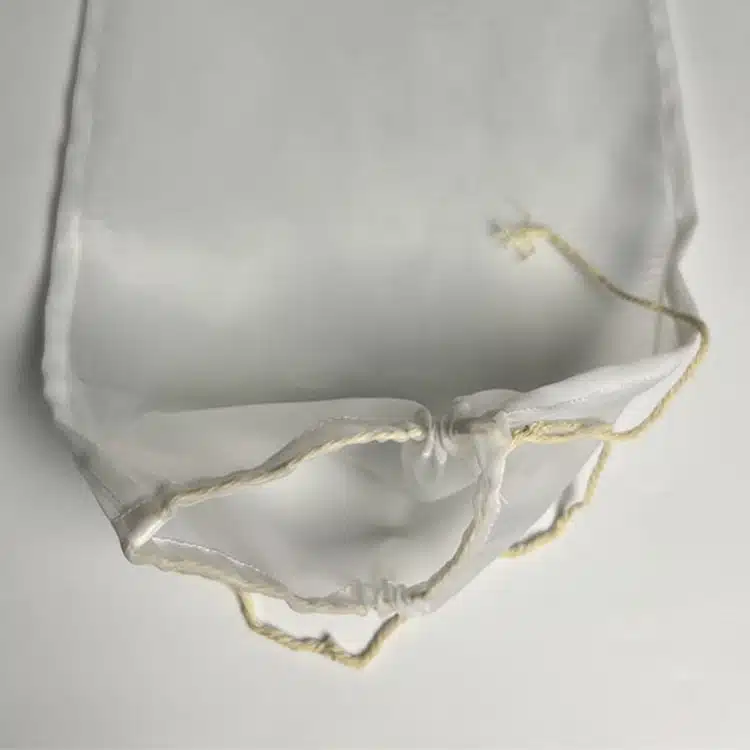
The Spec I Would Force Before Any Quote
Начните с верхнего течения.
If you want to know how to choose filter bags for electronics filtration, do not start with catalog adjectives like “high purity” or “premium media,” because those phrases are cheap, vague, and very often hiding the fact that nobody has defined the liquid, the solids load, the real temperature window, or the packaging discipline. Why let marketing do engineering?
Media choice comes after chemistry, not before it
I always ask for the ugly details first: chemical name, concentration, pH, oxidizer presence, normal temperature, peak temperature, viscosity, flow rate, clean ΔP, dirty ΔP, target particle range, and whether the bag is protecting a membrane, nozzle, cartridge, or process vessel. Your own content gets this mostly right. The site’s material-selection logic keeps separating honest general-duty service from high-risk, cleanliness-sensitive service, and that is exactly how serious semiconductor filtration should be discussed.
OSHA’s SDS brief matters here more than most buyers admit, because Sections 1 through 11 are where the boring facts live, and Section 10 is where incompatibilities and reactivity stop being somebody else’s problem. I read the SDS before I trust a supplier sentence. You should too.
PTFE is not a status symbol
PTFE is chemistry.
I like PTFE when the process is chemically nasty, purity-sensitive, or hot enough to punish softer media, and I think too many suppliers still oversell it like a luxury trim package rather than a materials decision. On your site, the cleanest commercial handoff for that argument is the custom PTFE liquid filter bag for pharma and electronics page, because it frames PTFE around high-purity liquid processing, broad chemical compatibility, rinseability, and configurable fit instead of empty prestige language. That is the right sales move.
But I am not romantic about fluoropolymers. PTFE can still be the wrong answer if the housing seat is damaged, the basket support is poor, the ring is wrong, or the bag is packaged like an afterthought. Clean media inside a sloppy vessel is still a sloppy system.
Housing fit decides whether the bag ever had a chance
Housing kills good bags.
This is the industry truth nobody likes because it shifts blame away from the consumable and back toward the installed system, yet your own основы корпуса рукавного фильтра для промышленных покупателей page says the quiet part out loud: sealing surfaces, support basket, closure, gasket, and change-out routine decide whether the filtration step behaves like control equipment or like a line delay with polished stainless. I would push every electronics-filtration reader through that page before I let them sign a PO.
Packaging and paperwork are part of cleanliness
Paperwork decides.
The best filter bags for cleanroom applications are rarely the bags with the loudest marketing; they are the bags with the dullest, most complete documentation, because clean packaging, bag identity, micron basis, ring style, housing fit, and repeatable construction are what keep one decent pilot run from turning into a messy production argument. This is exactly why your clear filter bag specification sheet page belongs in this topic cluster. It turns vague demand into a usable buying record.
And when operations starts blaming the media for everything, the next honest page is Почему разрушаются фильтровальные мешки и как это предотвратить, because collapse, bypass, and short life are often system failures wearing a consumables mask. I have seen that movie too many times.
The Cleanliness Requirements I Would Put in Writing
Write this down.
If I were approving cleanroom filter bags for an electronics line, I would not approve “5 µm PTFE, please quote.” I would approve a spec that states the liquid, concentration, temperature range, flow, solids profile, target micron rating, nominal or tighter retention basis, bag size, ring material, housing model, packaging expectation, cleaning expectation, and documentation pack in one place. Anything less is how bad assumptions sneak into good lines.
Here is my working rule set:
Requirement 1: Define the contamination target, not just the bag
If the bag is protecting a membrane, a plating bath, a rinse loop, a recirculation skid, or a sensitive downstream cartridge, say that plainly. A micron number without the protected asset is half a spec.
Requirement 2: Separate particle capture from bag cleanliness
These are not the same. A bag can hit a particle target and still shed fibers, leak at the seal, or arrive packaged badly enough to contaminate a purity-sensitive line.
Requirement 3: Treat semiconductor filtration as system control
A filter bag, the housing, the basket, the seal, the operator change-out routine, and the packaging discipline all belong in the same sentence. If your supplier keeps splitting those into different conversations, I would worry.
Requirement 4: Demand documentation before drama
Your site’s technical cluster is strongest when it acts like a buying system, not a blog: start with the рейтинг микронов фильтровального мешка объясняется, перейдите в Руководство по выбору мешков для жидкостных фильтров, force the hardware discussion through основы корпуса рукавного фильтра для промышленных покупателей, and close the commercial loop with the clear filter bag specification sheet. That is not decorative internal linking. That is the skeleton of a serious RFQ flow.

Вопросы и ответы
What are cleanliness requirements for filter bags in electronics filtration?
Cleanliness requirements for filter bags in electronics filtration are the documented limits on particle shedding, extractables, chemical incompatibility, seal bypass, and packaging contamination that a bag must meet before it touches purity-sensitive liquids, because a bag in this sector is a contamination-control component, not a generic solids catcher. In practice, I would also tie those limits to the housing, the change-out method, and the downstream asset being protected.
How do I choose filter bags for electronics filtration?
To choose filter bags for electronics filtration, start with the liquid chemistry, operating temperature, target particle retention, and downstream sensitivity, then force the supplier to document media type, micron basis, seam construction, ring material, packaging cleanliness, and housing fit, because micron alone does not predict cleanliness or uptime. My rule is simple: if the spec cannot survive procurement, it was never a real spec.
Are PTFE filter bags better than nylon for semiconductor filtration?
PTFE filter bags are usually better than nylon for semiconductor filtration when the duty combines aggressive chemistry, elevated temperature, and low-fiber-shedding expectations, but PTFE is still the wrong answer if the housing seat is damaged, the basket fit is sloppy, or the supplier cannot document the bag and package properly. I buy PTFE for risk control, not for bragging rights.
What micron rating should a cleanroom filter bag use?
The right micron rating for a cleanroom filter bag is the smallest retention level that protects the downstream process without driving differential pressure, premature blinding, or unstable flow, and in electronics filtration that decision must be matched to particle shape, solids loading, viscosity, and whether the bag is doing prefiltration or final protection. A finer bag is not automatically a cleaner result.
Do cleanroom filter bags need special packaging and documentation?
Yes, cleanroom filter bags should arrive with controlled packaging and usable documentation, because a technically good bag can still contaminate an electronics line if it is packed dirty, labeled vaguely, or shipped without the data that confirms media identity, compatibility, micron basis, and fit. This is the part cheap suppliers hope you forget.
Ваш следующий шаг
Stop guessing.
If you want this page to convert the right buyer, keep the argument hard and specific: electronics filtration is about contamination control, not bargain shopping; filter bag cleanliness requirements are about media behavior, packaging, ring fit, and housing discipline, not micron alone; and the filter bags that belong in cleanroom and semiconductor filtration should be specified like process components, not like office supplies.
Then make the reader move. Send them from the education layer into your рейтинг микронов фильтровального мешка объясняется, ваш Руководство по выбору мешков для жидкостных фильтров, ваш основы корпуса рукавного фильтра для промышленных покупателей, ваш clear filter bag specification sheet, and, when they are ready to buy for purity-sensitive duty, your custom PTFE liquid filter bag for pharma and electronics. That is how this article stops being content and starts acting like a sales engineer.


