
Jadual Kandungan

The finish buyers romanticize
Tiga perkataan dahulu.
A water and oil repellent filter bag finish is not some mystical performance upgrade, and I think the industry hurts itself when it sells it that way, because the real job is brutally simple: keep moisture and oily contamination from turning a healthy dust cake into a sticky, blinding, pressure-drop nightmare inside a collector that was already supposed to be running near its real operating window. Why do so many buyers pay for a finish before they verify the failure mode?
That matters because the baghouse itself is not a weak technology when it is run correctly. The EPA says fabric filters generally achieve collection efficiencies greater than 99%, and its baghouse guidance says a properly designed and well-run system will generally deliver 99.9%+ particulate-matter collection efficiency, while pressure drop rises as dust builds on the media surface. In other words, the water repellent filter bag conversation begins after you admit the collector is already a high-efficiency device, not before. EPA’s fabric-filter guidance says that plainly enough.
Now the ugly part.
Ohio EPA’s fabric-filter guide warns that operating below minimum inlet temperature can allow moisture or acid condensation and lead to bag blinding or chemical attack, and a CDC/NIOSH dust-control handbook makes the same point in blunter language: condensation and blinding show up when fabric collectors are asked to handle moist hot gases. That is the real reason oil and water repellent filter bag finish specifications exist. They are not there to make brochures prettier. They are there to buy margin when water, oil aerosol, or sticky carryover starts trying to wet the media. Ohio EPA’s fabric filter guide is worth reading with a pen in your hand.
If I were shaping internal movement on bestfilterbag.com, I would not dump readers from this page into a generic catalog. I would send definition-seeking traffic into filter bag micron rating basics, push substrate-level buyers toward polyester filter bags for industrial filtration, route chemistry-sensitive readers into PTFE filter bags explained dan cara memilih beg penapis PTFE untuk bahan kimia agresif, then close serious procurement intent with how to buy filter bags for high-temperature service dan how to write a clear filter bag specification sheet. That is how industrial buyers actually think. Not by category page. By risk sequence.
Where the finish actually earns money
Kebenaran pahit dahulu.
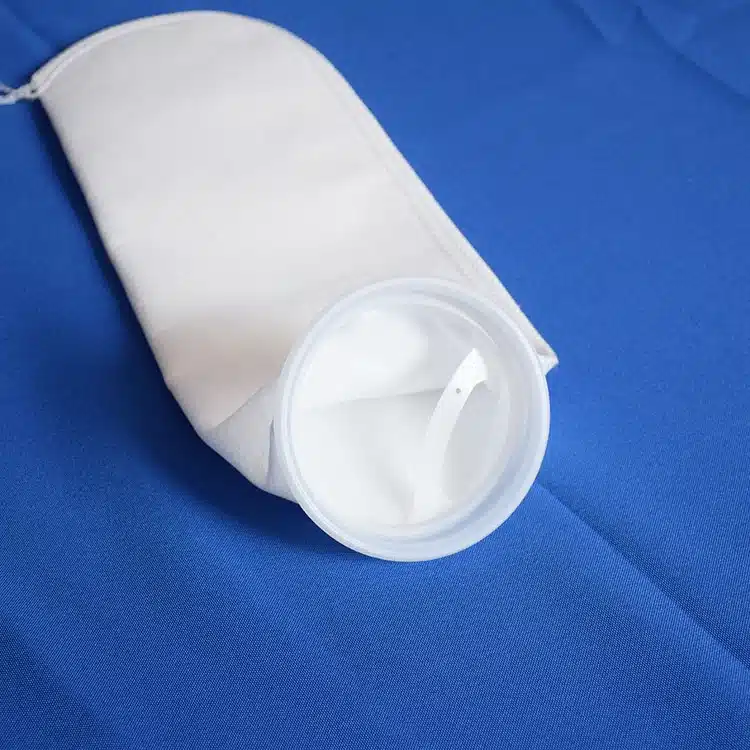
The best water and oil repellent filter bag is usually not the one with the most dramatic coating claim, because finish selection only pays when the substrate, operating temperature, cleaning method, and dust behavior already make sense, while the plain felt version is losing ground to intermittent condensation, oily particulate, or stubborn cake release. Why pretend a finish can rescue bad engineering?
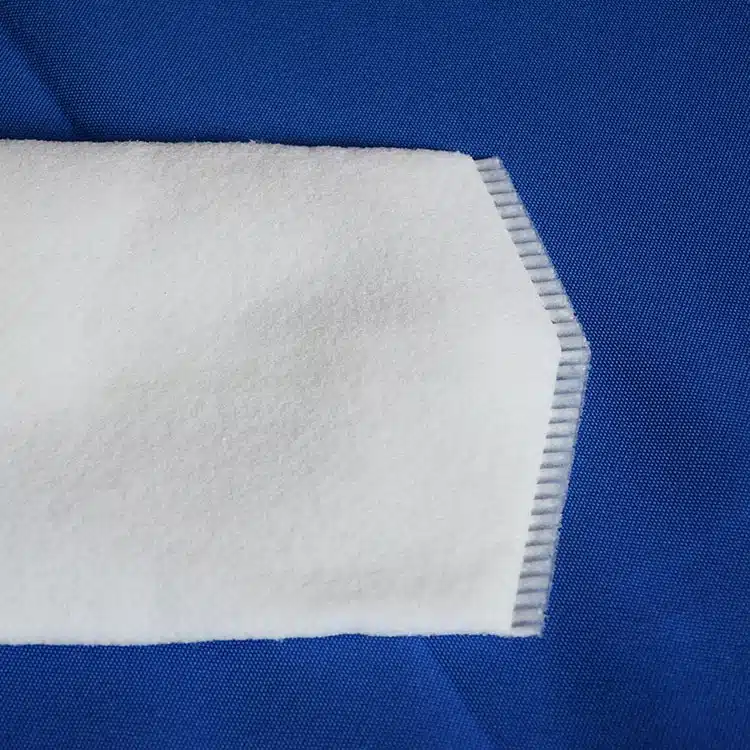
In practical terms, polyester needle felt oil and water repellent media usually makes the most sense when the plant likes polyester as the base workhorse but needs extra protection against wetting, oily contamination, or shutdown-related condensation, whereas a full PTFE path belongs in harsher chemical or hotter service where surface treatment alone will not carry the load. That distinction is exactly why your internal handoff from a finish article should move readers into polyester filter bags for industrial filtration for baseline logic, then into PTFE filter bags explained if the duty gets chemically ugly.
| Option | What it really buys you | Where it usually makes sense | The mistake I see most |
|---|---|---|---|
| Untreated polyester felt | Lowest-cost baseline for honest dry duty | Stable dry dust, controlled temperature, no meaningful oil or condensation events | Assuming dry lab logic survives wet plant reality |
| Oil and water repellent finish on polyester needle felt | Better resistance to wetting, stickiness, and ugly cake release | Outdoor collectors, startup-shutdown cycling, intermittent moisture, oily particulate | Thinking the finish fixes bad dew-point control or weak pulse cleaning |
| PTFE membrane or PTFE media | Bigger jump in chemistry tolerance, cleanliness, and severe-duty margin | Corrosive service, hotter windows, emissions-sensitive duty, higher failure cost | Paying PTFE money to hide housing or operating mistakes |
So my opinion is blunt.
Among dust collector filter bag finishes, the oil and water repellent option is best treated as insurance, not salvation. If your collector is drifting below dew point, taking in outside moisture, or getting hit with oily carryover, the finish can slow the damage and improve release; if the cage is wrong, the pulse pressure is lazy, the temperature profile is uncontrolled, or the collector is fundamentally undersized, the finish just gives you a more expensive version of the same argument. Why are plants still shocked by that?
The chemistry question suppliers keep dodging
This part matters.
Minnesota’s pollution agency says PFAS are typically used in textiles to provide water repellence and oil repellence, and a PubMed-indexed paper on PFAS substitution in apparel reported the awkward truth many sales teams hate saying out loud: non-fluorinated finishes can perform well on water repellency, but they fall short on oil repellency compared with PFAS-finished fabrics. That is the tradeoff. That is the industry secret wrapped in polite language. If a supplier tells you a finish is “PFAS-free” and “equal in oil performance” without test data, I would not clap. I would ask for proof. See the Minnesota PFAS-in-textiles brief and this PubMed-indexed review on substituting PFAS chemistry
The legal backdrop is not theoretical either.
EPA announced on May 14, 2025 that it would keep national drinking-water limits for PFOA and PFOS while extending compliance timing, and by February 6, 2026 the agency was still highlighting that the CERCLA hazardous-substance listing for PFOA and PFOS remained affirmed. At the same time, Reuters reported 3M’s $10.3 billion settlement with public water systems over PFAS contamination, and New Jersey later said its proposed 2025 settlement with 3M could reach up to $450 million. So when I hear “oleophobic hydrophobic filter bag finish” with no chemistry disclosure behind it, I do not hear innovation first. I hear liability screening. EPA’s May 2025 PFAS update dan Reuters on 3M’s settlement are not niche reads anymore.
So what is my rule?
If the finish chemistry is not named, it is not specified. If the supplier will not state whether the finish is fluorine-free, fluoropolymer-based, PFAS-linked, or simply a marketing phrase attached to ordinary felt, the buyer is authorizing ambiguity. And ambiguity is where expensive filtration stories begin.
The specification I would demand before approving a PO
No soft edges.
Before anyone approves a water and oil repellent filter bag, I would want the base fiber named, the finish chemistry identified as clearly as the supplier can legally and commercially state it, the normal and upset temperature range documented, the dew-point history described, the dust or aerosol profile defined, and the acceptable clean-to-dirty differential-pressure window written into the spec. Why are buyers still acting like “polyester + finish” is a full specification?
I would also force the reader to stop treating micron like theology. This page should naturally pass technical readers into filter bag micron rating basics, because smaller numbers do not rescue the wrong finish, and it should end by pushing quote-ready traffic into how to write a clear filter bag specification sheet, because that is where you turn a vague “best water and oil repellent filter bag” request into a usable purchasing document.
And yes, I would ask uncomfortable questions.
Has the plant logged startup and shutdown temperatures? Has anyone mapped when condensation events actually happen? Is the oily carryover coming from upstream process variation, burner drift, compressor leakage, raw-material moisture, or outdoor ingress? Was the previous bag truly blinded, or was it mechanically abused and then blamed for politics? The finish decision gets smarter the minute the excuses get shorter.
Soalan Lazim
What is a water and oil repellent filter bag finish?
A water and oil repellent filter bag finish is a surface treatment applied to filter media, often polyester needle felt, to reduce wetting by condensed water and oily contaminants, limit premature caking and blinding, and preserve easier cake release in services where moisture or hydrocarbon carryover would otherwise shorten bag life. I think buyers should treat it as a process-risk tool, not a magic upgrade.
How do water and oil repellent filter bag finishes work?
Water and oil repellent filter bag finishes work by lowering the tendency of condensed water and oily contaminants to wet and penetrate the fiber surface, which helps the dust cake release more cleanly, slows pressure-drop growth, and reduces the chance that a damp, sticky layer turns normal filtration into chronic blinding. The finish helps most when the collector is otherwise correctly selected and operated.
When should I specify an oleophobic hydrophobic filter bag?
You should specify an oleophobic hydrophobic filter bag or oil and water repellent filter bag finish when the collector sees outdoor exposure, startup-shutdown cycling, hydrocarbon mist, damp raw material, or temperature swings near the dew point, but the base media and collector design are otherwise appropriate for the duty. If those conditions are constant and severe, I would start comparing PTFE options fast.
Is a water-repellent and oil-repellent finish the same as PTFE membrane or PTFE media?
No, a water and oil repellent finish is not the same thing as a PTFE membrane or a full PTFE filter bag, because a finish modifies the surface behavior of another substrate, while PTFE membrane systems and PTFE media change the filtration layer, chemical profile, and cost structure more fundamentally. That difference is where many bad RFQs are born.
Do water and oil repellent finishes create PFAS risk?
Maybe, and the answer depends on the exact chemistry, because some water- and oil-repellent textile treatments have used PFAS chemistry for the very properties buyers want, while non-fluorinated alternatives can lose oil repellency, which is why a serious buyer should demand a written chemistry declaration instead of a vague “eco finish” claim. I would not sign off without that paper trail.
Langkah Anda Seterusnya
Lakukan ini sekarang.
If you want this page to pull real engineers and procurement people instead of casual search traffic, add one hard CTA below the fold that asks for substrate, finish chemistry, continuous and peak temperature, dew-point history, dust profile, bag size, cage dimensions, clean and dirty ΔP, and current bag-failure mode, then route that lead into how to write a clear filter bag specification sheet. I would also place contextual internal links to polyester filter bags for industrial filtration, PTFE filter bags explained, dan how to buy filter bags for high-temperature service inside the body, not in a lazy block at the end. That is how you turn the phrase “water and oil repellent filter bag” into qualified commercial intent.
My closing view is simple. Finish is useful. Spec is everything. And if the supplier cannot explain both in plain English, keep your purchase order in your pocket.


