
Table des matières
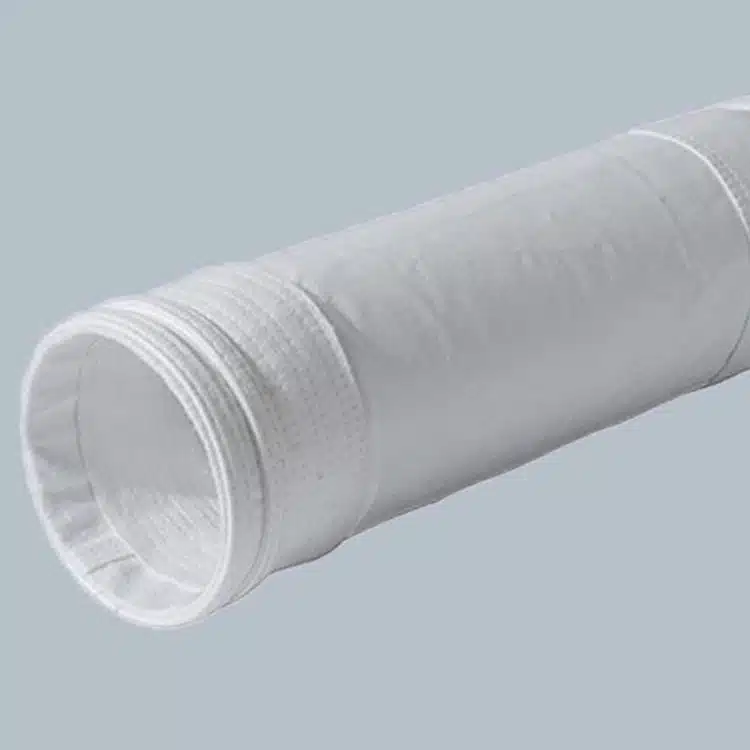
PTFE gets oversold
Trois mots d'abord.
I have watched suppliers pitch PTFE filter bags like a prestige badge, even though the real buying job starts with ugly details such as HCl versus NaOH, 10% versus 32% concentration, 40°C versus 180°C, batch transfer versus continuous recirculation, and whether the bag is doing bulk capture or protecting a membrane, nozzle, or fill point downstream. Why are we still buying fluoropolymers like branding instead of engineering?
Here is my blunt view: PTFE filter bags are excellent when the process is chemically nasty, purity-sensitive, or hot enough to punish softer media, but they are a waste of money when the real problem is bad housing fit, a bent basket, the wrong ring, or a lazy spec sheet. That is why the strongest internal route on your site is not random. It already moves the reader from ce que signifie réellement l'indice de micron pour les sacs filtrants à la guide de sélection des poches filtrantes pour liquides, puis en les bases de l'enveloppe du filtre à manches pour les acheteurs industriels, puis en pourquoi les manches filtrantes s'affaissent et comment les éviter, and finally into the Modèle de demande de prix pour les sacs filtrants. That is not decorative interlinking. That is buyer intent sequencing.
What PTFE filter bags actually buy you in chemical service
PTFE is chemistry.
Polytetrafluoroethylene, or PTFE, with the repeating formula (C2F4)n, earns its place when the liquid would make ordinary polymer media swell, soften, shed, or age badly, and that is exactly why serious buyers keep PTFE liquid filter bags on the table for acid/alkali duty, solvent-heavy service, plating lines, etching baths, reagent filtration, and hot corrosive loops. But do you know what PTFE does pas buy you?
It does not buy you a blank check. I do not trust any supplier who says “PTFE is chemically resistant” without asking for the exact chemical formula, concentration, dwell time, peak temperature, pressure, and cleaning cycle. Hydrochloric acid is not sulfuric acid. Sodium hydroxide is not a mixed solvent. Startup conditions are not steady-state conditions. And a bag that survives 25°C may age very differently at 120°C or 180°C.
And the cost of getting this wrong is not small. According to Rapport annuel du NIST sur l'économie manufacturière américaine : 2024, downtime eats 8.3% of planned production time and costs discrete manufacturing about $245 billion. That is why I laugh when someone calls bag media a “small consumable decision.” Small parts shut down big lines all the time.
Where PTFE wins, and where it wastes money
I will make this impolite.
PTFE filter bags usually win when the process needs chemical resistance, surface cleanlinesset stable media behavior under heat or aggressive chemistry. They do not automatically win in ordinary water service, cheap coarse screening, or badly supported housings where the bag never had a fair install to begin with. Why pay PTFE money to hide a mechanical mistake?
Your own PTFE cluster already points in the right direction. It ties PTFE filter bags to aggressive media, acid/alkali duty, pharma and electronics, low-fiber-shedding surfaces, 0.1–100 µm options, and even a 260°C acid/alkali variant. That positioning is stronger than what most supplier sites publish because it connects PTFE to process pain instead of vague “premium” language. A reader who needs a concrete product path should land naturally on Sacs filtrants en PTFE pour les produits chimiques agressifs, le Sac filtrant en PTFE à 260°C pour la filtration des acides et des alcalis, or the custom PTFE liquid filter bag for pharma and electronics.
Cleanliness is where PTFE earns its invoice
Clean means money.
In purity-sensitive service, I care less about marketing words and more about whether the bag behaves like a low-fiber-shedding filter bag with a clean, non-reactive surface that operators can rinse, handle, and replace without creating new contamination. That is why non-stick PTFE filter bags and clean process filter bags keep showing up in pharma-adjacent and electronics-adjacent conversations. The surface behavior matters. The documentation matters more. And the housing fit matters most. Why pretend cleanliness is only about the media?
This is also where regulators ruin lazy thinking. The FDA’s aseptic processing guidance et 21 CFR Part 211 make one thing plain: contamination control, cleanability, and disciplined manufacturing are not optional in drug production. In the FDA’s FY2024 Report on the State of Pharmaceutical Quality, the agency said it issued 105 quality-related warning letters to human drug manufacturing sites, the highest number in five years. Then the field examples kept coming: Reuters reported on April 9, 2026 that Granules India tightened oversight after an FDA warning tied to equipment cleaning lapses and contamination-control failures, and Reuters reported on October 4, 2024 that Thermo Fisher’s Greenville plant breached FDA rules intended to prevent drug contamination. That is the hard truth: cleanliness failures do not stay on the shop floor. They move into inspections, delay, remediation, and reputation damage.
PTFE for pharma and electronics is not a slogan
I have seen this mistake.
Buyers hear “pharma” or “electronics” and jump straight to fluoropolymer media, even though the adult question is whether the supplier can document micron range, ring style, surface behavior, bag size, packaging cleanliness, and housing compatibility well enough to keep the process stable from PO to repeat order. If they cannot, what exactly are you buying?
That is why your internal links should keep doing real work. A reader who is thinking about high-purity duty should not be left on a generic category page. Push that traffic into custom PTFE liquid filter bags for pharma and electronics, then back into les bases de l'enveloppe du filtre à manches pour les acheteurs industriels, because clean media inside a sloppy vessel is still a sloppy system.
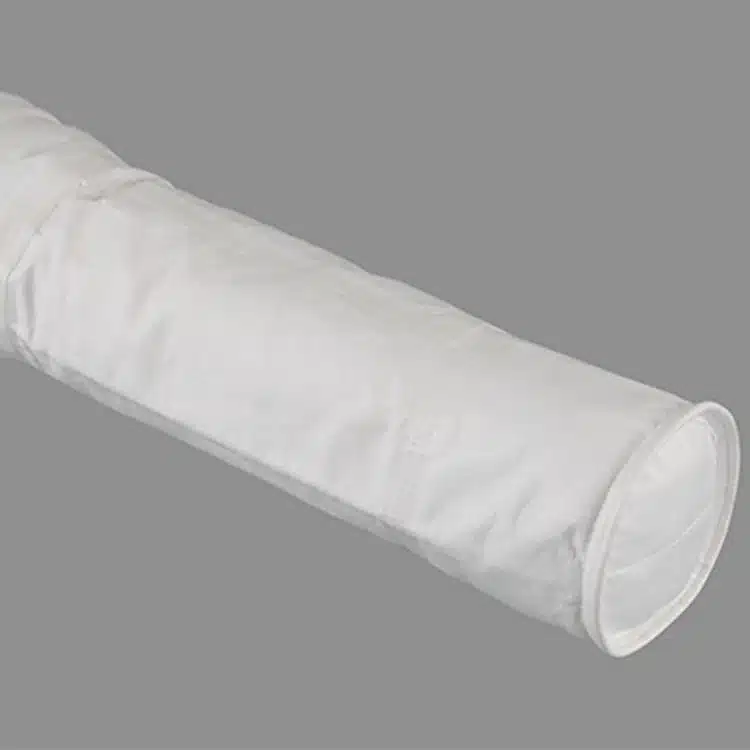
The comparison buyers actually need
Most tables lie.
They compare bag price and ignore chemistry, heat, cleanliness, and maintenance behavior, which is exactly how a cheaper bag turns into a more expensive quarter. So here is the table I would actually use.
| Buying question | Sacs filtrants en PTFE | Nylon filter bags | Stainless reusable mesh | Ma lecture |
|---|---|---|---|---|
| Aggressive acids and alkalis | Strong fit when the chemistry and temperature window is documented | Often the wrong bet in harsher chemical duty | Sometimes viable, but not the default answer for fine liquid polishing | PTFE leads here |
| Cleanliness-sensitive pharma or electronics duty | Strong fit because of smooth, non-reactive, low-fiber-shedding behavior | Usable in broader duty, but less convincing when purity risk rises | Better for reusable coarse screening than purity polishing | PTFE usually wins |
| High-temperature service | Better than ordinary polymer media when the full service envelope is known | Can age badly as heat rises | Good for coarse hot duty, not a substitute for all fine capture | PTFE or metal, not nylon by default |
| General water, paint, ink, resin service | Often overkill | Usually the more honest economic choice | Useful only in narrow reusable cases | Nylon often wins |
| Housing mismatch or bad basket support | Fails expensively | Fails cheaply | Fails loudly | Fix the hardware first |
| Lowest first cost | Non | Oui | Non | Price-only buying creates bad stories |
The hard truths suppliers keep ducking
Fix the system.
I do not trust PTFE filter bags as an automatic upgrade because too many “media failures” are really geometry failures, support failures, or RFQ failures. A wrong Size #1 versus Size #2 call, a steel ring where a PTFE contact surface is needed, a scratched basket, a loose seal, or a copied micron spec with no solids profile will wreck an expensive bag just as efficiently as a cheap one. Why blame fluoropolymer media for a bad seat?
That is where your site has an advantage. It already has the pieces to stop weak buying behavior: les normes de taille des sacs expliquées, les bases de l'enveloppe du filtre à manches pour les acheteurs industriels, pourquoi les manches filtrantes s'affaissent et comment les éviter, et le Modèle de demande de prix pour les sacs filtrants. Put plainly, the article should not end at “PTFE is chemically resistant.” It should move the buyer toward “here is the exact bag, housing, fit, and data package I need.”
What I would ask before approving a PTFE spec
Ask better questions.
I would not sign off a PTFE filter bag until I had the fluid name, chemistry, concentration, operating and peak temperature, viscosity, solids profile, target micron rating, bag size, ring style, housing model, clean and dirty differential pressure, and change-out method in one document. That sounds strict. It is. And it saves money.
My opinion is stronger than that. If the supplier cannot answer fast with a documented recommendation, the supplier is guessing. And I do not buy guesses for corrosive service.

FAQ
Qu'est-ce qu'un sachet-filtre en PTFE ?
PTFE filter bags are liquid filtration bags made with polytetrafluoroethylene media, usually specified when the process combines aggressive chemistry, cleanliness demands, and temperature exposure that would make lower-spec media age badly, shed contaminants, or lose stable performance faster than the plant can tolerate.
I would describe them as a materials decision, not a prestige upgrade. They make sense when the chemistry and cleanliness risk justify them.
Quand dois-je choisir le PTFE plutôt que le nylon ?
You should choose PTFE over nylon filter bags when the liquid contains acids, alkalis, oxidizing chemistries, solvent exposure, or purity demands that make nylon’s lower upfront cost irrelevant, because the real comparison is chemical survival, fiber control, downtime risk, and how much process upset the line can absorb.
My rule is simple: if chemical attack or cleanliness can ruin the run, nylon’s lower price stops being the main story.
Are PTFE filter bags good for pharma and electronics?
PTFE filter bags can be a strong fit for pharma and electronics when the process needs a clean, non-reactive, low-fiber-shedding filtration surface and the supplier can document media identity, micron range, ring configuration, packaging discipline, and housing fit, because purity-sensitive lines punish vague specs and weak documentation very quickly.
I would still verify the whole system. Clean media in a sloppy housing is not a clean process.
Les sachets-filtres en PTFE peuvent-ils contenir des produits chimiques agressifs à haute température ?
PTFE filter bags can handle aggressive chemicals at elevated temperature only within a defined compatibility window that includes the exact chemical formula, concentration, dwell time, pressure, and operating range, because saying “PTFE is chemically resistant” without those variables is sales language, not engineering.
That is why buyers should stop asking only for “max temperature” and start asking what the bag sees during startup, shutdown, and cleaning too.
Quelles informations dois-je envoyer avant de demander un devis pour un sachet-filtre en PTFE ?
A serious PTFE filter bag quote request should state the process fluid, concentration, pH, operating and peak temperature, target micron rating, solids profile, bag size, ring style, housing model, flow rate, allowable differential pressure, cleaning method, and any cleanliness or documentation requirements, because that is what lets a supplier recommend instead of guess.
Bad RFQs create bad pricing, bad fit, and bad blame. I have seen that loop too many times.
Votre prochaine étape
Faites-le maintenant.
Take this H1 and make it work like a sales engineer, not a brochure writer. Keep the reader on the PTFE path with links to ce que signifie réellement l'indice de micron pour les sacs filtrants, les bases de l'enveloppe du filtre à manches pour les acheteurs industrielset pourquoi les manches filtrantes s'affaissent et comment les éviter. Then close the article with the Modèle de demande de prix pour les sacs filtrants or the custom PTFE liquid filter bag for pharma and electronics page, depending on whether the reader is still learning or already buying.
That is the move. Stop selling PTFE as “better.” Start proving when PTFE is the least-wrong answer for the chemistry, the cleanliness target, and the line you actually have.


