
Table des matières
Most buyers start with the wrong argument
Trois mots d'abord.
I do not think the biggest mistake in liquid filtration is buying the wrong micron bag, because the uglier failure usually starts earlier, when a buyer ignores SDS chemistry, solvent content, temperature, and whether the line is fighting gels, pigment agglomerates, skins, or low-shed cleanliness, and then asks procurement to “find an equivalent” as if coatings, inks, and resins were one polite fluid family. Why are we still pretending they are? According to Rapport du NIST sur l'économie manufacturière en 2024, downtime still eats 8.3% of planned production time and costs discrete manufacturing about $245 billion, which is exactly why I treat material selection as an operating decision, not a catalog decision.
And here is the hard truth I would put in front of every buyer: if you are not reading the SDS before you choose media, you are guessing. OSHA’s Safety Data Sheet guide et Appendix D to the Hazard Communication Standard make it plain that SDS content is structured for this job, including identification, handling, physical properties, and, in Section 10, reactivity, stability, incompatible materials, and hazardous decomposition. That is not paperwork theater. That is your first filter bag material screen.
On your own site, the strongest internal path is already visible, and I would use it without apology: start broad with the guide de sélection des poches filtrantes pour liquides, tighten the solids question with ce que signifie réellement le taux de microns d'un sac filtrant, split the application logic with sacs filtrants en nylon pour l'eau, la peinture, l'encre et la résine et Comment choisir les sacs filtrants en PTFE pour les produits chimiques agressifs ?, then force the buyer into how to write a clear filter bag specification sheet and, when reality bites, pourquoi les manches filtrantes s'affaissent et comment les éviter. That is not blog decoration. That is a sales-engineering path.
My blunt hierarchy for filter bag materials
Short answer first.
For most coatings, inks, and many resin jobs, I start by asking whether nylon mesh can do the screening honestly, whether polypropylene can survive the chemistry more economically, whether polyester is being forced into a wet fight it should not take, and whether PTFE is the adult answer when failure would be expensive. Why do so many suppliers reverse that order?
Polypropylene wins more wet fights than people admit
Polypropylene is the material I trust when wet chemistry is real and the buyer is still pretending this is a price conversation, because polypropylene can take a broad range of inorganic chemicals seriously; HMC Polymers says inorganic chemicals produce little or no effect on HMC PP resins over six months at temperatures up to 120°C, while also warning that strong oxidizing acids can cause trouble earlier than buyers assume. That is why polypropylene filter bags deserve respect in many acids, caustics, and general chemical liquids, especially when temperature is moderate rather than heroic.
Polyester still works, but I would stop overselling it
Polyester is not obsolete. It is overused.
Donaldson’s polyester felt data sheet lists 135°C maximum operating temperature, 149°C surge, and explicitly says the media is subject to hydrolysis, while Gore’s filter bag specifications place polyester felt in the 135°C class with only fair acid and alkali resistance. So yes, polyester still has a place. No, I would not make it my first recommendation for hot, wet, chemically ugly coatings or resin service.
Nylon mesh is the honest answer more often than the brochure wants to admit
Nylon is not glamorous. Good.
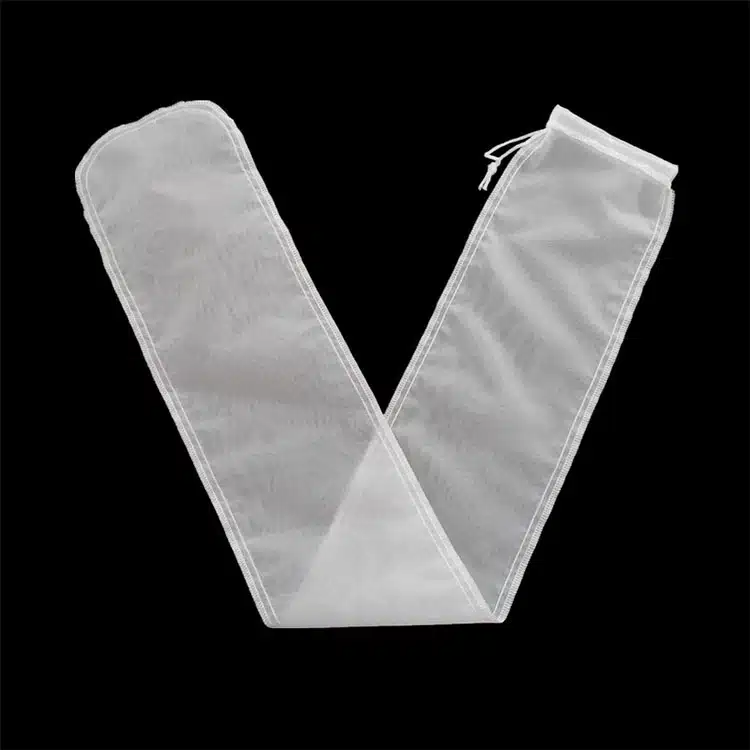
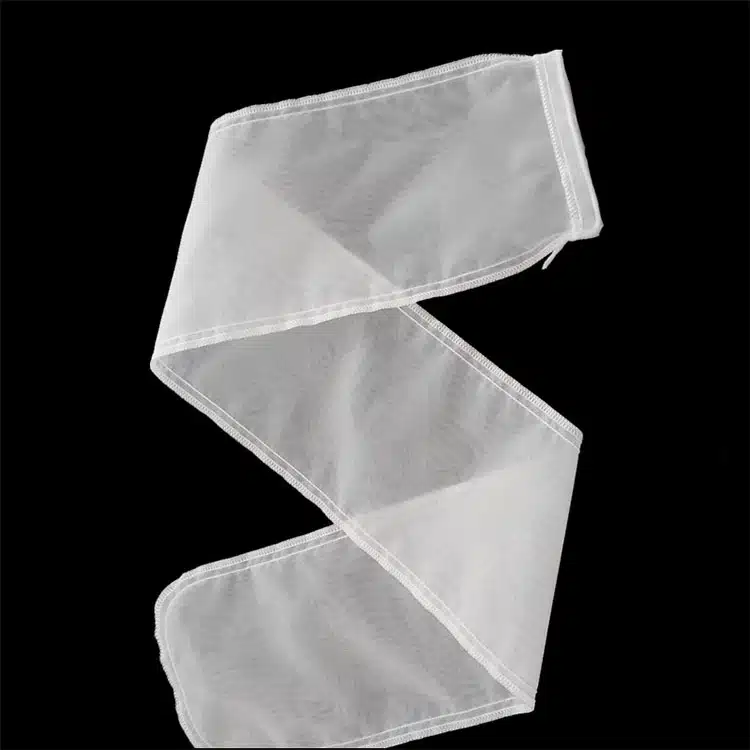
Best Filter Bag’s own application structure already says the quiet part out loud: nylon mesh is positioned for water, paint, ink, resin, and general liquid service, which matches the real-world reason people keep buying it—surface screening, decent flow, reusable behavior in some services, and fewer fake promises than the average “high-performance” media pitch. For many coatings and inks, especially where you are catching gels, skins, agglomerates, or visible debris rather than chasing ultra-clean chemistry, nylon mesh is still the honest starting point.
PTFE is not luxury media. It is risk-control media.
C'est important.
Chemours says PTFE fluoropolymers operate across roughly -200°C to 260°C, and Gore lists multiple PTFE and ePTFE filter bag constructions at 260°C continuous service with excellent acid and alkali resistance. That is why PTFE earns its keep when chemistry is rough, temperatures are high, low extractables or low shedding matter, or the cost of contamination is uglier than the media premium. I like PTFE a lot. I just hate seeing it used to hide a bad spec.
The comparison buyers actually need
The table below is the version I would hand to a plant manager before the RFQ leaves the building.
| Matériau | What it handles best | Where I would use it first | Where I get suspicious | Hard truth |
|---|---|---|---|---|
| Polypropylene | Broad inorganic chemical exposure, many acids and caustics, moderate heat | Chemical liquids, resin-adjacent wet service, cost-conscious filtration | Strong oxidizing acids, hotter service, solvent combinations people describe vaguely | Cheap does not mean weak |
| Polyester | General-duty filtration where service is chemically honest and moisture is under control | Dryer or milder duties, less aggressive liquids, budget-driven service | Hot, wet, acidic, alkaline, or hydrolysis-prone lines | Buyers force polyester into jobs it did not ask for |
| Nylon mesh | Surface screening, reusable mesh duty, visible solids removal, coatings and inks with manageable chemistry | Paint, ink, resin, process water, prefiltration, gel and skin capture | Aggressive solvents, high-temperature chemistry, purity-sensitive lines that hate shed or bypass | Nylon wins when the job is screening, not prestige |
| PTFE | Harsh chemistry, high heat, low-shed or cleanliness-sensitive duty | Aggressive chemicals, high-temperature resin service, premium control points | Specs that use PTFE to cover up bad housings or lazy startup behavior | PTFE is a penalty-avoidance material, not a status symbol |
The chemistry and temperature cues here come straight from HMC Polymers’ polypropylene resistance guide, Donaldson’s polyester media sheet, Chemours’ PTFE resistance overview, Gore’s filter bag specifications, and Best Filter Bag’s nylon application content.
What coatings, inks, and resins actually punish
Coatings punish bad chemistry calls
Not gently.
Coatings buyers love talking about finish quality, but the chemistry fight starts earlier with solvents, resin systems, additives, and reactive components that do not care what the purchasing spreadsheet says; NIOSH notes that isocyanates are the leading attributable chemical cause of occupational asthma in the United States and many industrialized countries, which is one reason I refuse lazy material calls on coating lines involving TDI, MDI, or HDI chemistry. If your coating stream is chemically active and hot, stop pretending nylon and PTFE are just different price tiers. Read NIOSH’s isocyanate guidance, then read the SDS again.
Inks punish fiber shedding and solvent laziness
I have watched ink filtration get reduced to “just catch the chunks,” and that is how plants end up solving one defect while quietly creating another, because ink lines care about gels, dried skin, pigment agglomerates, and also about the nasty cleaning chemistry nobody mentions in the quote request; in one NIOSH screen-printing evaluation, 10-minute toluene exposures during spray-cleaning ranged from 150 to 360 ppm with a mean of 260 ppm, and three samples exceeded the NIOSH 10-minute ceiling of 200 ppm. That is not a small reminder. It is a flashing one. NIOSH’s evaluation is old, but the lesson is current: ink systems lie when buyers ignore the solvent side of the line.
That is why, for many ink jobs, I would rather start with the practical logic in sacs filtrants en nylon pour l'eau, la peinture, l'encre et la résine than jump straight to expensive media. Surface capture is often the right fight. Why overbuy the polymer before you understand the defect?
Resins punish skin contact, heat, and wishful thinking
Resin service looks simple until it does not.
A 2024 study on epoxy exposure published via CDC Stacks says epoxy resins are one of the most common causes of occupational allergic contact dermatitis and notes that cases continue to increase, partly because of growing epoxy use and bad protection choices in construction and painting industries. That is not just a PPE story. It is a process-honesty story. If your resin line contains epoxy systems, amine hardeners, or reactive additives, I would not accept a vague “chemical resistant bag” description from anyone. I would want the exact chemistry, concentration, temperature band, and cleaning cycle before I picked media. See the 2024 epoxy resin study.
And when buyers still insist that filtration media is a small consumables choice, I push back. Hard. EPA’s October 2023 BLDS document says bag leak detection systems are used to detect bag failures or filter media degradation and recommends continuous monitoring of selected indicators such as pressure differential, temperature, exhaust flow, opacity, and PM emissions; it also notes that monitoring supports proactive maintenance and can reduce downtime, labor, and media costs. This is air-side guidance, yes. The principle still lands: trend the system or prepare to blame the bag unfairly.
Turn this article into a buyer funnel, not a dead-end blog post
Les liens ont besoin d'emplois.
I would not scatter internal links like confetti. I would place them where the reader’s next objection naturally shows up. If the reader is still confused about capture target, send them to ce que signifie réellement le taux de microns d'un sac filtrant. If they are still at the broad selection stage, use the guide de sélection des poches filtrantes pour liquides. If they are dealing with coatings or inks specifically, route them into sacs filtrants en nylon pour l'eau, la peinture, l'encre et la résine. If chemistry is getting ugly, use Comment choisir les sacs filtrants en PTFE pour les produits chimiques agressifs ?. If they are almost ready to buy, make them read how to write a clear filter bag specification sheet. And if the plant is already burning through bags, send them to pourquoi les manches filtrantes s'affaissent et comment les éviter. That sequence matches search intent, site structure, and buyer maturity better than the usual B2B mess.
My opinion is stronger than that. Most industrial sites overlink sideways and underlink forward. This page should move the reader from “what is the best filter bag material” to “here is my fluid, my SDS, my temperature window, my micron target, my housing, and my changeout trigger.” Anything less is just traffic cosplay.

FAQ
What is the best filter bag material for coatings, inks, and resins?
The best filter bag material for coatings, inks, and resins is the one whose chemistry resistance, shedding behavior, temperature limit, and solids-capture style match the actual fluid, because these three product families do not punish media in the same way and should never be treated like one interchangeable service.
My blunt version is this: nylon mesh often wins the honest screening jobs, polypropylene wins many wet chemical jobs, polyester works only when the chemistry is not lying to you, and PTFE earns its premium when heat, contamination risk, or aggressive chemistry make failure expensive.
Is polypropylene better than polyester for liquid filtration?
Polypropylene is usually better than polyester for many wet chemical liquid-filtration duties because polypropylene handles a broad range of inorganic chemicals more convincingly, while polyester is more vulnerable to hydrolysis and becomes a riskier choice once moisture, heat, and chemically active service start stacking up together.
I would still use polyester in honest service. I just would not let it wander into a resin or coatings loop that is hotter, wetter, and more reactive than the buyer wants to admit.
When should I use nylon mesh filter bags?
Nylon mesh filter bags are the best choice when the process needs surface screening, reusable mesh behavior, high flow, and visible solids removal rather than deep fine polishing, especially in paint, ink, resin, and water-adjacent service where the chemistry is compatible and the goal is gels, skins, specks, or debris capture.
That is why I keep defending nylon. It is not flashy, but it is often the least dishonest answer in coatings and ink filtration.
When should I pay extra for PTFE filter bags?
You should pay extra for PTFE filter bags when the process combines aggressive chemistry, higher temperature, cleaner-service requirements, or lower tolerance for contamination and emergency changeouts, because PTFE is bought to remove operational risk, not to make a procurement sheet look more sophisticated.
I would never call PTFE “best” in the abstract. I would call it the adult choice when the line is truly unforgiving.
How do I choose micron rating without making a bad material decision?
The right way to choose micron rating is to define the contaminant you must stop, the downstream asset or quality target you are protecting, the acceptable pressure-drop rise, and the fluid’s viscosity and solids load first, because micron rating only makes sense when it is tied to real process duty rather than shopping behavior.
This is where buyers keep fooling themselves. A 1 µm bag is not smarter than a 25 µm or 50 µm bag if the real problem is coarse solids, unstable flow, bypass, or the wrong media family.
Votre prochaine étape
Faites-le maintenant.
Take your current spec and rewrite it in one ugly, honest sentence: fluid name, SDS identity, concentration, operating temperature, viscosity, solids type, target particle range, micron rating, bag size, ring style, housing model, clean ΔP, dirty ΔP, and changeout trigger. Then compare that sentence against the internal path already sitting on your site: the guide de sélection des poches filtrantes pour liquides, ce que signifie réellement le taux de microns d'un sac filtrant, sacs filtrants en nylon pour l'eau, la peinture, l'encre et la résine, Comment choisir les sacs filtrants en PTFE pour les produits chimiques agressifs ?, how to write a clear filter bag specification sheetet pourquoi les manches filtrantes s'affaissent et comment les éviter. That is how this H1 stops being content and starts acting like a technical salesperson.
My final opinion? Stop buying filter bag materials by habit. Buy them by failure mode. That is the whole game.


