
Table des matières

The storeroom fiction most plants still believe
Parts get political.
I have watched plants treat bag filtration spare parts like low-value consumables, even though the wrong Size #2 bag, the wrong 316 support basket, or the wrong EPDM lid seal can stop a line faster than a failed motor, because spare-parts inventory and maintenance are still managed in separate silos in far too many factories, despite the fact that current academic work says maintenance execution is conditioned by spare-parts availability and NIST still estimates downtime at 8.3% of planned production time, or about $245 billion for discrete manufacturing. Why do smart factories still run filtration like it is janitorial supply?
And this is why your site already has better bones than most B2B filtration sites. The strongest internal chain is not random product linking; it is technical definition, sizing discipline, housing fit, failure diagnosis, and then purchasing control. That is exactly how serious buyers think when the line is hot and production is yelling. Best Filter Bag already has those pieces sitting in plain sight across its technical and maintenance content.
So I would not bury readers in generic “solutions.” I would move them straight into explication de l'indice de micronnage des sacs filtrants, les normes de taille des sacs expliquéeset les bases de l'enveloppe du filtre à manches pour les acheteurs industriels, because bag filter spare parts planning starts with three non-negotiable facts: what the bag must catch, what physical envelope actually fits, and what housing geometry will keep that bag alive.
Stop buying “5 micron bags” and start buying part identities
Names drive waste.
I do not trust an item master that says “filter bag, 5 micron” and calls the job done, because that description hides the variables that actually decide fit, life, and re-order accuracy: media, rating basis, size, ring style, housing family, seal material, and service chemistry, and the GAO has been blunt for decades that weak item identification leads to duplicate purchases, unnecessary spend, and bad inventory control. Why would any industrial plant accept weaker part discipline than a military depot?
The best case study I know does not come from filtration marketing. It comes from U.S. defense standardization. The GAO report on the Federal Catalog System said 30% of cataloged items lacked approved names and 29% were missing characteristic or performance data, while the Defense Standardization Program’s shipyard case study described data-sharing that cut inventory, design, engineering, and life-cycle costs, and a DLA reuse briefing tied disciplined standardization in the Virginia-class submarine program to 27,014 bill-of-material parts versus 67,834 in the Seawolf comparison, with about $789 million in cost avoidance. That is not a filtration case, no. It is a parts-control case. And the lesson transfers perfectly.
My view is blunt. A 5 µm Nylon 66 Size 02 bag with a 304 stainless ring is not “basically the same” as a 5 µm PTFE Size 02 bag with a polypropylene collar just because the micron number matches. That is not shorthand. That is clerical fraud with a storeroom label on it.
That is why I would naturally push readers from this article into how to standardize filter bag SKUs across multiple plants et le Modèle de demande de prix pour les sacs filtrants. One page fixes the internal language. The other fixes the buying process before another vague quote request poisons the item master.
The spare-parts matrix I actually trust
Simple rules first.
I split industrial bag filter parts into four buckets: running consumables, structural parts, sealing parts, and instrumentation parts, and I stock them very differently because a replacement filter bag for an industrial plant does not fail like a basket, a basket does not fail like an O-ring, and an O-ring does not fail like a ΔP gauge. Why do so many buyers still throw them into one reorder bucket?
| Spare part family | Ce qui ne va généralement pas | What I standardize in the item master | My stocking rule |
|---|---|---|---|
| Replacement filter bags | Wrong micron, wrong media, wrong size, wrong ring style, premature blinding | Media (Nylon 66, PP, PTFE), micron, nominal/absolute-style intent, Size #1/#2/#3/#4 or 01/02/03/04, ring material, housing fit class | Hold usage-based stock by approved line duty, not by vague “5 micron” labels |
| Support baskets / restrainers | Bent ribs, burrs, corrosion, bad fit, repeated bag collapse | Housing model, basket dimensions, perforation/mesh, material grade 304/316, revision level | Minimum one ready spare per critical housing family |
| Bag filter housing gaskets and O-rings | Chemical swell, flattening, wrong elastomer, leakage, bypass | Elastomer family (EPDM, FKM/Viton, NBR, PTFE envelope), cross-section, hardness if controlled, housing model | Stock deeper than buyers think; seals are cheap until they delay restart |
| Closure hardware and lid fasteners | Galling, thread damage, clamp wear, poor sealing force | Housing model, clamp/stud size, material grade, seal interface | Keep kits, not random loose hardware |
| ΔP gauges / switches / transmitters | No baseline, drift, blocked impulse lines, false replacement triggers | Range, connection type, housing tag, alarm setpoint logic | One verified spare for each critical format |
| Vent and drain valve kits | Sticking, leakage, incomplete draining, dirty change-outs | Valve type, seat material, connection size, duty chemistry | Keep one outage kit per housing family |
This is the hard truth I wish more suppliers said out loud: the best bag filtration spare parts for industrial plants are not always the most expensive parts. They are the parts whose identity is controlled so tightly that night shift cannot accidentally substitute the wrong one.
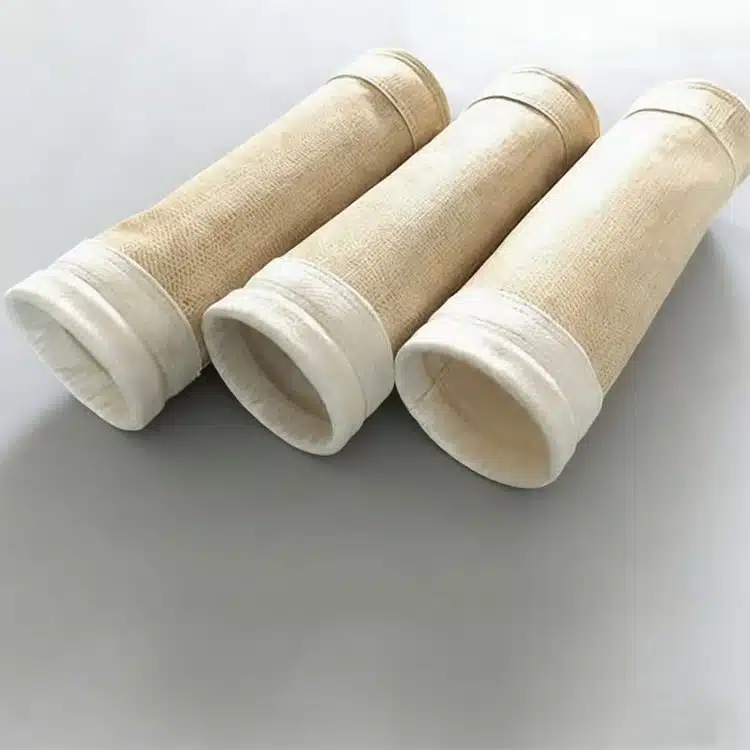
The parts most plants understock
Seals fail quietly.
I have seen more unnecessary downtime caused by bag filter housing gaskets and O-rings than by any exotic media issue, because operators can usually spot a torn bag, but they miss a swollen FKM seal, a flattened EPDM gasket, or a nicked seat until bypass, drips, or restart delays force the problem into daylight. Why are seals still treated like housekeeping?
And in regulated service, that laziness gets expensive fast. The FDA’s CGMP rules say equipment must be cleaned and maintained at appropriate intervals, and FDA guidance says equipment should be designed for intended use and for cleaning and maintenance. That means the wrong elastomer, the wrong surface condition, or a seal kit no one stocked is not just a maintenance miss in pharma-adjacent work. It can become a documentation problem, an inspection problem, and then a production problem.
Baskets matter more.
The industry loves to blame media, but repeated collapse is usually mechanical, and your own site says that part out loud in pourquoi les manches filtrantes s'affaissent et comment les éviter. I agree with that stance completely. A bent basket, scarred weld, wrong seat, or loose fit will ruin a good bag and then persuade purchasing that the next order should be “a better bag,” which is how bad housing discipline turns into an endless consumables argument. Shouldn’t the structural spare be treated like a structural spare?
Micron is not a part number.
I get impatient when buyers try to plan liquid bag filter replacement parts around micron alone, because micron only tells me the particle target, not the bag envelope, the ring, the seal logic, the basket compatibility, the chemistry tolerance, or the service life expectation, and those are the details that decide whether the part on the shelf is useful or just technically similar. That is why I would always tie spare-parts planning back to the sizing, housing, and collapse-prevention content already on this site instead of letting the item master drift into lazy shorthand.
The reorder logic that survives audits and night shift
Write ugly data.
I do not want pretty ERP descriptions. I want part records that tell the truth under pressure: 25 µm, nominal, Nylon 66 mesh, Size 02, 304 SS ring, fit class HSG-A, seal EPDM, clean ΔP 0.08 bar, review band 0.20-0.35 bar, approved for process water Line 4. Why do buyers keep writing descriptions that fail the moment the supervisor asks one real question?
My planning rule is simple. For A-class housings tied directly to revenue or validation risk, I carry enough on-site stock to cover average consumption through replenishment lead time, one upset event, and one planned outage. For B-class housings, I still hold local seal kits and at least one structural spare by housing family. For C-class duty, I let the supplier hold more of the depth, but only after the part identity is locked and the lead time is proven. That is how to plan bag filter spare parts for industrial plants without turning your warehouse into a museum.
And yes, I am opinionated about documentation. The U.S. Department of Energy has been saying for years that disciplined operations and maintenance programs can save 5% to 20% on energy bills while also improving safety and equipment life. That is not only about pumps and motors. It is a reminder that boring maintenance discipline pays real money back. Spare-parts planning belongs inside that discipline, not outside it.

FAQ
What are bag filter spare parts?
Bag filter spare parts are the controlled replacement items needed to keep a liquid bag filtration system operating safely and within specification, including the filter bag, support basket, lid gasket or O-ring, closure hardware, differential-pressure device, and other fit-critical components that affect sealing, support, and restart reliability.
I treat them as a system, not a shopping list, because the bag never works alone.
How many replacement filter bags should an industrial plant keep in stock?
Replacement filter bags for industrial plants should be stocked according to approved line duty, average consumption during supplier lead time, one upset-event allowance, and the business cost of a missed change-out, rather than by gut feel, calendar habits, or a single blanket quantity used across every housing family.
If the line is revenue-critical, I stock deeper. If it is optional utility service, I stock leaner. But I never stock by micron number alone.
Which matters more in spare-parts planning: filter bags or housing seals?
Filter bags and housing seals matter in different ways, but housing gaskets and O-rings often deserve more safety stock because they are low-cost, high-consequence parts that can block restart, create bypass, or turn a simple bag change into a leak, contamination, or compliance problem.
In other words, the cheap part is often the part that holds the line hostage.
What should be included in a bag filtration spare-part number?
A bag filtration spare-part number should include the technical fields that define form, fit, and function: media, micron value, rating basis, bag size code, ring or collar style, housing fit class, material grade, and revision status, so the part can be received, installed, and reordered without interpretation.
If the code cannot separate Nylon 66 from PTFE, or Size 01 from Size 02, it is not a real control code.
When should a plant standardize one bag across multiple lines?
A plant should standardize one bag across multiple lines only when the lines share the same contaminant target, chemistry, temperature window, bag size, ring style, housing fit, and replacement logic, because false standardization creates duplicate failures faster than it creates savings.
I like fewer SKUs. I do not like fake sameness.
Votre prochaine étape
Faites-le ensuite.
Pull one live housing family this week and force your team to write the full spare-parts truth for it: bag media, micron, rating basis, size code, ring style, basket spec, gasket elastomer, hardware kit, ΔP instrument, clean baseline, dirty trigger, and approved supplier lead time. Then compare that record to what your ERP currently says.
I will tell you what usually happens. The storeroom says “5 micron bag.” The operator says “the long one.” Maintenance says “the stainless-ring version.” Purchasing says “same as last time.” And nobody has actually controlled the part.
Fix that first. Then use your internal content the way it was meant to be used: teach spec logic, force housing-fit discipline, and tighten RFQ quality before the next outage does it for you.


