
جدول المحتويات

Most buyers are arguing about the wrong thing
ثلاث كلمات أولاً.
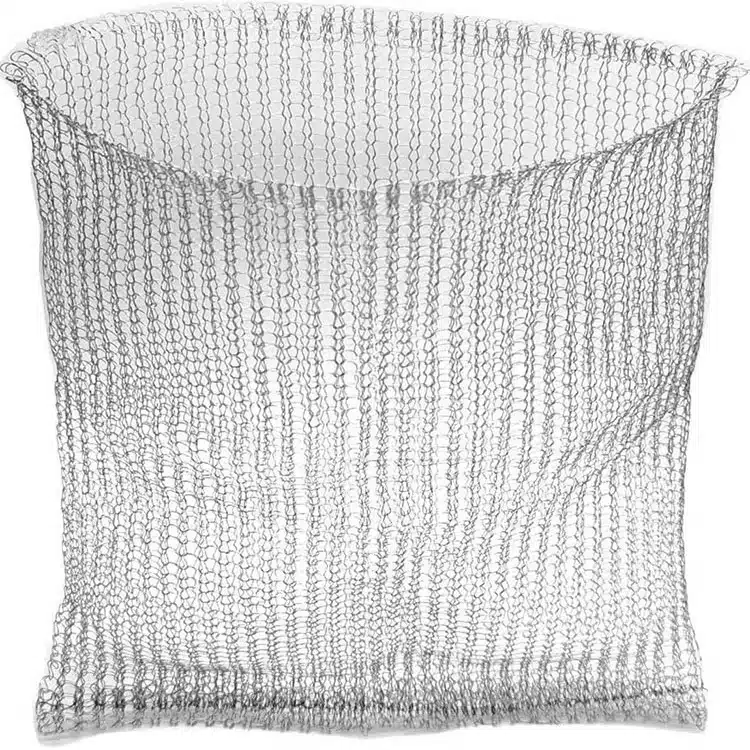
I have watched too many buyers compare 316 vs 316L stainless steel as if the answer lives in a price sheet, when the real answer is hiding in weld seams, chloride exposure, washdown chemistry, temperature swings, basket fit, and the uncomfortable fact that a stainless steel mesh filter bag is usually a coarse screening tool, not a miracle polish stage. Why are smart plants still buying metallurgy by nickname?
Here is my hard truth: for most welded stainless steel mesh filter bags, 316L should be the default starting point, not the premium upsell, because the “L” is not marketing fluff; it is the low-carbon version, and low carbon exists to reduce sensitization risk around welds and heat-affected zones. Sandia’s technical reference on Type 316 and 316L flatly states that Type 316 is sensitive to carbide precipitation and that 316L is used to moderate that sensitization. In plain English, if your bag has welded seams, welded collars, or welded reinforcement, the weld area is where lazy specs get punished first. Sandia National Laboratories’ technical reference says it without the sales varnish.
But I am not saying 316 is useless. I am saying buyers keep using it where 316L is the safer fabrication choice, then acting shocked when the weak point is not the mesh panel but the heated, welded, chloride-exposed zone they barely discussed in the RFQ.
What 316 and 316L actually change in a mesh filter bag
قم بالحساب.
Both grades sit in the same molybdenum-bearing austenitic family, and Sandia summarizes them as Fe-18Cr-13Ni-2.5Mo alloys, which is why both 316 stainless steel filter mesh and 316L stainless steel mesh filter bag constructions have a better corrosion story than plain 304 in dirty, wet, chloride-leaning duty; but once weld integrity and heat exposure enter the picture, the lower-carbon 316L spec stops looking fancy and starts looking sane. Why save a few dollars on paper and then gamble at the seam?
Here is the comparison I would actually hand to procurement.
| نقطة القرار | 316 stainless steel | 316L stainless steel | My blunt take |
|---|---|---|---|
| Carbon cap | Typically up to 0.08% | Typically up to 0.03% | This is the number that matters when welding enters the room |
| Welded seam behavior | More vulnerable to sensitization in the heat-affected zone | Lower sensitization risk after welding | For welded stainless steel mesh filter bags, 316L is usually the safer call |
| Chloride-bearing duty | Better than 304, not magic | Better than 304, not magic | Neither grade gets a free pass in hot chloride service |
| Food-contact reasoning | Can work if duty is mild and fabrication is sound | Usually the easier sell in hygienic, washdown-heavy, corrosion-sensitive service | Hygiene plus welding plus salt usually points me to 316L |
| Price tendency | Sometimes slightly lower | Sometimes slightly higher | The price gap is usually cheaper than one bad shutdown |
| Where I would use it | Mild duty, limited welding exposure, controlled chemistry | Welded bags, brine-adjacent duty, repeated washdown, chloride risk | If I do not know the real chemistry yet, I lean 316L |
The table is not theory. It reflects the low-carbon sensitization point from Sandia, FDA food-contact equipment rules requiring corrosion-resistant surfaces and cleanable installation, USDA’s 316-series guidance for cheese-brine equipment, and HSE’s repeated warning that chloride stress corrosion cracking is a common failure mode for austenitic stainless equipment in chloride service. FDA’s 21 CFR 117.40, USDA’s dairy equipment guidance, and HSE’s chloride SCC materials make the point better than most supplier brochures ever will.
The low-carbon point suppliers keep soft-pedaling
It is not subtle.
Type 316 stainless steel is sensitive to carbide precipitation roughly between 773 K and 1073 K, and Sandia notes that 316L is specifically used to moderate that sensitization; that matters because a mesh filter bag is not just sheet chemistry on a mill cert, it is a fabricated object with seams, collars, rings, and stress points that live or die in service. So why do so many vendors still talk as if the mesh panel alone tells the story?
My view is simple. If you are buying an unwelded or minimally fabricated 316 stainless steel filter mesh insert for mild service, 316 can be defensible. If you are buying a fabricated 316L stainless steel mesh filter bag with welds, repeated cleaning, chloride-bearing liquid, or hygiene pressure, 316L is usually the adult specification.
Where 316 wins, where 316L should win, and where both lose
Say it plainly.
A stainless steel mesh filter bag does not become “better” because it is metal, because the wrong metal mesh bag in the wrong duty still blinds fast, leaks at the seal, misses fine particles, and turns into a maintenance argument, while the right bag in the right duty can survive heat, abrasion, solvent cleaning, and repeated reuse in ways polymer bags simply cannot. Why are we still pretending material selection is the whole job?
I would back 316 stainless steel mesh for coarse solids, ordinary industrial water, general oils, and controlled chemistry where welding exposure is limited and the line is not living in hot salt, acid-cleaned, or hygiene-heavy reality. I would back 316L stainless steel mesh filter bag construction when the bag is fabricated and welded, the duty includes brine, chlorides, aggressive washdown, or repeated clean-in-place behavior, and the buyer cannot afford the embarrassing failure mode where the weld corrodes before the mesh media is done.
And I would reject both when the process actually needs depth loading, sterile one-pass capture, sub-micron polishing, or dissolved-contaminant removal. EPA’s April 10, 2024 PFAS rule set enforceable drinking-water limits at 4.0 أجزاء لكل تريليون for PFOA and PFOS, while EPA’s treatment materials continue pointing utilities toward GAC, ion exchange, RO, and nanofiltration for real PFAS control. Reuters then reported on June 11, 2024 that industry groups sued to block that rule, and the same report noted $11 billion in PFAS settlements in 2023. That is not a small compliance backdrop. It is a reminder that a stainless steel mesh filter bag belongs in prefiltration logic, not in fake “compliance filtration” marketing. EPA’s PFAS announcement و Reuters’ coverage of the legal challenge make that painfully clear.
Food, beverage, and brine service are where the argument gets honest
Look closer there.
FDA’s current rule says food-contact surfaces must be corrosion-resistant and equipment must be installed to facilitate cleaning and maintenance, while USDA’s dairy equipment guidance says cheese-brine tanks should be made from 316 series stainless steel with continuous, snag-free welds; that is exactly the kind of regulatory language that turns the lazy “316 vs 316L stainless steel mesh” debate into a real process-materials decision. Who still wants to call that cosmetic?
My opinion is stronger here than most suppliers will say out loud: if your stainless steel mesh filter bags touch salty product, washdown chemicals, or hygiene-sensitive liquid, and the bag is a fabricated welded assembly, I would rather defend a 316L spec to finance than defend a weld-corrosion failure to QA.
Chlorides are the part buyers keep underestimating
They always do.
HSE’s guidance says the most frequent stress corrosion cracking failures in piping occur with austenitic stainless steels in chloride-bearing conditions, and even trace chlorides can become a problem above 60°C; that matters because many buyers hear “316” and mentally file it under “marine resistant,” which is not the same as “immune,” especially when crevices, deposits, heat, and neglected inspection enter the picture. Did you buy corrosion resistance, or did you buy comforting vocabulary?
That is why I hate vague specs. A good 316 vs 316L decision cannot be made from “water service” alone. I want chloride level, pH, operating temperature, cleaning chemical, flow pattern, solids type, expected reuse cycles, and whether the bag is welded to rings, collars, or support hardware.
The mistake that keeps costing plants money
يكذب رقم واحد.
Buyers love asking for a “best 316L stainless steel mesh filter bag” as if “best” is a universal adjective, even though the actual cost driver is not bag price but whether the bag fits the housing, seals correctly, survives the cleaning routine, and captures the right particle range without wrecking flow; NIST’s 2024 manufacturing report still ties downtime to 8.3% من وقت الإنتاج المخطط له و $245 مليار in discrete manufacturing losses, with defects adding another $32.0 billion to $58.6 billion. Why would any serious buyer treat filter-bag specification like a catalog checkbox? تقرير NIST السنوي لعام 2024 عن اقتصاد التصنيع في الولايات المتحدة الأمريكية should be required reading for anyone still treating bag selection as a low-stakes consumables issue.
That is also why this article should not sit alone on your site. A reader who lands here should move naturally into your guide to stainless steel filter bags when reusable mesh is the better choice, ثم إلى دليل اختيار كيس الفلتر السائل, ثم إلى ما معنى التصنيف الميكروني لأكياس الفلتر, ثم إلى how to confirm housing fit before ordering filter bags, and only after that into branch pages like كيفية اختيار أكياس الترشيح PTFE للمواد الكيميائية العدوانية أو how to write a clear filter bag specification sheet. That is not decorative interlinking. That is buyer control.
The buying rule I would put in the RFQ
Write this down.
If the stainless steel mesh filter bag is fabricated, welded, washdown-exposed, chloride-exposed, or hygiene-sensitive, specify 316L unless process data proves otherwise; if the duty is mild, the geometry is simpler, the chemistry is controlled, and the weld risk is low, 316 can still be a rational cost choice; and if the job needs fine polishing or dissolved contaminant removal, stop forcing stainless mesh into a role better handled by felt, membranes, GAC, ion exchange, or cartridges. Why make the bag apologize for a bad process design?
I would also put these fields in the RFQ every single time: liquid name, chloride content, pH, temperature range, solids description, target micron, bag size, ring style, weld locations, cleaning method, reuse target, housing model, and whether the bag is screening, protecting downstream equipment, or acting as a final process barrier. That is how we stop buying vague stainless.
الأسئلة الشائعة
What is the difference between 316 and 316L stainless steel?
The difference between 316 and 316L stainless steel is carbon content: 316L is the low-carbon version, typically capped around 0.03% carbon instead of roughly 0.08% max for 316, which lowers sensitization risk around welds and makes fabricated, welded parts easier to trust in corrosive service. I would treat that as a fabrication decision first and a metallurgy trivia point second.
How do I choose 316 vs 316L stainless steel mesh filter bags?
You choose 316 vs 316L stainless steel mesh filter bags by matching the bag’s fabrication method, chloride exposure, cleaning chemistry, operating temperature, and hygiene demand to the risk at the weld and heat-affected zone, with 316L usually favored when welded seams, brine, washdown, or corrosion-sensitive duty are involved. My rule is blunt: the uglier the service, the less I want to defend plain 316.
Is a 316L stainless steel mesh filter bag always better than 316?
A 316L stainless steel mesh filter bag is not always better than 316, because the better grade depends on fabrication, chemistry, temperature, and duty, but 316L is often the safer default for welded bag assemblies since the lower carbon level reduces weld-related corrosion risk that buyers routinely underestimate. “Always better” is lazy; “better for this build” is the real question.
Can stainless steel mesh filter bags remove PFAS or dissolved chemicals?
Stainless steel mesh filter bags are not PFAS-removal or dissolved-chemical removal technologies; they are mechanical screening devices best used for prefiltration, solids removal, and downstream equipment protection, while EPA’s current PFAS treatment framework points utilities toward GAC, ion exchange, reverse osmosis, and nanofiltration for actual regulated PFAS control. Anyone selling mesh as a PFAS compliance answer is selling fiction.
What micron range makes sense for SS316L wire mesh filter bag service?
The right micron range for SS316L wire mesh filter bag service depends on solids size, viscosity, acceptable pressure drop, and whether the bag is acting as coarse screening or downstream protection, but metal mesh usually earns its money in coarse-to-medium capture rather than fine depth filtration or sterile final-polish duty. I would settle the process target before I argue alloy grade.
خطوتك التالية
افعل ذلك بعد ذلك.
If I were publishing this on Best Filter Bag, I would keep the opinion sharp and the buying path sharper: state early that 316L is usually the safer specification for welded stainless steel mesh filter bags, admit that 316 still has a place in milder duty, and then force the reader into the next pages that answer the questions procurement always leaves too late, especially micron logic, housing fit, aggressive-chemistry alternatives, and spec-sheet discipline. Why let a strong H1 die as a standalone opinion piece when it can become a quote-ready conversion path?
And if you want the commercial version of my conclusion, here it is: stop asking whether 316 or 316L sounds better. Start asking which one you are willing to defend after six months of chlorides, washdown, reused mesh, and a weld that never got the respect it deserved.


