

It happens fast. One minute the bag is holding shape, taking the solids load, and keeping flow stable; the next it is folded inward, rubbing where it should not rub, starving flow where it should not starve flow, and giving operators a false sense that the problem is “just a dirty bag.” Why do filter bags collapse? Because most plants ask soft media to survive structural mistakes.
I’ll say the unpopular part first: in industrial liquid filtration, a collapsed filter bag is usually not a consumables problem. It is a system problem wearing a consumables mask. Best Filter Bag’s own site architecture tells the story if you read it like an engineer, not a marketer: their industrial filter bags are framed around service life, dirt-holding capacity, and avoiding excessive pressure drop; their stainless steel bag filter housing for Size 1/2 bags highlights support-basket options, seal materials, and standard bag formats; and their PTFE filter bags for corrosive service and nylon filter bags for general liquid filtration are clearly separated by chemistry and duty. That is not accidental. It is the whole failure map in plain sight.
Table of Contents
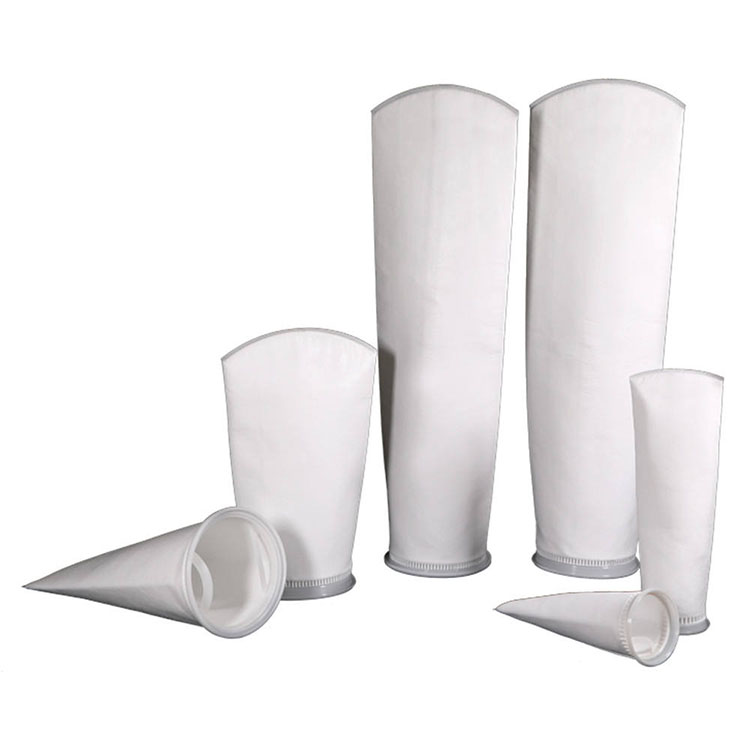
The collapse usually starts before the bag even sees solids
Most people blame the bag first. I blame the stack-up: wrong bag size, tired housing, bent basket, bad ring seating, flow spikes, viscosity swings, chemical softening, and lazy installation discipline.
A filter bag collapses when the media loses the structural support or operating margin it was supposed to have from the start. In a healthy setup, the bag, ring, basket, housing, and flow profile act like one system; in a bad setup, the bag becomes the sacrificial part trying to compensate for poor fit, poor support, or bad process control. That is why a “better bag” often fails again in the same vessel. Surprised? You shouldn’t be.
Best Filter Bag’s housing page is unusually honest about this. The company does not just sell a shell; it calls out standard Size 1 and Size 2 bag compatibility, felt or mesh media, and optional components such as the support basket, seal materials, mounting legs, and surface finish. Translation: if your bag filter housing geometry is loose, your basket is wrong, or your seal is off, a premium bag still enters the fight handicapped.
And support hardware matters more than buyers like to admit. EPA’s fabric-filter guidance, though written for air-side baghouses rather than liquid bag vessels, makes the same mechanical point in black and white: reverse-air systems use rigid rings to keep bags from fully collapsing, and pulse-jet systems use an internal wire-mesh cage to keep bags from collapsing under flow and cleaning cycles. Different process. Same physics. Soft media needs structure.
What a collapsed filter bag is actually telling you
I have watched plants spend three meetings arguing about micron rating while ignoring a basket that was bent, undersized, or scarred enough to shred the replacement bag by the second shift. That is not troubleshooting. That is theater.
Here is the faster read.
| What you see in the vessel | What it usually means | What I check first |
|---|---|---|
| Bag sucked inward against the basket | Excessive differential pressure, reverse flow, or weak structural support | Clean ΔP baseline, basket geometry, pump behavior at startup |
| Bag wrinkled or folded near the collar | Wrong bag size, wrong ring, poor seating in the housing | Size 1 vs. Size 2 fit, PP vs. steel ring, gasket/seal condition |
| Bag blinding early, then collapsing | Media mismatch, sticky solids, viscosity jump, chemical swelling | Process temperature, solids character, resin/paint load, chemistry changeover |
| Repeated collapse after each changeout | Installation error or damaged basket/housing lip | Basket straightness, weld burrs, collar seating, operator method |
| Sudden loss of flow with no dramatic solids load | Air entrainment, surge conditions, or blocked upstream/downstream control | Pump cavitation signs, valve sequence, venting, startup procedure |
The hard truth is that “pressure drop in bag filter” is not a number problem first. It is a trend problem. A single reading means little by itself. A clean bag at 0.08 bar that drifts to 0.14 bar over a week tells a very different story from a bag that jumps from 0.08 to 0.18 bar in one shift after a chemistry change, a tank turnover, or a rushed startup. But people still want a magic replacement number because numbers feel cleaner than judgment.
Best Filter Bag’s own copy points the same way: bag change intervals are managed by pressure drop and dirt-holding capacity, and replacement planning is supposed to avoid excessive pressure drop, reduced flow, and inefficiency. In other words, if you are still changing bags by calendar alone, you are running a filtration system like it is 1998.
The media choice is where expensive mistakes get dressed up as “spec changes”
This part annoys me. Plants routinely under-spec media for chemistry, over-spec media for bragging rights, and ignore the bag support basket entirely. Then they call the supplier and say the bag “collapsed.” No. The bag was miscast.
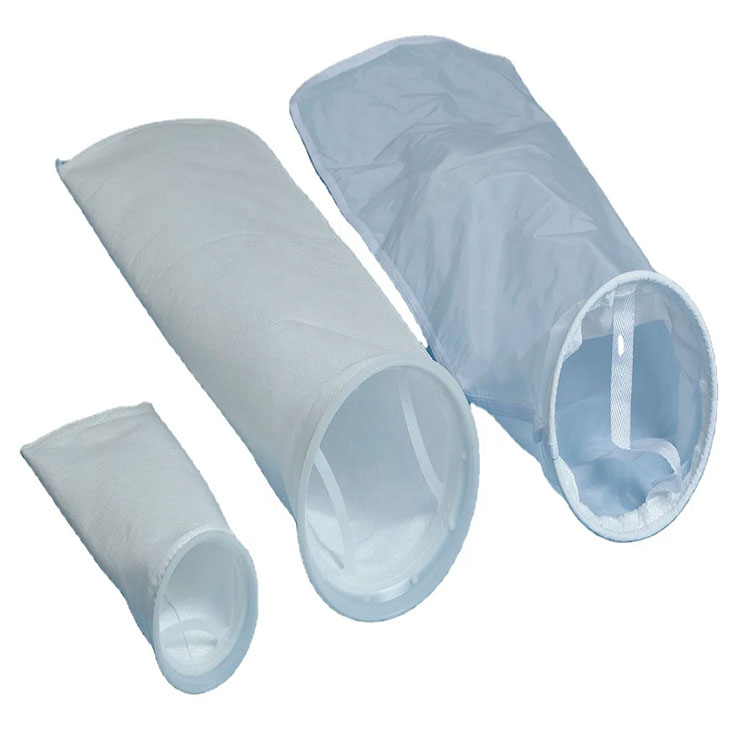
If your liquid is chemically aggressive, hot, or both, pretending nylon will survive because it worked in a milder loop six months ago is how you buy repeat failure. Best Filter Bag positions its 260°C PTFE filter bag for acid/alkali filtration for hot corrosive service, with PTFE used where standard felts can soften, swell, or lose strength. That is the correct logic. Likewise, their NMO nylon monofilament filter bag with PP/steel ring options is framed as a practical pre-filtration and general-liquids option, not a universal answer. PTFE, nylon, PP, 316 stainless, ring choice, bag size, and temperature are not catalog trivia; they are failure variables.
And let me make this blunter. A collapsed filter bag is often the final symptom, not the first. Before the collapse, you usually get a few quiet warnings: unstable ΔP, flow drift, bag wrinkling at seating points, strange polishing quality, or operators complaining that the bag “doesn’t feel right” during changeout. Ignore those long enough, and the post-mortem becomes expensive.
The evidence says filtration neglect is never “minor”
Here is where the procurement crowd usually goes quiet. According to Siemens’ 2024 True Cost of Downtime, the world’s 500 biggest companies lose about $1.4 trillion annually to unplanned downtime, roughly 11% of revenue. Siemens also estimates an average large plant in the sectors it surveyed now loses $253 million per year, suffers 25 downtime incidents per month, and loses 27 hours per month to unplanned downtime. Filtration is rarely the only cause, but it is exactly the kind of “small” reliability issue that plants ignore until it compounds into stoppages, scrap, rework, and emergency purchasing.
And yes, I know the next objection: “Those are broad manufacturing stats, not liquid bag filters.” Fair. So let’s move to legal reality. In September 2024, the EPA’s settlement with Federal Cartridge said the company would pay $349,471 and install new lead-controlling baghouses with secondary HEPA filtration; EPA estimated the deal would cut emissions by more than 1,700 pounds of particulate matter per year and more than 400 pounds of lead per year. In June 2024, the EPA’s action against Smith Foundry cited alleged failure to properly operate pollution-control equipment and specifically required continuous pressure-drop monitoring, recording equipment, bag-leak detection, and an updated operations and maintenance plan. Different filtration segment, yes. Same lesson, absolutely: when filtration hardware, monitoring, and maintenance discipline slip, the bill shows up in penalties, shutdowns, or both.
So no, I do not treat a collapsed bag as a housekeeping issue. I treat it as a reliability signal and, in regulated plants, a governance signal.
How to prevent filter bag collapse before it becomes routine
Start with the support basket, not the sales brochure
Three words matter. Geometry. Fit. Finish.
If the basket is undersized, bent, corroded, or rough at weld points, the bag never had a fair chance. I would inspect the basket before I argue about bag media, because the basket is the structural truth-teller. On Best Filter Bag’s housing page, support-basket options are not buried filler; they sit right in the configuration language. That tells me the site understands what too many plants still deny: the basket is not an accessory. It is load-bearing insurance.
Trend differential pressure, don’t worship a single number
A collapsed filter bag often has a pressure story behind it. EPA notes that as dust builds on fabric filters, pressure drop rises and cleaning or intervention is needed to avoid excessive pressure loss; it also lists pressure differential among the best indicators of filter performance. Again, air-side example, same operational logic. In liquid service, I want a clean baseline ΔP at installation, then a trend line tied to flow, viscosity, temperature, and solids loading. One reading is gossip. A trend is evidence.
Stop pretending all liquids are equal
Water-like service is not resin service. Paint is not solvent. Caustic loops are not food lines. And a bag that performs in a mild 25°C stream may fold, blind, or soften in a hotter, stickier, more chemically active process. That is exactly why internal navigation on this site should point readers toward PTFE filter bags for corrosive service when chemistry is aggressive and toward nylon filter bags for general liquid filtration when the service is broader and the economics matter more. Internal links should not be decorative. They should narrow bad decisions.
Fix startup and changeout discipline
I have seen perfectly good bags ruined by sloppy startup. Dry pump surge, trapped air, reverse slosh during shutdown, operators forcing a ring into a dirty seat, bags installed on damaged baskets, housings closed before alignment is checked—these are boring mistakes, and boring mistakes are exactly what kill systems repeatedly.
So write the simple rule set nobody wants to write: inspect basket straightness; confirm ring style; record clean ΔP; vent the housing properly; ramp flow instead of hammering it; note chemistry and temperature changes; and reject baskets with burrs, dents, or corrosion before the next bag is installed. Is that glamorous? No. Does it save money? Usually, immediately.
The internal-linking play here is simple, and most sites still get it wrong
A lot of B2B sites scatter product links like confetti. I would not do that here. I would funnel this article into the pages that answer the reader’s next technical question in sequence.
If the reader is still diagnosing the failure, send them to industrial filter bags and the stainless steel bag filter housing for Size 1/2 bags. If the reader has already identified chemical or temperature exposure as the trigger, move them into PTFE filter bags for corrosive service or the more specific 260°C PTFE filter bag for acid/alkali filtration. If the reader is dealing with general liquids, solids capture, and repeat changeouts in common housings, the natural step is the NMO nylon monofilament filter bag with PP/steel ring options. That is how internal linking earns its keep: by moving the reader from diagnosis to fit to purchase without making them hunt.
FAQs
What causes filter bag collapse?
Filter bag collapse is the loss of the bag’s intended shape inside the housing, usually caused by too much differential pressure, poor support from the basket, wrong bag size or ring fit, reverse-flow events, media softening from chemistry or heat, or early blinding that overwhelms the bag structurally. In practice, I would rank housing fit and basket condition ahead of “bad bag” quality complaints, because repeated collapse in the same vessel usually means the system is mis-matched, not merely under-supplied.
Can a support basket really prevent filter bag collapse?
A support basket prevents filter bag collapse by giving flexible media a rigid shape to work against, distributing pressure loads across the bag wall, and stopping the bag from being pulled inward, folded, or abraded against the housing during normal flow, surge events, or cleaning cycles. EPA’s fabric-filter guidance explicitly points to rings and cages as anti-collapse structure, and Best Filter Bag’s housing configuration also lists support baskets as a core option rather than a cosmetic add-on.
What pressure drop in bag filter should trigger action?
Pressure drop in a bag filter should trigger action when the trend departs materially from the clean installed baseline for that exact service, because no single universal ΔP number is responsible across all liquids, viscosities, solids loads, temperatures, bag sizes, and housing geometries. I do not trust one-size-fits-all replacement numbers. I trust baseline data, flow correlation, and rate-of-rise. If ΔP climbs faster than normal after a process change, the bag may be blinding, swelling, mis-seated, or collapsing long before total flow falls off a cliff.
Should I use PTFE or nylon to prevent filter bag failure?
PTFE and nylon prevent different kinds of filter bag failure: PTFE is the better choice for hotter, more chemically aggressive, or cleaner-contact applications, while nylon is the practical choice for many general liquid services where mesh stability, repeatability, and cost discipline matter more than extreme chemical resistance. On this site, that division is already visible in the product structure, which separates PTFE for acid/alkali and corrosive duty from nylon for paint, ink, water, and broader general-duty liquid filtration.
Your next step
Do not order another replacement bag until you run a four-point audit: housing fit, support basket condition, clean ΔP baseline, and media compatibility with the real process—not the old process, not the spec sheet fantasy, the real process.
Start with the pages that map directly to those decisions: industrial filter bags, the stainless steel bag filter housing for Size 1/2 bags, PTFE filter bags for corrosive service, and nylon filter bags for general liquid filtration. If your team already knows the chemistry is harsh or the temperature is high, go straight to the 260°C PTFE filter bag for acid/alkali filtration. If your pain is solids capture and repeat changeouts in common housings, look at the NMO nylon monofilament filter bag with PP/steel ring options. That is the fastest path from bag filter troubleshooting to a fix that actually lasts.
