

The Number Everyone Repeats and Almost Nobody Defines
Here’s the truth.
A filter bag micron rating is the stated particle-size target, in micrometers (µm), that a bag is designed to retain under a given set of conditions, but in real plants that number is only the beginning because media type, face velocity, fluid viscosity, particle shape, solids loading, seam construction, and differential pressure decide whether the bag behaves like a clean separator or an expensive mistake. Why do so many buyers still pretend the number alone is enough?
So what is filter bag micron rating in plain English? It is the size threshold you use to estimate what solids a bag can catch. Smaller number, finer capture. But I have seen too many RFQs that say “1 micron bag” and nothing else, and those RFQs usually end the same way: short bag life, rising ΔP, operators irritated, and procurement asking why the “upgrade” made the line slower.
The hard part is not finding a number. The hard part is finding the right number.
That is why micron specifications stopped being a back-room engineering issue and became a money issue. In EPA’s February 2024 PM2.5 rule, the agency said tightening the annual soot standard from 12 to 9 µg/m³ could deliver up to $46 billion in net health benefits in 2032, prevent up to 4,500 premature deaths, and avoid 290,000 lost workdays. A month later, Reuters reported that 25 states and major industry groups sued over the rule, arguing the tighter threshold would raise costs and complicate manufacturing permits. When particle-size thresholds move, the legal bills are never far behind.
If you want a broad product entry point instead of theory first, your cleanest internal hub is industrial filter bag options. It fits this topic because readers asking what is filter bag micron rating usually need to move quickly from definition to material and size selection.
Table of Contents
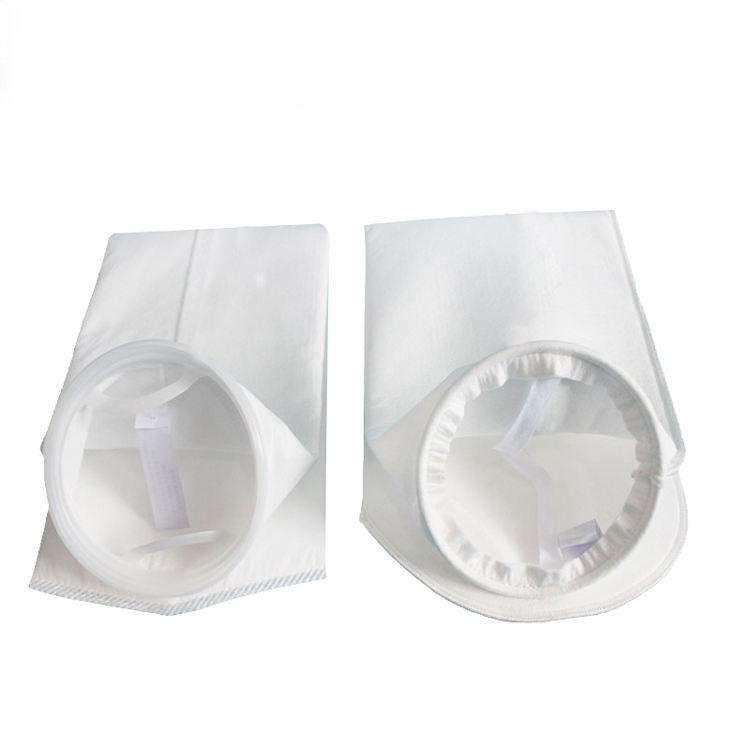
Micron Rating Is a Starting Point, Not the Whole Capture Story
One number lies.
Not because micron rating is useless, but because suppliers often present it as if it were a hard, universal performance guarantee when it is really shorthand for a retention behavior that changes with test method, particle distribution, fluid properties, and operating conditions. Want the uncomfortable version?
I do not trust a single-number efficiency claim unless the vendor also shows how it was tested. A 2023 methodological paper in PubMed Central warned that expressing filtration efficiency with one number only becomes meaningful when the particle distribution and test conditions are clearly defined; otherwise, comparisons can become misleading or meaningless. And in a 2024 PubMed-indexed study of 22 vehicle cabin air filters, the minimum average efficiency at 0.1–0.3 μm was 56.1%, while pressure drop ranged from 33.2 to 250 Pa and dust-holding capacity from 5.8 to 19.4 g. Air filters are not liquid filter bags, obviously, but the engineering lesson carries over perfectly: one size label never tells the whole performance story.
This matters because buyers routinely confuse liquid filter bag micron size with absolute filtration truth. They are not the same thing. A 10 micron monofilament nylon bag, a 10 micron felt bag, and a 10 micron PTFE construction may all be sold under the same headline number and still behave differently in particle retention, cleanability, fiber shedding, chemical resistance, and service interval.
And yes, I’ll say the impolite part. Many spec sheets are written to win the PO, not the post-installation argument.
How to Choose Micron Rating for Filter Bags Without Burning Money
Start with the dirt you must stop, not the number you want to buy
Three questions first.
What particle size is causing the problem, what downstream asset are you protecting, and what flow penalty can the system tolerate once the bag starts loading? If you do not have those answers, you are not selecting a bag; you are guessing.
If the job is coarse solids capture ahead of storage or transfer, a 50 micron filter bag may be the sane answer. If the job is polishing liquid before a membrane, nozzle, seal, or fine cartridge stage, then a 1 micron filter bag or 5 micron bag may be justified. But smaller is not automatically better. Finer bags usually load faster, drive up pressure drop sooner, and punish operators when the solids distribution was broader than purchasing assumed.
I usually tell plant teams to define the bag’s role before they define its rating. Is the bag the main separator, or is it a bodyguard for something more expensive downstream? That answer changes everything. If the bag is acting as a sacrificial pre-filter before cartridges, membranes, or pumps, you should often tolerate a coarser first stage and let the system, not one component, do the work.
That is where process filtration solutions for engineered projects and technical RFQ support for micron target and housing fit fit naturally as internal links: this topic quickly moves from “what does micron mean?” to “how do I translate process data into a bag, housing, and replacement plan?”
Then force the pressure-drop conversation
Flow always votes.
A fine bag that blinds in six hours is not a higher-end solution; it is a labor and downtime transfer hidden inside a prettier spec. I have watched teams celebrate a tighter micron choice in week one, then quietly widen the rating in week three because ΔP climbed, changeouts multiplied, and the pumps started telling the truth.
That is why the best micron rating for filter bags is never a universal number. It is the least-wrong number for your solids profile, fluid viscosity, temperature, bag area, and maintenance tolerance. That answer annoys people who want a shortcut. I’m fine with that.
Finally, match media to chemistry, temperature, and cleanliness
Material changes the answer.
For general liquid service, paint, water, and broad industrial duty, nylon filter bags for water treatment and paint systems make sense as a natural internal destination. For high temperature, aggressive chemistry, and cleaner-process demands, PTFE filter bags for aggressive chemical service are the more honest internal link because the conversation shifts from micron rating alone to corrosion resistance, low fiber shedding, and FDA-oriented cleanliness options.
I would also stop pretending media selection is secondary. In real plants, chemistry and temperature can kill a bad material choice faster than particle size ever will. A buyer who obsesses over micron and ignores media compatibility is basically negotiating against himself.
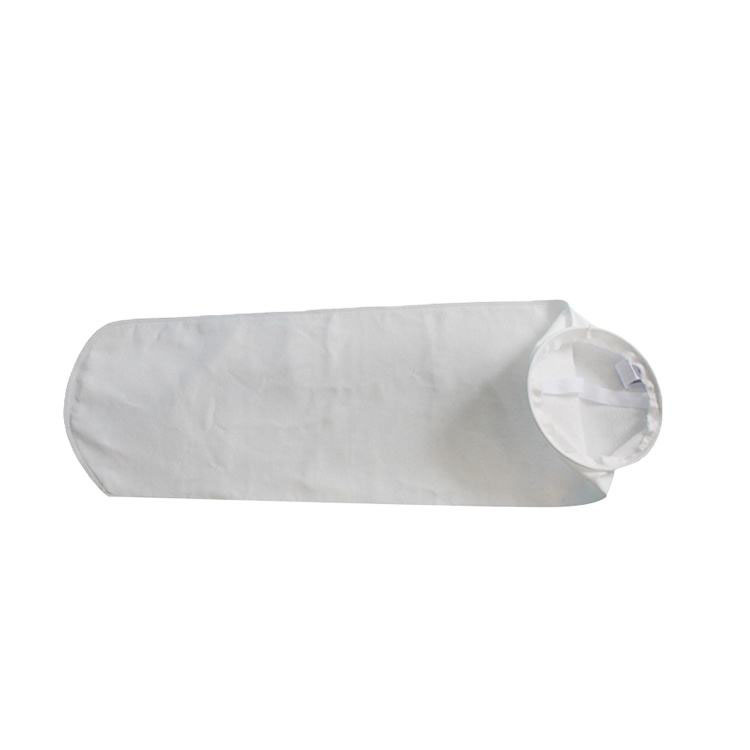
The Micron Ranges I Actually Use in Real RFQs
Below is the blunt version I wish more suppliers gave upfront.
| Micron rating | What it usually targets | Where I would spec it | What usually goes wrong |
|---|---|---|---|
| 1 µm | Fine suspended solids, polishing duty, downstream cartridge or membrane protection | Final-stage polishing, sensitive nozzles, product-quality cleanup | Bags blind early, ΔP rises fast, service life disappoints |
| 5 µm | Fine-to-medium solids where quality matters but 1 µm is too aggressive | General polishing, intermediate cleanup, cartridge pre-protection | Buyers expect “near-absolute” performance without test data |
| 10 µm | Versatile middle ground for many liquid processes | Paint, coatings, chemicals, process water, transfer protection | Overused as a default when contamination data is weak |
| 25 µm | Medium solids removal with lower flow penalty | Pre-filtration, tank cleanup, bulk liquid protection | Too coarse for fine asset protection, lets nuisance fines through |
| 50 µm | Coarse solids capture with better throughput and bag life | Strainers, bulk solids removal, pre-stage bagging | Mistakenly chosen for polishing jobs it cannot handle |
| 100 µm | Large particulate and debris removal | First-pass cleanup, heavy contamination, rough service | Used as a cost saver when the process really needs staged filtration |
That table is not a standard. It is a field-minded buying framework. And that distinction matters.
Nominal vs Absolute Micron Rating Is Where Specs Get Sloppy
Here comes the fight.
Nominal vs absolute micron rating is the difference between a looser retention claim and a far tighter performance claim backed by a defined testing logic, and if the seller cannot explain which one they mean, the number on the page is doing more marketing work than engineering work.
I have no patience for vague language here. “Nominal” is often used to suggest an approximate capture threshold, while “absolute” usually signals a much tighter claim at that particle size. But the nasty little detail is this: those words only mean something when the vendor also tells you the test conditions, the efficiency basis, the fluid, the flow, and the media construction. Without that, “absolute” can become a confidence trick dressed as a specification.
Ask for the ugly details. Ask for the bag size, ring type, media structure, temperature limit, chemical compatibility, food-contact status if relevant, and actual performance data. Ask what happens after loading, not just on day zero. Ask whether the bag is meant to catch, polish, or protect. The people who can answer fast are usually the people worth buying from.
FAQs
What is filter bag micron rating?
A filter bag micron rating is the manufacturer’s stated particle-size target, expressed in micrometers, that tells you what size contaminants the bag is intended to retain under defined test conditions, fluid properties, media construction, and flow assumptions; it is a selection signal, not a standalone guarantee of field performance.
In practice, the lower the micron number, the smaller the particles the bag is intended to catch. But that does not mean lower is always better. Finer bags often load faster and create more pressure drop.
What is the difference between nominal and absolute micron rating?
Nominal versus absolute micron rating means the difference between a broad, less tightly defined retention claim and a far stricter performance claim tied to a stated test method or efficiency threshold, which is why two bags both labeled 10 micron can behave very differently in service.
My rule is simple: if the vendor cannot explain the test basis, the terms are incomplete. Treat nominal as approximate, treat absolute as something that still needs proof, and never buy the label without the method behind it.
How to choose micron rating for filter bags?
Choosing the right micron rating for filter bags means working backward from the contaminant size you must remove, the downstream equipment you must protect, the fluid viscosity, the acceptable pressure drop, and the bag material’s chemical compatibility, then validating the choice against real operating dirt load and changeout frequency.
If you only choose by price or by a copied legacy spec, you are gambling. Start with particle data, define the bag’s job, and then make operations sign off on expected ΔP and replacement interval.
Is a 1 micron filter bag always better than a 50 micron filter bag?
A 1 micron filter bag is not automatically better than a 50 micron filter bag because a finer bag usually raises pressure drop, shortens service life, and may solve the wrong problem if the real goal is coarse solids removal, pre-filtration, or protection of a downstream cartridge stage.
I would choose 1 micron only when the process actually needs fine cleanup. For many bulk liquid jobs, 25 or 50 micron is the smarter answer because it gives you flow stability and longer runs.
Your Next Step
Do this next.
Take your current bag spec and rewrite it with real operating data: fluid type, temperature, target particle size, solids loading, housing size, flow rate, acceptable ΔP, and whether you need nominal or absolute-style performance. Then send that package, not just a micron number, through send your micron target and application data.
That single change will save more time than another week of browsing supplier pages. And if you want my blunt opinion, that is the difference between buying a filter bag and buying a result.


