

Three words matter.
Most water-treatment buyers obsess over the final polishing step, yet the ugly economics usually sit upstream, where a badly chosen prefilter lets grit, rust, scale flakes, polymer clumps, and suspended fines slam into cartridges, foul membranes, blind UV trains, and push operators into a cycle of unstable ΔP, rushed change-outs, and arguments about “media quality” that are really design mistakes. Why pretend the front end is cheap when it is often where the avoidable damage starts?
I’ll be blunt: in 2024, “good enough” prefiltration is a fantasy. On April 10, 2024, EPA finalized the first national PFAS drinking-water standard, with legally enforceable limits and a monitoring-and-treatment clock that puts more pressure on utilities and industrial plants to run tighter, cleaner systems; Reuters noted that the rule sets limits ranging from 4 to 10 parts per trillion and gives systems three years to complete monitoring, then five years to reduce concentrations where limits are exceeded. That does not mean nylon mesh bags remove dissolved PFAS by themselves. It means upstream solids control is getting less optional, because every unstable pretreatment step makes downstream compliance more expensive.
Table of Contents
The dirty secret behind “simple” prefiltration
I’ve watched this movie.
Plants spend real money on RO, UF, cartridge polishing, UV, stainless housings, and commissioning paperwork, then get stingy on the prefilter, as if the first capture step should be selected by habit rather than solids profile, bag geometry, ring fit, media style, and service interval math. And then they act surprised when maintenance hates the system. Why does the cheapest line item so often create the most expensive argument?
The macro trend is ugly enough. EPA’s 7th Drinking Water Infrastructure Needs Survey says U.S. drinking-water systems will need $625 billion over the next 20 years for pipes, treatment plant upgrades, tanks, and related assets, which tells me buyers are entering a decade where wasted maintenance hours and avoidable consumable burn will get less tolerated, not more.
And the legal pressure is already real. Reuters reported a $10.3 billion 3M settlement in June 2023 tied to PFAS claims from U.S. public water systems, and by late 2023 Reuters was tallying more than $11 billion in PFAS-related settlements across the sector. That is not a nylon-bag story on its face. It is a signal that water treatment decisions are now operating under litigation, disclosure, and procurement scrutiny that rewards boring reliability over wishful spec-sheet marketing.
Where nylon mesh bags actually earn their keep
This is the part vendors mangle.
A nylon mesh bag is not magic media, and I get impatient when suppliers talk about “high efficiency” without first asking about particle size distribution, solids shape, viscosity, housing basket geometry, target flow, and whether the buyer needs coarse screening, stable surface capture, or a sacrificial step before finer media. Isn’t that the difference between engineering and brochure poetry?
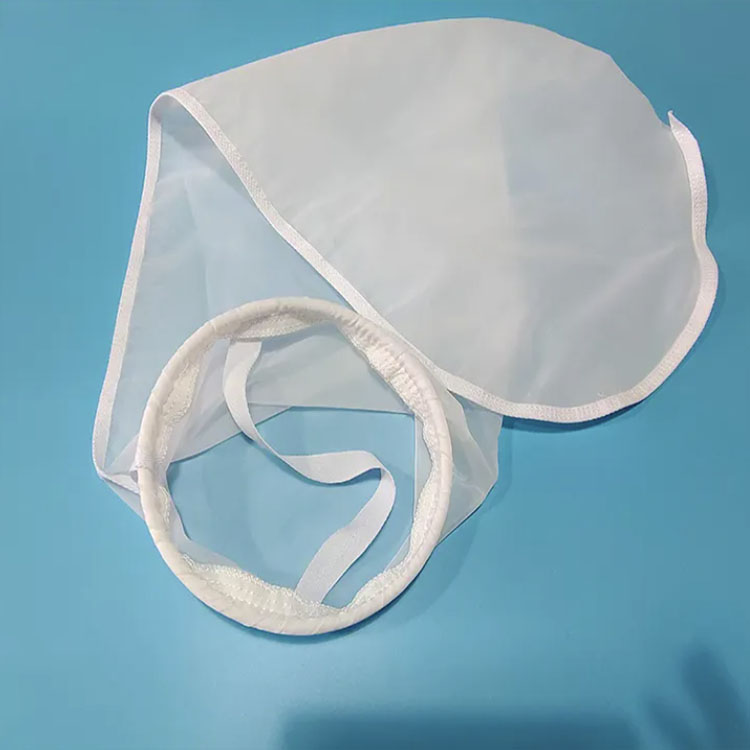
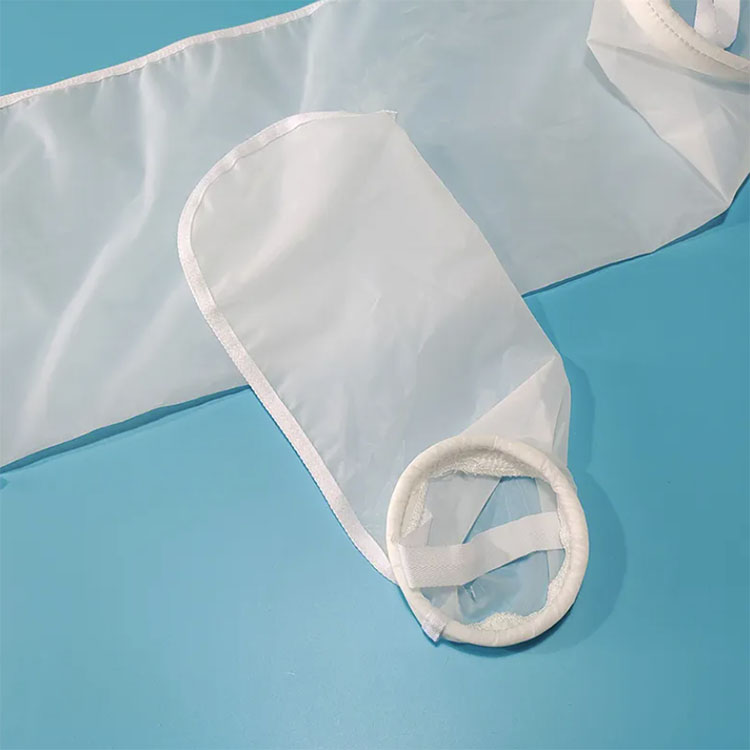
On your site, the broad nylon filter bags category is the right parent page because it frames nylon bags as practical for water treatment and general liquid filtration, while the more specific Size 1/2 nylon filter bag for water treatment page tightens the use case around process-water polishing, grit, rust, suspended solids, and prefiltration ahead of membranes, cartridge filters, or UV systems.
The more technical buyer will want the monofilament angle, and rightly so. Your NMO nylon monofilament filter bag with PP/steel ring options page does the better job of naming what matters: nylon monofilament mesh, PP or steel ring choices, smooth mesh surface, and use as a primary strainer or prefiltration step ahead of cartridges or membranes. That is stronger than generic “liquid filter bags” copy because it speaks the language of seating, fit, flow, and repeatability.
And yes, details matter. The Nylon 66 filter bag, FDA grade, 10–600 mesh page gives you specific entities buyers actually search: Nylon 66, 10–600 mesh, FDA-grade, and common housings. I would use those entities selectively in supporting copy, not spam them into every paragraph like an amateur.
The prefiltration chain that saves money before anyone notices
Small step. Big effect.
If I were writing the process logic for a skeptical maintenance manager, I would say it this way: use a coarse mechanical barrier first, use a nylon mesh bag second when you need a predictable surface-filtration step with fast change-outs, and then let cartridges or membranes do the expensive fine work they were actually bought to do. Why burn premium media on trash that a bag could have intercepted thirty minutes earlier?
Your own site already contains the sequence. The duplex basket strainer for continuous liquid filtration page is the coarse-end answer when shutdowns are unacceptable and debris loads are erratic, especially ahead of pumps and heat exchangers. The stainless steel bag filter housing for Size 1/2 bags page is the practical middle layer for standard Size 1 and Size 2 bag formats, while the custom process filtration system manufacturer page is where the conversation should move once the buyer has to standardize flow, pressure, micron targets, solids load, and documentation across projects.
What each step should do
| Stage | What it should intercept | Typical hardware | What usually goes wrong when it is skipped |
|---|---|---|---|
| Coarse front-end screening | Rust flakes, gasket debris, pipe scale, large agglomerates | Duplex basket strainer | Pumps, valves, and exchangers take the hit |
| Mid-stage prefiltration | Suspended solids that are too variable for cartridges to absorb economically | Nylon mesh bag filters in Size 1/2 housings | Cartridges blind early, ΔP swings, operators over-change media |
| Fine polishing | Smaller residual particulate before RO, UF, UV, or final process use | Cartridge vessel, membrane train, UV-protected loop | Fine media gets used as a trash collector instead of a polishing step |
| Standardized plant rollout | Multi-point control of micron, housing fit, seals, traceability, and replenishment | Integrated filtration program or skid package | Procurement buys mismatched parts and calls it a quality problem |
Here’s my hard truth: most failed bag-filter installations are not media failures. They are sequencing failures, fit failures, or expectation failures.
How to choose micron-rated nylon filter bags without lying to yourself
Start upstream first.
A buyer who begins with “What micron do I need?” is asking the wrong first question, because micron rating without solids profile, loading pattern, and downstream sensitivity is just a number printed on packaging for emotional comfort. How many bad purchases begin with a neat specification and end with a filthy basket?
Start with the contaminant, not the catalog
If the water carries visible grit, intermittent rust bursts, resin crumbs, sand fines, coating fragments, or seasonal debris, I usually want the first conversation to be about what must be intercepted before the expensive step, not what marketing calls “fine filtration.” For many process-water loops, a nylon mesh bag works because it is a clean, serviceable surface-filtration step rather than a vague catch-all.
Match bag format to housing reality
Size 1 and Size 2 sound boring. They are not. They determine bag volume, hold-up, change-out ergonomics, and whether the operator fights the hardware every time a bag swells, cakes, or seats badly. PP ring versus steel ring is not decorative either; seating stability and handling feel matter when a system is opened every week, every shift, or every time influent quality goes sideways.
Use monofilament when the job is screening, not storytelling
Monofilament nylon mesh bags make sense when you want more predictable surface capture, better cake release, and less lint-style confusion than a fuzzy, depth-loading medium. That does not make them universally better. It makes them better when the job is screening and protecting, not pretending a coarse prefilter should substitute for final polishing.
Stop treating chemistry as a footnote
Nylon is widely useful in aqueous service, but “widely useful” is not the same as “compatible with everything.” Water chemistry, temperature, oxidants, cleaning protocol, and solvent exposure still matter. I would rather see one cautious compatibility note than twenty chest-thumping claims about universal performance.
The internal linking move I would make here
No fluff here.
I looked through the site, and I would not waste this page’s authority on empty blog taxonomy pages that say “No results”; I would push readers toward pages that actually match commercial intent, technical intent, and equipment-selection intent. Isn’t that what internal linking is for?
So inside this article, I would route users naturally into nylon filter bags, then into the more specific Size 1/2 nylon filter bag for water treatment, then laterally into NMO nylon monofilament filter bag with PP/steel ring options, operationally into stainless steel bag filter housing for Size 1/2 bags, upstream into duplex basket strainer for continuous liquid filtration, and finally into custom process filtration system support when the reader graduates from product curiosity to project scope.
FAQs
What is water treatment prefiltration with nylon mesh bags?
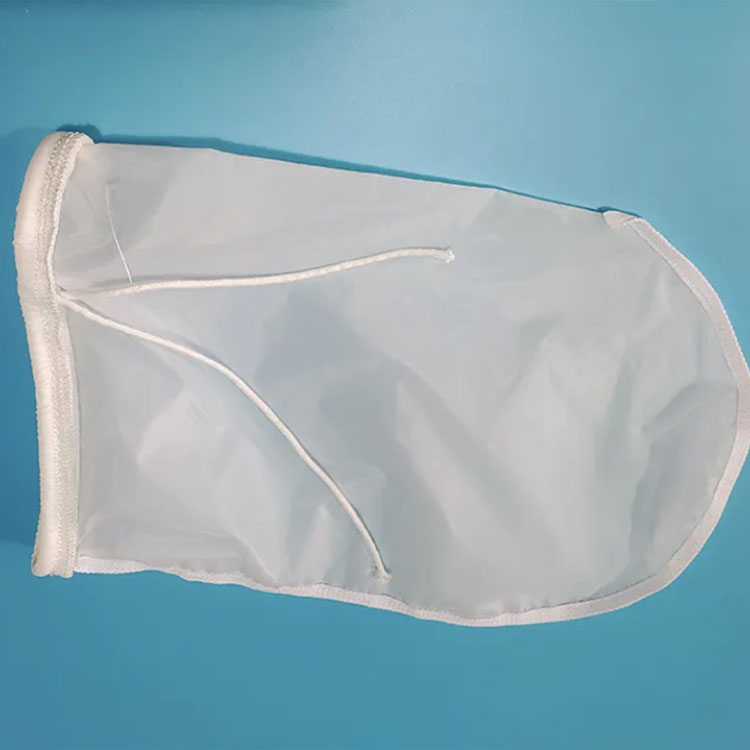
Water treatment prefiltration with nylon mesh bags is the use of woven nylon bag media, often monofilament and installed in Size 1 or Size 2 housings, to remove larger suspended solids before cartridge, membrane, UV, or polishing stages so downstream equipment sees a cleaner, more stable particle load. In practice, that means less particulate shock loading, more predictable ΔP, and easier change-outs when the solids are coarse enough for a mesh-based surface-filtration step.
How are nylon mesh bag filters different from felt liquid filter bags?
Nylon mesh bag filters are surface-filtration media with defined woven openings, while felt liquid filter bags are depth-style media that trap solids within a thicker structure, so nylon mesh usually makes more sense for repeatable screening, cake release, and protecting downstream stages from larger particulate loads. I use nylon mesh when I want cleaner screening logic and simpler solids handling, not when I need a depth-loading bag to chase finer particulate in a single step.
What micron-rated nylon filter bag should I use for water treatment?
The right micron-rated nylon filter bag for water treatment is the coarsest rating that reliably protects the downstream process, because oversized ambition at the prefilter stage usually shortens service life, raises pressure drop, and turns a cheap consumable into an expensive maintenance nuisance. The sane method is to start with solids size, loading swings, housing fit, flow target, and what sits downstream—RO, UF, UV, cartridge, nozzle, meter, or heat exchanger—then adjust after actual run data.
Are monofilament nylon mesh bags good before RO, cartridges, or UV?
Monofilament nylon mesh bags are good before RO, cartridge filters, or UV when the assignment is upstream solids interception rather than dissolved contaminant removal, because their job is to stabilize particulate loading, reduce debris carryover, and keep the finer, more expensive stage from wasting capacity on material it was never meant to handle. That is why your site’s water-treatment nylon bag page explicitly positions the product before membranes, cartridge filters, and UV systems.
Your next steps
Do the boring math.
If this H1 page is meant to rank and convert, then keep the article honest, push the internal links toward live commercial pages, and make the buyer feel that you understand bag size, ring fit, mesh style, solids loading, and downstream protection better than the average catalog vendor. That is what serious buyers notice.
And if you want this page to pull revenue instead of just impressions, send readers from the educational angle into nylon filter bags, the application-specific Size 1/2 nylon filter bag for water treatment, the equipment-side stainless steel bag filter housing for Size 1/2 bags, and the higher-ticket custom process filtration system manufacturer page. I would make that path obvious, because the buyer who starts by asking about a bag often ends by needing a filtration program.

