
Table of Contents

Most supplier audits are theater
Start here.
I have sat through too many factory tours where the conference room looked perfect, the ISO certificate was framed like a religious object, and the sales manager kept saying “stable quality” while nobody could show me how a 5 µm Size 2 bag with a steel ring, Nylon 66 mesh, or PTFE media was actually controlled from incoming roll stock to final carton label. Why do buyers keep auditing the lobby instead of the line?
According to NIST’s Annual Report on the U.S. Manufacturing Economy: 2024, downtime eats 8.3% of planned production time and about $245 billion in discrete manufacturing, while defects add another estimated $32.0 billion to $58.6 billion. I do not read those numbers as abstract economics. I read them as a warning that a “cheap” filter bag supplier can become a very expensive operating habit.
And the lesson does not stay small. Reuters reported on March 5, 2024 that the FAA’s audit of Boeing and supplier Spirit AeroSystems found multiple cases of non-compliance in manufacturing process control, parts handling and storage, and product control after the January 5 Alaska Airlines 737 MAX 9 door-plug blowout. Different industry, same disease: weak supplier control hides inside normal paperwork until it does not.
My view is simple. A real supplier audit checklist is not a courtesy visit. It is a stress test.
The supplier audit checklist I would actually use
Not complicated.
I would structure the factory audit checklist around the exact places where filter bag production usually drifts: media identity, cutting accuracy, sewing or welding consistency, ring or collar fit, dimensional control, contamination control, packaging discipline, and change management. If the checklist cannot catch lot drift between a trial sample and the 800th bag in the next shipment, it is not a supplier qualification checklist. It is office décor.
| Audit Block | What I verify | Red Flags I take seriously | Evidence I want in hand |
|---|---|---|---|
| Company identity | Legal entity, plant address, export entity, subcontracting disclosure | “Main factory” is actually a trader; hidden outsourced sewing | Business license, plant org chart, subcontractor list |
| Incoming media control | Nylon, PTFE, PP felt, mesh grade, roll labeling, storage separation | Mixed rolls, handwritten relabeling, no quarantine area | Incoming inspection forms, lot stickers, media certs |
| Construction process | Cutting, seam method, welding or stitching standard, operator training | One “master worker” holds the whole process together | SOPs, training logs, first-piece approval records |
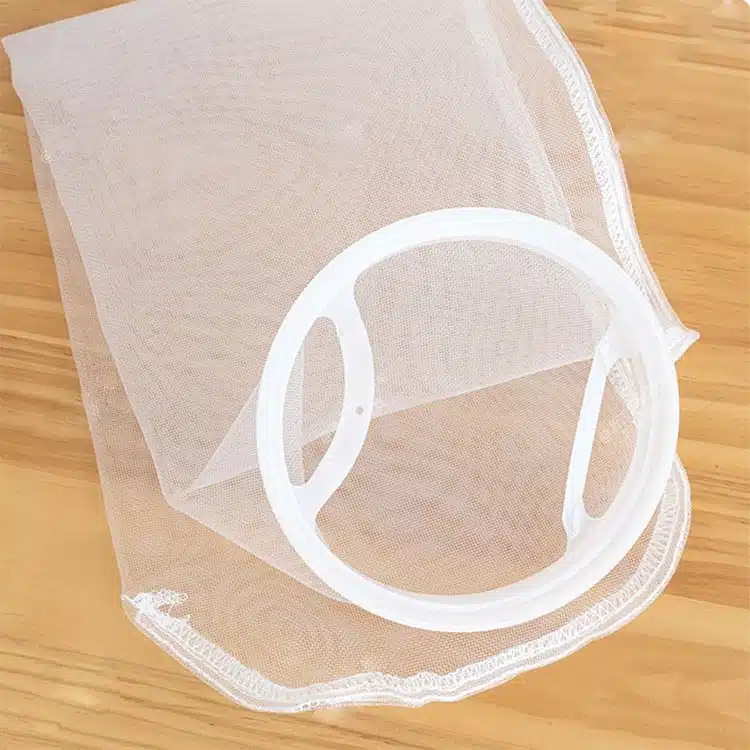
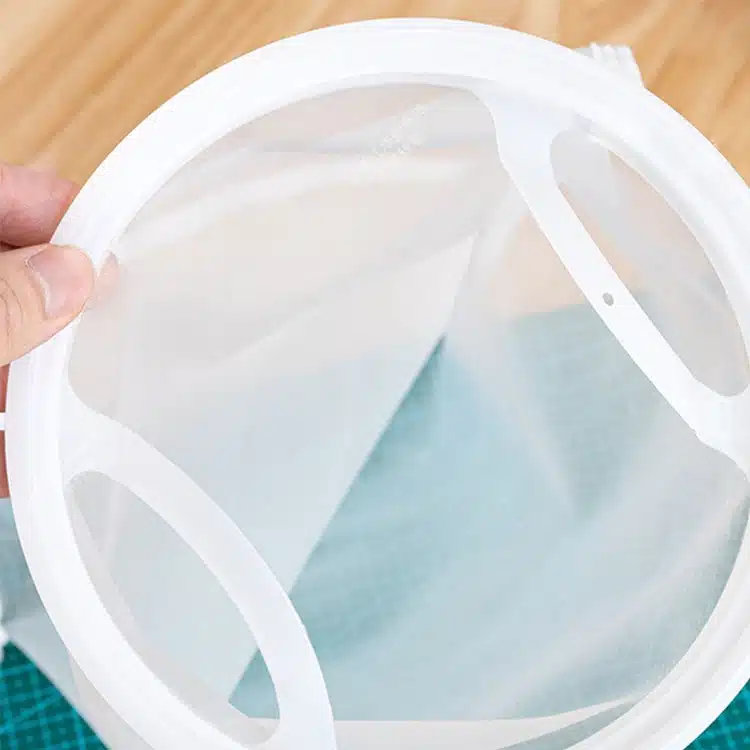
| Ring/collar assembly | PP ring, steel ring, welded collar, fit tolerance | Ring deformation, mixed ring suppliers, no fit gauge | Assembly specs, incoming ring inspection, gauge records |
| Dimensional control | Bag length, diameter, collar geometry, seam allowance | Samples pass, routine lots drift | In-process inspection sheets, final dimension reports |
| Performance logic | Micron claim, nominal vs tighter retention language, ΔP expectations | “5 micron” with no test basis or use case | Test method, datasheet revision history, application notes |
| Sample-to-production repeatability | Does the approved sample match normal production? | Hero samples built differently | Batch records, retained sample file, change notices |
| Cleanliness and packaging | Loose fibers, dust, sealing, carton labels, SKU control | Dirty packing tables, mixed SKU cartons | Packaging SOP, label template, final packing checklist |
| Change control | Media change, ring change, sewing thread change, supplier switch | No formal approval before changes | ECO/change log, customer notification procedure |
| Corrective action | Complaint handling, root cause, recurrence prevention | “We replaced it” counts as CAPA | NCR log, CAPA records, 8D or equivalent |
On your own site, the natural internal path is already there: the liquid filter bag selection guide frames the buying logic; nylon filter bags cover general-duty water, paint, ink, and resin; PTFE filter bags push into acid/alkali, pharma, electronics, FDA-grade options, 0.1–100 µm ranges, and products advertised up to 260°C; bag filter housing basics for industrial buyers ties bag choice to fit and service access; and the filter bag RFQ template turns technical control into purchasing control. That sequence matches how serious buyers think under pressure.
What I check on the floor before I believe a word
Watch them work.
I do not care how polished the catalog looks if the operator cannot show me the incoming lot card for the exact media being cut, the in-process dimension check for that lot, and the final label that ties the packed carton back to a real production record. Why would I approve a supplier who cannot prove sameness?
Media identity is where the lie usually starts
This matters first.
If a supplier says it can make Nylon 66 bags for general-duty filtration, FDA-grade 10–600 mesh nylon products, PTFE bags for corrosive chemicals, and higher-temperature options for acid/alkali service, I want to see physically separated inventory, lot-specific receiving records, and clear rules for how H₂SO₄, NaOH, hot solvent, food-contact, and general water-duty products are kept from becoming one big mixed-material mess. Brochure range is easy. Segregation discipline is hard.
Approved samples are often fake comfort
I have seen this trick.
A supplier sends one beautiful trial sample, built by its best operator, checked by its best supervisor, packed by its cleanest station, and then ships routine production with looser seam control, looser ring fit, and weaker label discipline. That is why I would tie this article directly into your filter bag sample approval checklist, because approval only means something when the sample and the shipment are built under the same rules.
Housing fit is not a side issue
It never was.
A filter bag can be “correct” on paper and still fail in service because the ring seats badly, the basket support is worn, the Size 1 or Size 2 assumption is wrong, or the housing geometry creates ugly deformation under surge. That is why I would force any supplier evaluation checklist to include real installed-housing photos, basket condition, seal material, and service access, then route the buyer to bag size standards explained and bag filter housing basics for industrial buyers before the PO gets signed.
The ugly red flags most vendor audit checklists miss
Here is the hard part.
The biggest supplier failures are usually boring, and boring failures are exactly why buyers miss them, because nobody wants to admit that the real problem was a mixed roll rack, a skipped first-piece check, a lazy ring-fit gauge, or a datasheet revision nobody told procurement about. Does that sound dramatic enough for a boardroom slide? No. Does it still cost money? Every week.
I also think many buyers run a supplier qualification checklist that is too narrow. Reuters reported in June 2024 that an Italian court pushed for stronger supplier checks after worker-exploitation probes involving luxury supply chains, with the court president saying companies did not invest enough in control systems and warning that ultra-low prices should ring alarm bells. Different product, same buying lesson: if the price looks absurdly low, your audit checklist had better ask why.
And paperwork failure is not just clerical failure. In Kauffman and Associates, GAO said the RFQ was latently ambiguous about what vendors had to submit; in Technatomy Corporation, the wrong pricing template helped sink the quotation; and in Guidehouse Inc., part of the quote not reaching the designated inbox made the vendor ineligible. I know those are government cases, not filter bag POs, but the transfer is obvious: if your factory audit checklist does not specify document names, owners, revision control, and the exact submission path, you are inviting avoidable confusion.
When filtration discipline becomes enforcement
This is where people wake up.
EPA announced in September 2024 that Federal Cartridge would pay $349,471 in penalties and make filtration-related upgrades expected to cut more than 1,700 pounds of particulate matter and more than 400 pounds of lead per year. In June 2024, EPA also said Smith Foundry would install continuous pressure-drop monitors, recording equipment, and a bag-leak detection system, and update its operations and maintenance plan. These are baghouse cases, not liquid filter bag sourcing, but I use them for one reason: once filtration control breaks down badly enough, it stops being a maintenance story and becomes an enforcement story.
So yes, I want to see the supplier’s quality paperwork. But I also want to know whether the factory thinks in terms of prevention, monitoring, and corrective action, or whether it waits for the complaint and then starts acting surprised.
How to audit a filter bag manufacturer without fooling yourself
My rule is blunt.
Audit the plant in the same order that failure happens in real life: media receipt, storage, cutting, sewing or welding, ring assembly, dimensional check, sample retention, final packing, then complaint handling. Anything else is too neat to be useful.
The five questions I would ask in the plant
- Show me three finished bags from three different lots for the same SKU, then show me the records that prove they were built to the same construction.
- Show me how you separate nylon, PTFE, felt, and mesh inventory when multiple jobs run on the same shift.
- Show me the gauge, fixture, or inspection record you use to confirm ring fit and bag dimensions for Size 1 and Size 2 production.
- Show me the exact difference between the approved trial sample and the routine production release file.
- Show me the last complaint, the root cause, and the correction that stopped it happening twice.
If the supplier cannot answer those five without escorting you back to the meeting room, your factory audit checklist already found something useful.
FAQs
What is a supplier audit checklist?
A supplier audit checklist is a buyer-controlled document that verifies whether a manufacturer can repeatedly make the specified filter bags, document lot history, control dimensional and material variation, and prove compliance before a trial sample quietly turns into a long-term purchasing commitment.
I use it to stop optimism from becoming inventory. For this topic, it should connect technical fit, process control, and purchasing records in one chain, not three disconnected forms.
How do I audit a filter bag manufacturer?
To audit a filter bag manufacturer, inspect the plant in the same order failure appears in real production: incoming media, lot coding, cutting, sewing or welding, ring assembly, dimensional control, packaging cleanliness, change control, and the paperwork that ties the shipped carton back to the tested construction.
I would never start with the catalog. I would start at receiving, then walk forward until I can see how a bag becomes a SKU and how a SKU becomes a repeat PO.
What documents should a supplier qualification checklist demand?
A supplier qualification checklist should demand the records that connect claims to repeat production: media certificates, incoming inspection logs, dimensional inspection records, micron test methods, retained-sample controls, nonconformance reports, change notices, packaging standards, and the exact datasheet language that will be copied into the PO.
If the supplier only hands over a brochure and a certificate, I assume the real controls are thinner than the sales pitch. The paperwork should tell the same story as the production floor.
What are the biggest red flags in a factory audit checklist?
The biggest red flags in a factory audit checklist are vague test methods, mixed lot storage, missing first-piece approval, no formal change control, weak ring-fit verification, and a sales team promising nylon, PTFE, mesh, felt, and custom construction with no visible separation of risk or records.
I trust ordinary discipline more than polished language. Clean segregation, boring forms, and consistent labeling beat flashy promises every time.
Should I audit nylon and PTFE suppliers differently?
Nylon and PTFE suppliers should not be audited as if they are interchangeable, because the chemical window, temperature margin, cleanliness expectations, and construction controls differ enough that a passing audit for water, paint, or ink service may still be a bad audit for acid, alkali, electronics, or high-temperature duty.
That is why I like your site’s split between nylon filter bags and PTFE filter bags. It reflects the way real process risk is separated in the field.
Your next step
Do this now.
Take this supplier audit checklist into the next factory visit, then pair it with your filter bag sample approval checklist and your filter bag RFQ template. Ask the supplier to show three lots, three records, and one real corrective action. If they can do that cleanly, you may have a manufacturer. If they cannot, you probably have a salesperson with a workshop behind him.


