
Table of Contents
Most buyers start with the wrong savings
Three words first.
I have watched too many buyers compare one bag price to another while the real bill is hiding in hot shutdowns, bag-change labor, chemical attack, abrasive solids, and the quiet embarrassment of pretending a disposable felt bag and a reusable metal mesh bag are interchangeable just because both fit the same housing. Why are we still buying filtration like stationery?
On your site, this H1 should not work alone. The strongest support path is already visible: the liquid filter bag selection guide, bag filter housing basics for industrial buyers, and the hardware-level stainless steel bag filter housing for Size 1/2 bags give this topic a technical spine, while the comparison pages on nylon mesh filter bags for water, paint, ink, and resin and PTFE filter bags for aggressive chemicals keep the buyer from forcing one article to answer every use case badly.
My blunt view is simple. Stainless steel filter bags are better only when the process is nasty enough that washability, shape retention, thermal tolerance, and repeat use beat the cheap comfort of throwaway media.
Where reusable mesh actually wins
Heat changes everything.
Once temperature climbs, solvents get aggressive, solids turn abrasive, or operators are changing bags often enough to hate you for it, reusable stainless steel mesh filter bags stop looking expensive and start looking honest; and in food, beverage, and drug-adjacent systems, the argument gets even sharper because FDA says equipment must be designed for cleaning and maintenance and product-contact surfaces must not be reactive, additive, or absorptive, while USDA’s dairy equipment guidance specifies 316-series stainless steel in cheese brine systems rather than pretending every stainless grade ages the same way.
| Operating condition | Stainless steel reusable mesh is usually the better choice | Disposable media is usually still smarter | My read |
|---|---|---|---|
| Coarse solids, 50–500 μm | Yes, especially when bags can be washed and returned to service repeatedly | No, unless contamination rules force single-use | This is classic metal mesh filter bag territory |
| Hot liquids, roughly 80–200°C | Often yes, especially where nylon will soften or age badly | Only if finer capture matters more than durability | High-temperature liquid filtration bags earn their keep here |
| Abrasive slurries or hard particles | Usually yes | Not ideal | Reuse beats shredding soft media |
| Solvent or aggressive cleaning duty | Often yes, depending on grade and chemistry | Sometimes PTFE, not nylon | This is where “cheap bag” logic dies |
| Food or brine service | 316 usually beats 304 | Only if single-use hygiene logic dominates | Chlorides punish lazy grade selection |
| Fine polishing below about 5–10 μm | Usually no | Usually yes | Felt or other depth media still wins plenty of jobs |
| Low-frequency maintenance on a simple line | Maybe not | Often yes | If you clean rarely, reuse savings can be fake savings |
And here is the part sales pages hate. A reusable mesh filter bag is not automatically a sustainability win if cleaning takes longer than replacement, if operators cannot inspect it properly, or if the process needs sacrificial depth loading rather than surface screening. Why lie about that?
The compliance angle most suppliers dodge
Not a theory.
On April 10, 2024, Reuters reported that the EPA issued its first national PFAS drinking-water standard, a rule the agency said would affect 6% to 10% of the roughly 66,000 U.S. public water systems and reduce exposure for about 100 million people; and EPA’s own March 2024 technology-and-cost document laid out the serious PFAS treatment paths as granular activated carbon, ion exchange, and reverse osmosis/nanofiltration, not a magic coarse screen that somebody decided to call “advanced.”
That matters because stainless steel filter bags in water duty are usually prefiltration, not the final answer. They make sense when they remove grit, rust, scale, fiber, agglomerates, and other solids that would blind downstream GAC, foul ion-exchange resin, or make RO/NF performance worse, which is a much more defensible claim than pretending reusable mesh solves dissolved-chemical compliance by itself. Why oversell a screen when the law is asking for a treatment train?
And the legal pressure is real. Reuters reported 3M’s $10.3 billion PFAS settlement in June 2023, and Reuters also reported on June 11, 2024 that industry groups sued to block the EPA drinking-water rule, which tells you exactly how filtration choices move from maintenance trivia into boardroom math once contamination, monitoring, and treatment costs become legal line items.
304 vs 316: stop pretending the grade is cosmetic
Numbers matter now.
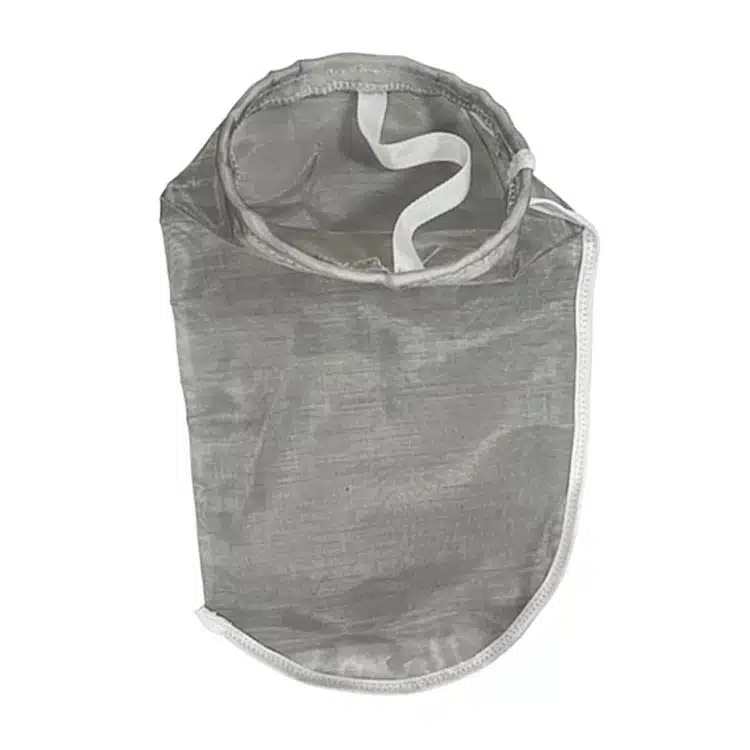
I do not trust any quote that says “stainless” without asking four ugly questions first: chloride exposure, pH, temperature, and cleaning chemistry. If the duty is ordinary process water, many oils, broad industrial service, or coarse solids removal with moderate corrosion risk, a 304 stainless steel filter bag or basket can be a rational choice. If chlorides, brine, aggressive washdown, solvent attack, or corrosion-sensitive hygiene matter, 316 stainless steel filter bags are the safer conversation, and official guidance backs that instinct in the places where corrosion gets expensive fast.
I have seen this movie before. Someone saves a little on material grade, then pays for it with premature staining, corrosion anxiety, harder validation, shorter service life, and endless operator suspicion that “the bag quality changed,” when the real mistake was buying a stainless name instead of a stainless specification.
Your own internal content already gives you the comparison framework. Use the liquid filter bag selection guide to frame micron, duty, and bag size; use nylon mesh filter bags for water, paint, ink, and resin for general-duty screening; send corrosive-duty traffic to how to choose PTFE filter bags for aggressive chemicals; and when the buyer is finally ready to think like an operator instead of a searcher, move them to bag filter housing basics for industrial buyers and then the product page for stainless steel bag filter housing for Size 1/2 bags. That is how you turn informational traffic into RFQ-quality traffic.
When metal mesh is the wrong answer
Be honest here.
If you need sub-micron polishing, sterile one-pass capture, deep dirt loading, or a bag that can be discarded faster than it can be cleaned, stainless steel mesh is often the wrong answer, full stop. And if the housing fit, support basket, seal logic, or pressure-drop discipline is bad, reusable mesh will not rescue the system; it will just fail in a more expensive and more irritating way.
That is why this page should also send maintenance-minded readers to why filter bags collapse and how to prevent it. Your site is already making the correct argument that collapse is usually a system problem wearing a consumables mask, and that is exactly the kind of blunt technical truth industrial buyers remember.
The internal route that will actually convert
Links need jobs.
If I were tightening this page for search and conversion, I would use the internal sequence like this: define capture logic with the liquid filter bag selection guide, answer housing objections with bag filter housing basics for industrial buyers, split media comparisons through nylon mesh filter bags for water, paint, ink, and resin and PTFE filter bags for aggressive chemicals, catch failure-prevention intent with why filter bags collapse and how to prevent it, and close hardware-ready readers on stainless steel bag filter housing for Size 1/2 bags. That sequence matches how your site is already structured across selection guides, technical specs, maintenance content, and product pages.
Most industrial sites overlink sideways and underlink forward. Yours does not need more random links. It needs links that move the reader from “What is this?” to “What fits my duty?” to “What fails here?” to “What do I quote?”

FAQs
What are stainless steel filter bags?
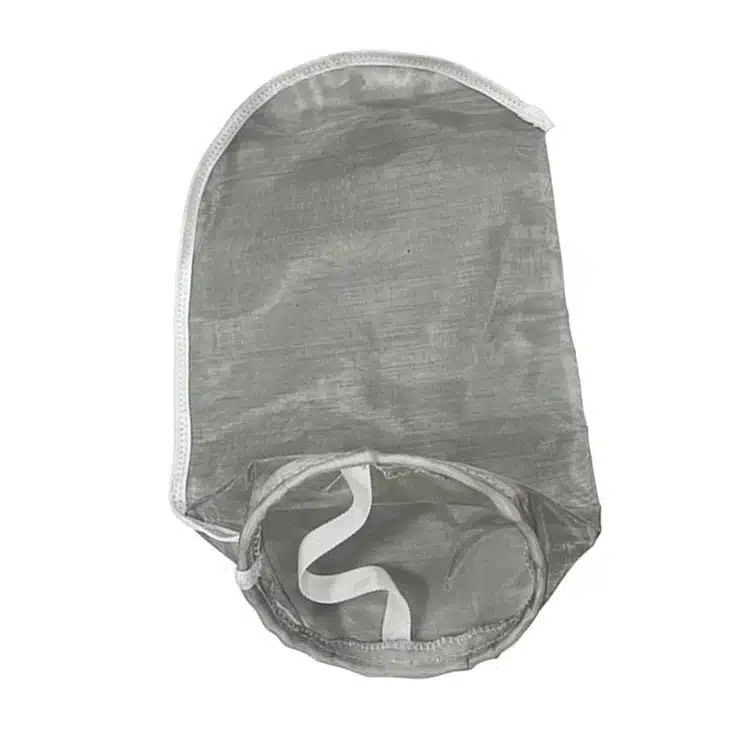
Stainless steel filter bags are reusable filtration elements made from woven or perforated metal media, usually installed in a bag-style housing or supported basket, to remove coarse to medium solids from liquids in services where heat, abrasion, solvent exposure, or repeated cleaning would punish disposable polymer media. They are best understood as durable surface-screening tools, not universal replacements for fine felt or depth media.
When are reusable mesh filter bags the better choice?
Reusable mesh filter bags are the better choice when particle capture is relatively coarse, the fluid is hot or chemically hard on polymers, the process runs often enough to justify cleaning labor, and the cost of repeated disposable-bag changes exceeds the cost of wash, inspection, and reuse. I would add one more rule: if your operators hate bag changes, count that labor honestly before pretending disposables are cheaper.
Should I choose 304 or 316 stainless steel filter bags?
304 stainless steel filter bags usually fit general water, oil, and mild chemical service, while 316 stainless steel filter bags are the safer specification for chloride-bearing liquids, brine, aggressive cleaning regimes, and other corrosion-sensitive duties where a cheaper grade can turn a small materials saving into a maintenance problem. In food or hygiene-sensitive duty, FDA’s cleanability requirements and USDA’s 316-series brine guidance should end the argument quickly.
Can stainless steel mesh filter bags replace felt bags?
Stainless steel mesh filter bags can replace felt bags in reusable, coarse-to-medium filtration duty, but they are not a universal swap because felt media usually handles finer sacrificial capture and depth loading better, especially when the process values one-pass clarity more than washability and service life. This is where buyers fool themselves most: reuse sounds efficient right up until the process needs depth, not just screen area.
Are stainless steel filter bags enough for PFAS removal or compliance?
Stainless steel filter bags are not a standalone PFAS-removal technology; in regulated water duty they are best used as front-end prefiltration that removes grit and protects downstream systems such as GAC, ion exchange, or RO/NF, which EPA evaluated in 2024 as effective PFAS-treatment approaches. That is the adult answer, and it is far more useful than dressing up a coarse screen as a compliance solution.
Your next step
Do this now.
If you want this page to bring in serious buyers instead of soft traffic, ask them for eight data points before any quote starts: fluid chemistry, temperature, viscosity, target micron range, solids loading, flow rate, housing size, and cleaning method. Then force one more decision that most suppliers dodge: should this duty be specified as a disposable capture step, or as a reusable stainless steel mesh cycle with documented wash-and-inspect intervals?
That is the real buying line. And if the reader cannot answer it yet, send them deeper into your own site with the pages that already do the work: liquid filter bag selection guide, bag filter housing basics for industrial buyers, and stainless steel bag filter housing for Size 1/2 bags. That is how this H1 stops being content and starts acting like a sales engineer.


