
Table of Contents

Most OEM Filter Bag Programs Break After the Demo
Here is truth.
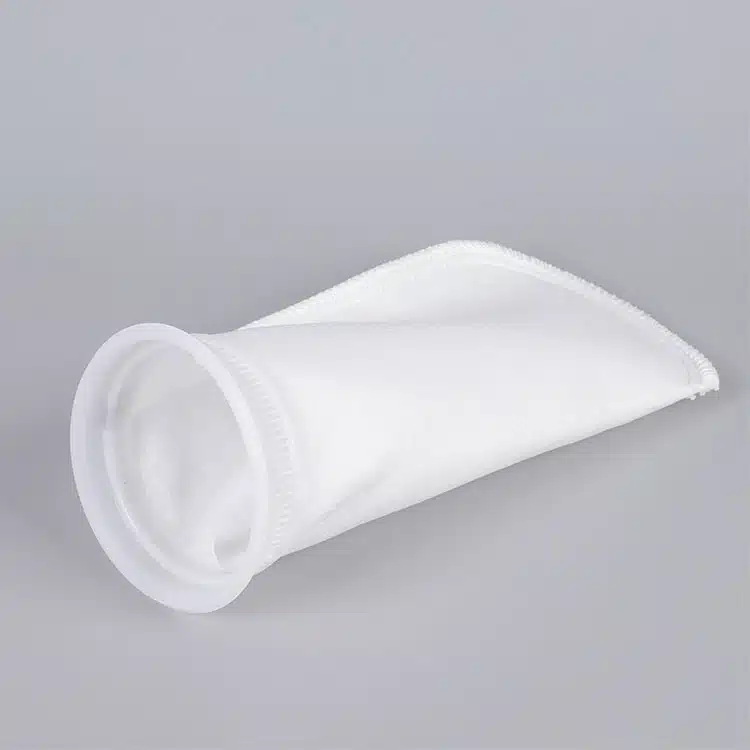
I have seen too many buyers celebrate a beautiful prototype, sign off a 5 µm Size #2 bag with a stainless ring, and then act shocked when the third shipment drifts on dimensions, label content, fit, or media behavior, because the sample was treated like proof of capability when it was really only proof that one good bag existed on one good day. Why do so many teams confuse a moment with a system?
That is why I would not let this page stand alone as a glossy commercial pitch. On Best Filter Bag, the strongest internal path is already visible: the OEM & private label filtration program, the filter bag specification sheet, the filter bag sample approval checklist, the filter bag RFQ template, the guide on micron rating for filter bags, and the page on bag filter housing basics for industrial buyers. That is not filler. That is the actual buying path from vague inquiry to repeat-order discipline.
And I will say the rude part out loud. Most “OEM programs” are not programs at all. They are a sample, a quote, and a prayer.
The Prototype Trap Buyers Keep Walking Into
One bag lies.
A prototype can prove basic fit, visible construction, and early filtration logic, but it cannot prove lot-to-lot media identity, repeatable sewing or welding, packaging control, carton traceability, or whether the factory will still follow the same spec when the order changes from 20 bags to 2,000 bags spread across three delivery dates and two warehouse destinations. Why are people still pretending otherwise?
According to NIST’s 2024 manufacturing economy report, downtime still eats 8.3% of planned production time and costs roughly $245 billion in U.S. discrete manufacturing. I do not read that as abstract macro data. I read it as the bill that shows up when one “minor” consumable decision keeps getting waved through without control.
So what changes between prototype and repeat order? Usually the boring things. And boring things are where money leaks.
What I would lock before the first repeat order
| Program Stage | What weak suppliers show you | What a disciplined OEM filter bag program controls | What usually goes wrong when control is weak |
|---|---|---|---|
| Prototype | One nice-looking sample | Approved media, micron language, bag size, ring style, housing fit | Buyer assumes the sample equals future production |
| Sample approval | General “looks good” feedback | Written sign-off on fit, label, packaging, tolerances, and documents | QA and purchasing approve different products without noticing |
| First bulk PO | Cheapest quote wins | Pre-production review, lot traceability, pack-out, carton marks, inspection checkpoints | Wrong label, wrong ring, mixed lots, ugly receiving errors |
| Repeat orders | Reuse old PO notes | Stable SKU, revision control, pack count, delivery logic, reorder code | Reorders drift because the old information was incomplete |
If I were writing this page to sell and qualify at the same time, I would move every serious reader from this H1 straight into the filter bag sample approval checklist and then into the filter bag specification sheet. That sequence forces the buyer to stop talking about “custom filter bags” as a vague wish and start naming the exact media, micron class, bag size, ring type, and housing reality that must survive repeat production.
Cheap Quotes Usually Hide Expensive Drift
Low price seduces.
But low price, by itself, tells me almost nothing useful, because a cheap custom filter bag quotation can be the result of thinner control, weaker incoming verification, looser labeling, vague micron wording, or a supplier who knows the buyer has not pinned down nominal versus absolute intent, Nylon 66 versus PTFE, or Size #1 versus Size #2 fit. Why would I trust a low number more than a clear process?
That suspicion is not paranoia. In June 2024, Reuters reported that Milan’s court pushed for stronger supplier checks after probes involving LVMH and Armani units, and the court president said companies often failed to invest enough in control systems and should treat ultra-low prices as alarm bells. Different product category, same adult lesson: if the quote is suspiciously low, your supplier controls had better be stronger, not weaker.
I have no patience for the fantasy that industrial filtration is somehow exempt from that logic. A 5 µm bag for water service, a PTFE bag for HCl or NaOH duty, and a private label pack for a distributor are not the same risk, not the same process, and not the same commercial object, even when the sales spreadsheet tries to flatten them into one line item.
And if the project includes your branding, the stakes go up again. The moment your name sits on the carton, pack identity stops being clerical work and becomes liability control. That is exactly why Best Filter Bag’s OEM & private label filtration program talks about sample support, labeling, packaging coordination, and repeat-order consistency instead of pretending supply stability begins only after the PO lands.
Private label is where sloppy OEM programs get exposed
Brands remember everything.
If you are running private label filter bags, I would insist on unit labels, carton marks, batch identity, pack count, country-of-origin logic, and revision control before I approved a single commercial shipment, because a technically correct bag with muddy labeling is still a bad program once receiving, warehouse staff, and the next buyer cannot tell one SKU from another. Why build a repeat-order business on packaging fog?
That is not just me being hard-nosed. CBP’s country-of-origin marking guidance says foreign-origin goods entering the U.S. generally must be marked with the English name of the country of origin, and the FTC’s Made in USA guidance warns marketers to check origin rules and avoid claims that could mislead buyers about where a product was actually made. If you private-label industrial filter bags and get lazy with origin language, that is not branding. That is exposure.
The RFQ Decides Whether Repeat Orders Stay Clean
Paperwork bites.
I know engineers hate hearing that, but the handoff from prototype to repeat orders does not live in the lab alone. It lives in the RFQ, the approved drawing set, the packaging callout, the inspection language, and the commercial identifiers that prevent everyone from silently quoting, shipping, and receiving slightly different products under the same name. Why do buyers wait until the second shipment to become specific?
That point has real legal teeth. In GAO’s Kauffman and Associates decision, the protest was sustained because the RFQ was latently ambiguous about what vendors had to submit. In GAO’s Guidehouse decision, the quotation was not timely received in the required manner, and the protest failed. Government procurement is not industrial filtration, obviously. But the lesson maps over perfectly: ambiguity kills comparisons, and sloppy submission discipline kills otherwise viable quotes.
So here is my rule. A repeat-order RFQ for custom filter bags should never say only “same as sample” unless that sample is tied to an approved spec sheet, a stable SKU, and a controlled packaging standard. Otherwise you are not placing a repeat order. You are rerolling the dice.
That is why I would wire the middle of this article into the filter bag RFQ template and the filter bag specification sheet. One page tightens the buying request. The other page locks the technical meaning. Together, they do what most supplier pages never even try to do: reduce vague inquiries before they turn into expensive arguments.
Material, Micron, and Housing Fit Are Where Repeat Orders Live or Die
Specs matter.
I do not trust any OEM filter bag manufacturer who talks about repeat orders without talking about media, micron language, and housing fit in the same breath, because repeat supply only works when the bag that passed the prototype stage still behaves the same way in the real housing, under the real ΔP window, with the real liquid, at the real temperature, and against the same downstream risk. Why would I separate the bag from the system that decides whether it fails?
On your site, the smart move is already half-built. The page on micron rating for filter bags pulls buyers away from lazy “1 micron solves everything” thinking, while bag filter housing basics for industrial buyers reconnects bag choice to vessel fit, basket support, pressure drop, bag size, and service access. That internal pairing is exactly right for this H1 because repeat orders fail less often when the buyer stops treating the bag as a floating commodity.
Here is the hard truth I have learned. Many “filter bag failures” are really one of five uglier things: wrong media for chemistry, wrong micron language, wrong ring fit, worn basket support, or a reorder that copied an old note instead of an approved spec. That is why I get suspicious whenever a supplier says “standard replacement” too quickly.
The mistakes I see most often
Three keep repeating.
A buyer uses nylon when the duty is really pushing toward PTFE because IPA, acid wash, or cleanliness sensitivity makes material risk more expensive than the media upgrade. Another buyer writes “5 micron” without naming nominal versus tighter retention intent, then compares quotes that were never comparable. And a third buyer signs off the bag but never verifies the housing seat, ring type, or basket condition. Then everyone blames the bag. Convenient, isn’t it?
If your process is general-duty water, paint, ink, or resin, nylon may be the honest answer. If the line is dealing with aggressive chemistry, low-fiber-shedding needs, pharma-style cleanliness, electronics fluids, or advertised service up to 260°C, PTFE stops looking expensive and starts looking sane. But sane only counts when the spec says so, the sample confirms it, and the reorder still calls it the same way.
FAQs
What is an OEM filter bag program?
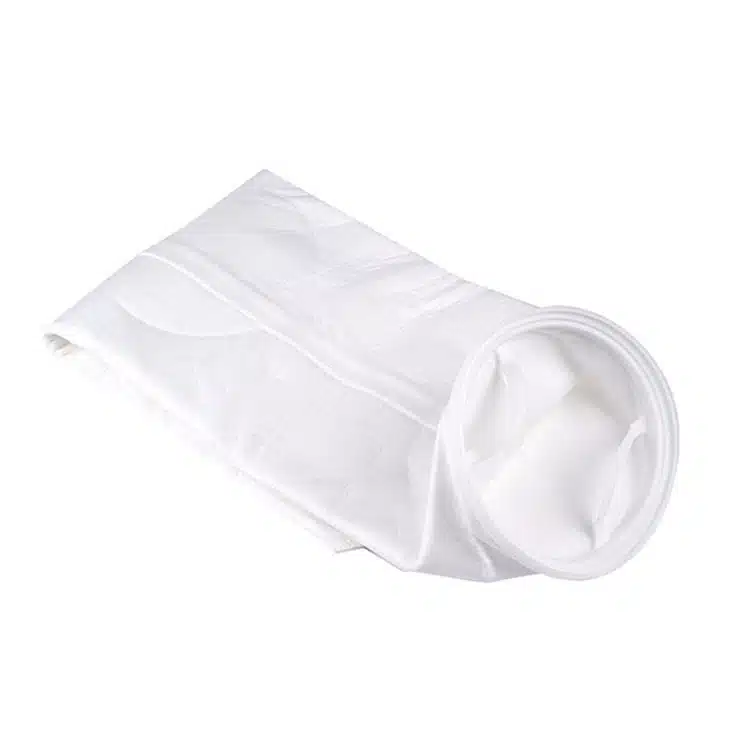
An OEM filter bag program is a controlled supply arrangement in which the manufacturer develops, samples, documents, labels, and repeatedly produces filter bags to one approved specification so material, micron rating, bag size, ring fit, packaging, and lot identity stay stable from the first prototype through every later order.
I would not call it a real program until purchasing, QA, and operations are all approving the same thing with the same identifiers. Too many suppliers sell “custom” and deliver improvisation.
How do I move from prototype to repeat orders?
Moving from prototype to repeat orders means converting a sample that merely fits and filters into a locked commercial standard with approved drawings, media callouts, micron language, housing fit checks, label content, pack counts, lot traceability, inspection checkpoints, and a reorder code that purchasing can issue without rewriting the job every time.
My advice is blunt: stop celebrating the sample too early. The sample is the audition. The repeat order is the job.
What should I approve before the first bulk PO?
Before the first bulk purchase order, buyers should approve the production-intent sample, exact media and micron definition, bag size, ring or collar style, housing compatibility, packaging and labeling format, inspection method, accepted tolerances, and the documents that prove the factory is shipping the same product it had you test.
If one of those is still fuzzy, the order is not ready. It is just emotionally ready.
How do I choose between nylon and PTFE in a custom filter bag program?
Choosing between nylon and PTFE in a custom filter bag program means matching chemical exposure, operating temperature, fiber-shedding tolerance, cleaning method, and downstream risk to the media, because nylon usually wins on cost in general-duty service while PTFE earns its price when chemistry, heat, or cleanliness makes failure expensive.
I never answer that question with “which is better?” I answer it with “what are you willing to let fail?”
What should a repeat-order RFQ include?
A repeat-order RFQ for custom filter bags should restate the approved part code, media, micron rating, size, ring style, quantity, pack-out, labeling, delivery window, and document package so the supplier quotes the same item, purchasing compares the same item, and receiving books the same item.
If the RFQ still relies on memory, old emails, or “same as last time,” it is not controlling anything. It is borrowing luck.
Your Next Move
Do this now.
If you want this H1 to pull in serious buyers instead of casual traffic, turn it into a hard-edged conversion page that forces clarity. Push readers from the program overview into your OEM & private label filtration program, then into the filter bag sample approval checklist, the filter bag specification sheet, the filter bag RFQ template, the guide on micron rating for filter bags, and finally bag filter housing basics for industrial buyers. That is how you qualify the reader, answer the technical objection, and make repeat orders easier to win.
And if I were the buyer, I would send one RFQ with eight non-negotiables attached: liquid chemistry, temperature, micron target, nominal versus tighter retention language, bag size, ring style, housing photos, and pack-label requirements. No romance. No supplier poetry. Just a custom filter bag program that can survive repeat orders.


