
Table of Contents

Nylon still wins
Three words matter.
I do not buy the lazy supplier pitch that every demanding liquid needs exotic media, because Best Filter Bag’s own product architecture already admits the obvious: nylon filter bags are positioned for water treatment, paint, ink, resin, process water, and general liquid service, while the more specialized PTFE path is separated into its own category and guide for harsher chemistry. Why are so many buyers still paying for fear instead of fit?
And the pressure is getting real. On April 10, 2024, the EPA finalized the first national drinking-water standard for PFAS, with enforceable limits of 4.0 parts per trillion for PFOA and PFOS and 10 parts per trillion for PFNA, PFHxS, and GenX; the rule took effect on June 25, 2024; Reuters reported that public water systems have three years to monitor and five years to reduce exceedances; and EPA says U.S. drinking-water infrastructure needs total $625 billion over 20 years. Add Reuters on 3M’s $10.3 billion PFAS settlement, and filtration stops looking like a low-stakes consumables purchase. It starts looking like compliance, liability, and procurement discipline.
Water, paint, ink, and resin are four different fights
Wrong assumption. Wrong bag.
Water service usually rewards practicality, which is why Best Filter Bag’s size 1/2 nylon filter bag for water treatment is framed as pre-filtration before membranes, cartridge filters, or UV systems rather than as some miracle final barrier, and I think that is the honest way to sell nylon in 2026. A nylon bag can remove grit, rust, and suspended solids; it cannot rescue a utility from PFAS regulation by itself, because EPA’s own treatment reviews keep pointing to GAC, ion exchange, reverse osmosis, and nanofiltration as the serious PFAS-control technologies. Why pretend a bag house style answer solves a chemistry problem?
Paint, ink, and resin are messier, and this is where lazy filtration advice usually falls apart. Best Filter Bag’s custom nylon bag for paint and ink liquid filtration is aimed at gels, pigment clumps, dried skin, and visible defects; its heat-set monofilament page stresses low lint and uniform openings; and its NMO page explicitly calls out protection for pumps, nozzles, and meters. That is the real issue in coatings and ink lines: not mystical retention, but preventing visible trash and fiber shedding from becoming a downstream quality problem.
I will say the impolite part. Most bad filter-bag purchases are not material failures. They are thinking failures. Buyers ask for “1 µm” or “Size 2” before they define viscosity, solids geometry, ring style, housing model, change-out labor, or whether the line is prefiltration, transfer polishing, or final finish protection. Best Filter Bag’s own selection-guide logic is stronger than most supplier copy because it keeps dragging the reader back to micron, material, bag size, pressure drop, and housing fit in the same conversation. That is exactly right.
Where nylon mesh filter bags actually earn their keep
Hard truth first.
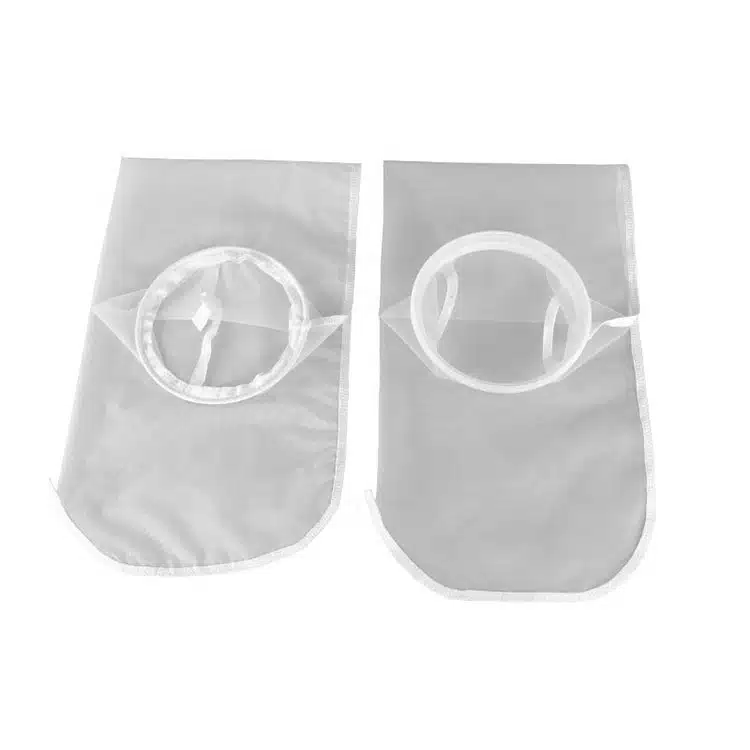
Nylon mesh filter bags make sense when you need surface capture, decent flow, quick change-outs, and clear solids screening in liquids that are chemically compatible with nylon, and they make even more sense when you are protecting downstream cartridges, membranes, spray nozzles, filling heads, or metering equipment from visible particles and non-deformable debris. When suppliers blur that simple rule, who benefits? Usually the quote sheet, not the plant.
| Application | What nylon usually does well | What buyers usually get wrong | Best internal path |
|---|---|---|---|
| Water treatment | Removes grit, rust, and suspended solids before finer stages | Treating bag filtration like a complete PFAS or dissolved-contaminant solution | size 1/2 nylon filter bag for water treatment |
| Paint and coatings | Screens gels, skin, agglomerates, and visible defects during transfer or fill | Using fibrous media too close to nozzles or finish-critical steps | custom nylon bag for paint and ink liquid filtration |
| Ink and pigment dispersions | Low-lint monofilament mesh helps protect pumps, meters, and nozzles | Buying on micron alone and ignoring ring fit or housing seal | nylon filter bags |
| Resin and adhesive service | Surface filtration and prefiltration ahead of cartridges or membranes | Ignoring viscosity, blinding risk, and chemical exposure | how to choose PTFE filter bags for aggressive chemicals |
That table is not theory. It is a compressed version of the site’s current product and blog signals: water treatment is framed as prefiltration, coatings and inks are framed around defect reduction, monofilament mesh is framed around low fiber shedding and stable openings, and PTFE is reserved for the ugly chemical jobs where nylon stops being the adult answer.
The internal links that actually pull their weight
Six links are enough.
If I were tightening this page for search, I would treat it as the commercial hub and send readers, in-context, to the pages that already match the site’s intent buckets: the broad nylon filter bags category page for category relevance, the liquid filter bag selection guide for informational depth, the bag filter housing basics for industrial buyers page for housing-fit objections, the water-treatment product page for application specificity, the paint-and-ink product page for finish-sensitive use cases, and the PTFE guide for the “when nylon is not enough” comparison path. Why spray random internal links everywhere when the site already has a workable hub-and-spoke structure?
And I would be blunt about anchor text. Generic anchors like “learn more” are wasted oxygen on a B2B filtration site. Use descriptive anchors that carry intent, such as “nylon filter bags for water treatment,” “liquid filter bag micron and material guide,” “bag filter housing basics,” and “custom nylon bag for paint and ink liquid filtration,” because the current site taxonomy already separates Products, Filter Selection Guides, Technical Specs & Buying Resources, and OEM/Private Label. The architecture is there. The page just needs to exploit it harder.
The specification sheet buyers should stop faking
Send real data.
Best Filter Bag’s homepage FAQ gets this mostly right: fluid type, flow rate, pressure, operating temperature, solids loading, target particle size, micron rating, housing model, connection type, and documentation requirements all matter, and replacement timing should be tied to differential pressure rather than wishful thinking. I would keep all of that, then add one ugly but necessary question: are the particles hard, soft, gelatinous, or deformable? That single detail often explains why a “correct” micron still runs badly in the line.
So my view is simple. Nylon mesh filter bags are not magic. They are disciplined industrial consumables. When the chemistry is compatible and the contaminant is screenable, nylon is often the cost-smart answer. When the process drifts into aggressive acid, alkali, solvent, or purity-sensitive duty, nylon stops being brave and starts being cheap in the worst possible way, which is why the PTFE comparison path needs to stay visible on this page.
FAQs
What are nylon mesh filter bags?
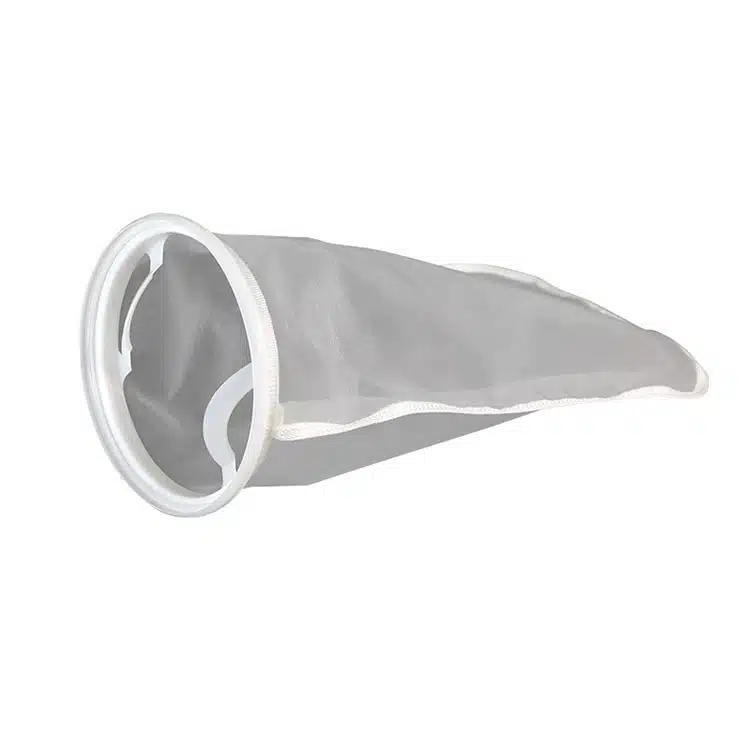
Nylon mesh filter bags are liquid-filtration elements made from woven nylon media, usually monofilament or Nylon 66, installed in bag housings to capture suspended solids from water, coatings, inks, resins, solvents, and process liquids while preserving higher flow than finer depth-style media. On Best Filter Bag, that definition is reflected across the nylon category, the water-treatment page, the paint-and-ink page, and the Nylon 66 product positioning.
Are nylon monofilament filter bags better for paint and ink?
Nylon monofilament filter bags are surface-filtration bags with uniform mesh openings that reduce linting and make them especially suitable for paints, inks, pigment dispersions, and resin streams where gels, dried skin, or hard particles must be screened without shedding fibers into nozzles, valves, or finished product. That is why the heat-set monofilament and NMO product pages lean so heavily on low-fiber, stable-opening language.
How do I choose micron rating for water, paint, ink, or resin?
The right micron rating is the particle-retention target that balances clarity, flow, viscosity, solids loading, and downstream sensitivity, meaning a 1 µm bag is not automatically better than 50 µm if pressure drop, blinding, or change-out labor makes the finer choice unstable in production. Best Filter Bag’s own selection content correctly ties micron choice to pressure drop, housing fit, and nominal-versus-absolute expectations rather than treating the number as a complete specification.
When should I choose PTFE instead of nylon?
PTFE becomes the better choice when chemical compatibility, solvent resistance, temperature exposure, or purity demands move beyond what nylon can safely handle, especially in aggressive acid, alkali, or solvent service where a cheap nylon bag can turn into an expensive contamination event. The PTFE guide on Best Filter Bag explicitly positions PTFE as the answer for corrosive chemical duty, not as a default upgrade for every liquid.
Can nylon mesh filter bags be reused?
Reusable operation depends on whether the bag uses cleanable mesh media, the contaminant is surface-loaded rather than embedded, and your plant can rinse or dry it without damaging seams, ring fit, or retention consistency, which is why some nylon mesh bags are reused and others are not. Best Filter Bag’s Nylon 66 and monofilament descriptions both lean toward cleanable surface filtration logic rather than one-time depth loading.
What information should I send before requesting a quote?
A serious quote request is a process-data package that includes liquid chemistry, temperature, flow rate, target micron, solids profile, bag size, ring style, housing model, baseline and dirty differential pressure, and any downstream equipment sensitivity, because suppliers cannot select intelligently from micron alone. Best Filter Bag’s homepage buyer FAQ already asks for most of this information, and that is one of the smarter parts of the site.
Your Next Step
Do this now.
Publish this page as the commercial hub for the phrase “nylon mesh filter bags,” keep the six in-copy internal links intact, and make the CTA practical instead of polite: ask the reader for liquid chemistry, operating temperature, target micron, bag size, ring type, housing model, and whether the bag is being used for prefiltration, transfer polishing, or final finish protection. That will qualify better leads and send cleaner relevance signals at the same time.
And one more thing. Stop selling nylon as “versatile” and start selling it as the right answer for clearly defined service windows. Skeptical buyers trust limits more than slogans. I know I do.
────────


