
Three words first.
Most buyers treat MOQ like a pricing issue, lead time like a factory issue, and filter bags like interchangeable consumables, which is exactly how they end up with a quote that looks fast on Monday, a delay email on Thursday, and a shipment that somehow became “custom” only after the purchase order landed. Why are smart teams still buying fog?
I do not buy the fantasy that MOQ and lead time live in a vacuum. Best Filter Bag’s own content already points to the real logic: micron definition, bag size, media choice, and RFQ discipline sit in different pages because they are different failure points, not because the CMS needed more blog posts. Before a buyer worries about price, they should understand What Is Micron Rating for Filter Bags?, Bag Size Standards Explained: #1, #2, 01, 02, 03, and 04, and How to Write a Clear Filter Bag Specification Sheet. That is not theory. That is the buying sequence.
Table of Contents

MOQ Is Where Weak Specs Go to Hide
Here is the hard truth.
A low MOQ does not automatically mean a strong supplier, and a high MOQ does not automatically mean a rigid one, because MOQ is usually a factory’s way of pricing setup pain, scrap risk, media availability, packaging complexity, and the chance that your order will interrupt a repeat run for somebody else. Why do buyers still pretend MOQ is just a negotiation trick?
I have seen this too many times: a buyer asks for “5 µm Size 2 filter bags” and thinks that is enough, while the supplier is quietly asking a different set of questions about Nylon 66 vs. PTFE, PP ring vs. steel ring, nominal vs. absolute intent, FDA paperwork, low-fiber-shedding surfaces, and whether the bag must fit a tired old housing with a bent basket. The moment those questions appear, the real MOQ appears with them.
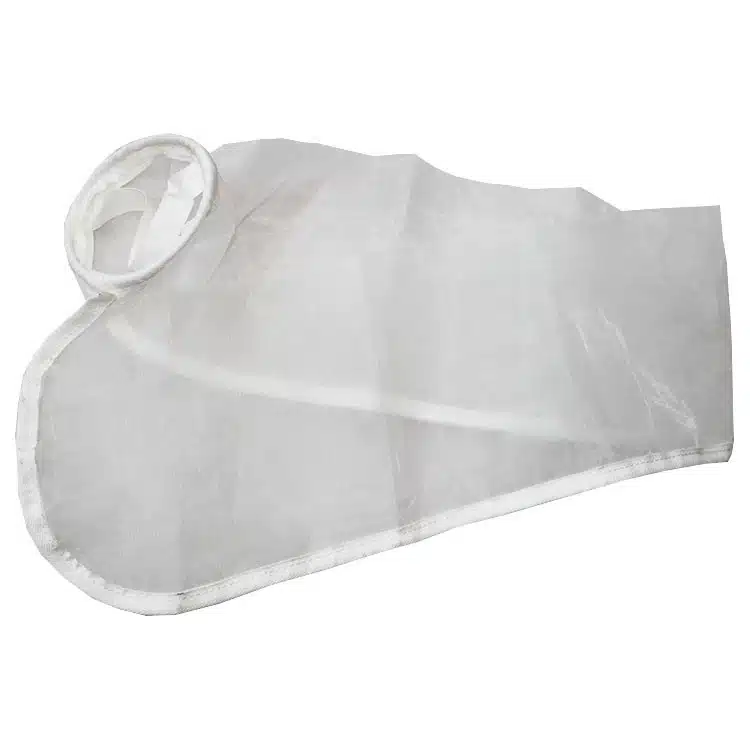
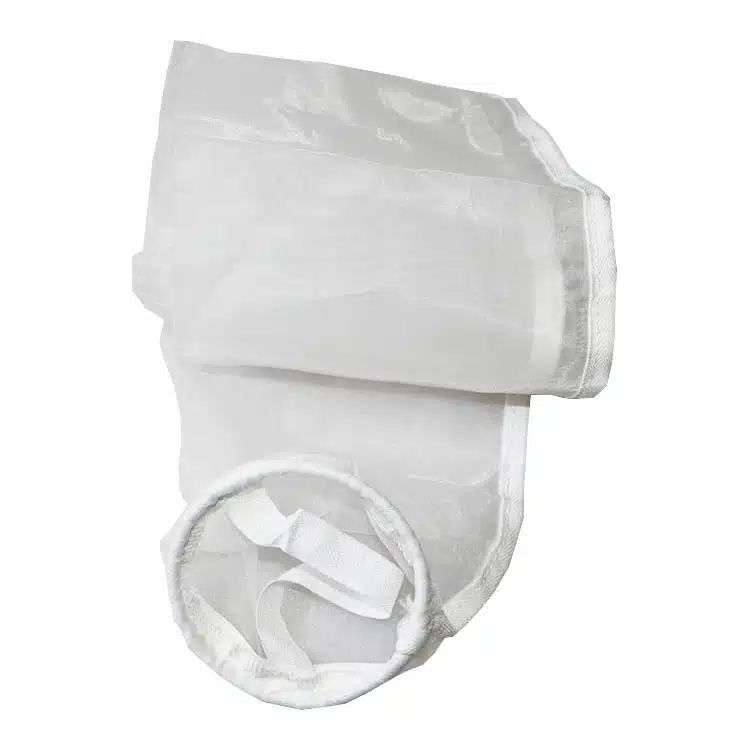
Best Filter Bag’s product structure makes that split obvious. Its Nylon Filter Bags pages lean into water treatment, paint, ink, resin, flexible mesh options, and even Nylon 66 FDA-grade builds in 10–600 mesh, while its PTFE Filter Bags pages move straight into acid/alkali duty, pharma and electronics use, FDA-grade filtration, 0.1–100 µm ranges, low-fiber-shedding surfaces, and products advertised up to 260°C. Those are not the same manufacturing job, so pretending they should carry the same MOQ is buyer self-harm.
Standard nylon and custom PTFE are not the same buying job
Short version.
If you are ordering a repeat nylon mesh bag in a common Size #1 or Size #2 format with a known ring style, you are asking the factory to do something it probably already does every week. If you are ordering a custom PTFE bag with FDA paperwork, special labeling, and a non-standard seal, you are asking the factory to reserve attention, not just media. Should those two requests really be priced and scheduled the same way?
And this is where many buyers get fooled. A supplier who accepts an ultra-low MOQ on a custom build may not be “flexible.” He may simply be burying development cost inside unit price, stretching lead time, or leaving enough ambiguity in the quote to reopen the conversation after sample review. I would rather hear an honest MOQ than a cheap lie.
Lead Time Starts Long Before Production
Not on the sewing line.
Lead time really starts when the request becomes clear enough for a manufacturer to schedule material, labor, inspection, and shipment without guessing, which is why I keep coming back to FAR 13.004, the GAO’s Kauffman decision, and the GAO’s Guidehouse decision: different market, same ugly lesson. Ambiguous requests create bad comparisons, and submission failures kill otherwise usable quotations. Why would industrial buying be exempt from that logic?
That is why the smartest internal page on this topic is not a product page. It is the Filter Bag RFQ Template: What Suppliers Need to Quote Fast. If the RFQ leaves out chemistry, pH, temperature, bag size, ring style, housing fit, annual demand, and documentation requirements, then the buyer has not shortened lead time at all. They have just moved the delay from the inbox to the factory floor.
The shipping calendar can wreck a clean quote
This part hurts.
Even when the factory is organized, the logistics chain may not be. Reuters reported on May 31, 2024 that Red Sea diversions were driving elevated rates and additional delays, and on July 17, 2024, Reuters reported Maersk’s warning that disruption had spread across its global network with delays across Asian hubs; earlier, Reuters also noted some importers were already seeing delays of two to more than 20 days. So when a supplier gives you a lead time, are you buying plant readiness, vessel availability, or both?
And no, I do not think buyers should shrug that off as “logistics stuff.” NIST’s 2024 manufacturing report ties downtime to 8.3% of planned production time and about $245 billion in discrete manufacturing, with defects adding another estimated $32.0 billion to $58.6 billion. A late filter bag shipment is not a small clerical annoyance when the bag protects a membrane train, coating line, resin batch, or filling step. It is a production risk wearing a purchasing label.
The Variables That Actually Move Filter Bag MOQ and Lead Time
This is the real list.
I would not let any buyer approve a quote until these variables are forced into one sentence, because the supplier is already using them whether the buyer names them or not. Why let the other side control the definition of the job?
Media choice
Chemistry wins.
Nylon usually buys speed when the liquid is manageable and the spec is standard. PTFE usually buys safety when the liquid is ugly, the cleanliness bar is higher, or the process sees heat, acids, alkalis, or solvents that punish casual material selection. If your fluid is at pH 2.5, the process peaks at 180°C, and downstream contamination tolerance is near zero, why are we pretending a generic nylon quote tells you anything useful?
Micron logic
One number lies.
A “1 µm” request without nominal-versus-absolute intent, solids profile, viscosity, and clean/dirty ΔP window is not a spec. It is a conversation starter pretending to be a requirement. That is why I push buyers back to the micron page first. Smaller numbers often mean more pressure drop, shorter service life, and more operator complaints, not more wisdom.
Fit and hardware
Bypass is real.
Bag size, ring style, collar fit, and housing condition decide whether the bag actually seals, changes out cleanly, and survives the shift. A supplier can build the “right” bag and still ship the wrong solution if the installed housing is tired, non-standard, or badly maintained. And yes, buyers still blame the bag for that. They should stop.
Paperwork and packaging
The admin matters.
COA requests, FDA statements, private-label cartons, lot traceability, barcode control, and sample approval can add more lead time than the cutting and sewing itself. People in procurement hate hearing that because paperwork feels invisible. But invisible work still burns calendar days.
A Benchmark Table I Would Actually Use Before Signing the PO
Use this.
These are working RFQ benchmarks I use to pressure-test a supplier’s response, not published market averages, and that distinction matters because honest quoting starts with scenario discipline, not fantasy precision.
| Purchase scenario | What the supplier is really seeing | Working MOQ benchmark* | Lead-time pressure | Buyer risk |
|---|---|---|---|---|
| Standard nylon filter bags, repeat Size #2, common ring, no special docs | Existing media, known setup, easy merge into repeat production | 100–500 pcs | Low to medium | Low |
| Trial order for standard nylon with one spec change | Small run, setup cost spread over fewer pieces | 50–200 pcs | Medium | Medium |
| Custom PTFE liquid filter bags with FDA paperwork or low-fiber-shedding requirement | Specialty media, tighter inspection, documentation burden | 50–150 pcs sample / 200–500 pcs repeat | High | High |
| Custom size or non-standard ring style | Tooling attention, fit risk, higher scrap probability | 100–300 pcs | High | High |
| OEM/private-label bulk order with custom cartons and SKU control | Packaging changeover, label approval, mixed operational handoffs | 300–1000 pcs | High | Medium to high |
| Emergency repeat order against an approved drawing | Priority slotting, possible premium freight | Existing MOQ, but expedited premium likely | Very high | High |
*These are buyer-side screening ranges I use to challenge quotes, not universal market rules.
The point is not to memorize those numbers. The point is to ask the next question. If a supplier quotes a very low MOQ on a highly customized PTFE construction, I want to know what they are sacrificing: margin, inspection depth, documentation, or schedule reliability. And if a supplier gives a long lead time on a standard nylon repeat build, I want to know whether the delay sits in media supply, factory loading, or shipping. Why accept a single number when the real risk sits in the explanation?
What Serious Buyers Do Differently
They tighten the sentence.
The strongest buyers send one clean commercial-technical line: liquid, pH, temperature, target micron, nominal or absolute intent, bag size, ring style, housing model, quantity split, paperwork requirement, and target ship window. Then they ask for three separate answers, not one soft promise: MOQ for sample, MOQ for first production, and MOQ for repeat orders.
I would also force a sample-vs-repeat distinction into every conversation. Factories behave differently when they are qualifying a build than when they are running a stable repeat item, and the buyer who mixes those two phases together gets a quote that feels fast but ages badly. That is why I like using the spec-sheet page and the RFQ template page together. One cleans the engineering sentence. The other cleans the commercial one.
FAQs
What is the MOQ for filter bags?
The MOQ for filter bags is the lowest order quantity a supplier will accept for a given construction, and it shifts with media availability, micron rating, bag size, ring style, packaging, traceability demands, and whether your order can be merged into an existing production run without expensive setup loss.
I do not treat MOQ as a fixed market truth. I treat it as a clue. When the MOQ suddenly rises, the supplier is usually telling you the job became less standard, less repeatable, or less worth interrupting a running line for.
How long is the lead time for custom filter bags?
The lead time for custom filter bags is the full clock from confirmed specification to shipment readiness, and it usually expands when the order needs non-stock PTFE media, FDA paperwork, unusual dimensions, sample approval, custom labels, or a production slot outside the factory’s normal repeat schedule.
The buyer mistake is waiting until after quotation to define those details. By then, the calendar is already dirty. Clean specs shorten lead time before production even starts.
Does PTFE usually require a higher MOQ than nylon?
PTFE filter bags usually carry a higher MOQ than nylon only when the request involves low-volume custom builds, specialty media, tight cleanliness demands, or documentation burdens, because the supplier is managing more setup risk, more material cost, and fewer chances to absorb your order into regular output.
That does not mean PTFE is always slow or expensive. It means PTFE punishes vague buying harder. When the spec is disciplined and repeatable, the conversation gets easier fast.
Can a buyer reduce filter bag lead time without paying premium freight?
A buyer can reduce filter bag lead time by sending a complete RFQ that defines liquid chemistry, temperature, micron target, nominal versus absolute intent, bag size, ring type, housing fit, documentation, and quantity logic, so the supplier does not waste days converting a vague request into an engineering conversation.
I have seen buyers save more time with a better first email than with rush shipping. Expedite fees are often just a tax on sloppy preparation.
What should be in an RFQ to get accurate MOQ and lead time?
The fastest way to get accurate MOQ and lead time is to tell the supplier exactly what you are buying, what it must fit, what it must survive, and what paperwork must ship with it, because missing details create delay long before the factory cuts a single piece of media.
At minimum, I want liquid name, pH, operating temperature, micron target, nominal or absolute language, bag size, ring style, housing model, trial quantity, repeat quantity, and required documents. Anything less is bargaining with yourself.
Your Next Move
Stop guessing now.
If you want serious quotes for filter bags, stop asking suppliers for one soft number and start demanding a structured answer: sample MOQ, first-order MOQ, repeat-order MOQ, sample lead time, production lead time, and shipping lead time. Then make the supplier tie every number to the exact build: nylon or PTFE, 1 µm or 25 µm, Size #1 or #2, PP ring or steel ring, FDA docs or none, standard pack or OEM label.
My advice is blunt because the market rewards bluntness. Read the spec first, not the sales line. Use the six pages above to tighten your buying language. Then send one RFQ that a manufacturer can quote without guessing. That is how you get a real delivery promise instead of a polite placeholder.


