
Table of Contents
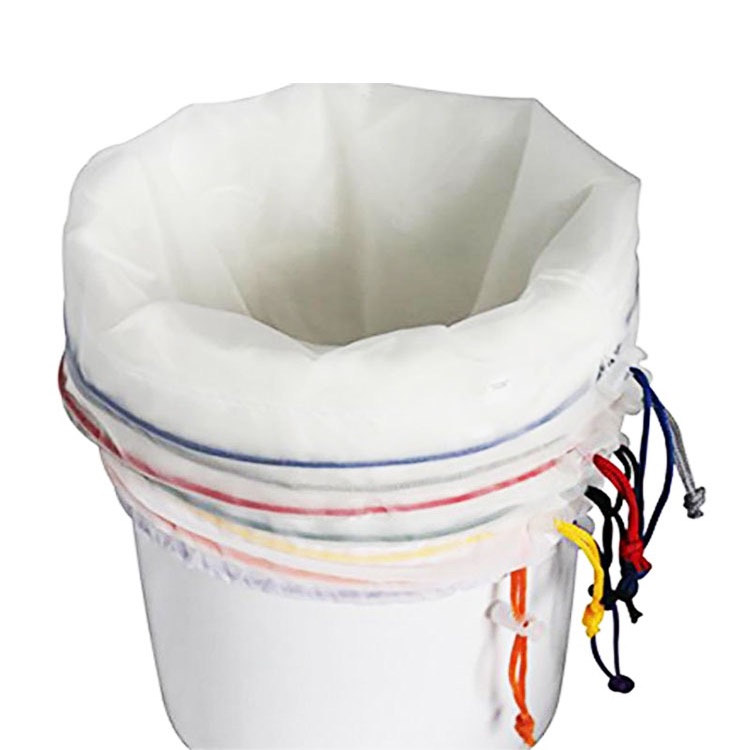
Most Buyers Start With the Wrong Question
Three words matter.
I have watched too many filtration discussions get hijacked by a single number, usually micron, while the real operating variables, fluid chemistry, solids load, temperature, housing geometry, change-out labor, and downstream sensitivity, sit ignored in the corner like they are somebody else’s problem, and then the same buyer wonders why the “right” bag became the wrong one after two shifts. Why are we still buying a number before we buy a failure mode?
This is not a soft market anymore. On April 10, 2024, EPA finalized the first national PFAS drinking-water standard, setting enforceable limits at 4.0 parts per trillion for PFOA and PFOS and 10 parts per trillion for PFNA, PFHxS, and GenX chemicals; Reuters reported that public water systems get three years to monitor and five years to reduce exceedances; and EPA’s 7th Drinking Water Infrastructure Needs Survey put U.S. drinking-water infrastructure needs at $625 billion over 20 years. Add Reuters’ coverage of 3M’s $10.3 billion PFAS settlement in 2023, and the message is plain: filtration choices now sit much closer to legal exposure, capex pressure, and procurement scrutiny than many suppliers want to admit.
Your own site already points in the right direction. Best Filter Bag separates intent into Filter Selection Guides, Industry Applications, Maintenance & Performance Optimization, and Technical Specs & Buying Resources, while the homepage and solutions page keep repeating the same adult buying logic: fluid, flow, pressure, temperature, micron target, solids load, housing details, and documentation all belong in the same conversation. I agree with that, and I would lean even harder into it.
Micron Rating Is a Tool, Not a Religion
Start here instead.
A filter bag micron rating is not the answer; it is the beginning of the argument, because the same stated rating behaves very differently when viscosity rises, particles deform, solids concentration spikes, seams load unevenly, or operators push a bag past a sane differential-pressure window, and that is exactly why lazy RFQs produce expensive results. Why do buyers still treat “1 µm” like a complete sentence?
If you want the internal page that should carry the semantic weight for this section, use filter bag micron rating explained. Best Filter Bag’s own technical content already frames micron rating as the particle-size target a bag is designed to retain, then immediately drags the reader back to reality: acceptable pressure drop, flow stability, and the difference between nominal and absolute expectations. That is the right move, because the bag that captures more is not always the bag that runs better.
Nominal vs absolute without the brochure fog
Here is the blunt version.
A nominal-rated bag is usually the economic choice when you need broad solids reduction, prefiltration, or upstream load management, while an absolute-style requirement belongs in the conversation when downstream cartridges, membranes, spray nozzles, filling heads, or finished-product specs are less forgiving, and the worst mistake is pretending those two buying modes are interchangeable. Who benefits when that difference stays vague? Usually the seller, not the plant.
I do not trust any spec sheet that gives a micron number and hides the duty. In water pretreatment, coarse or mid-range screening often protects the expensive stage. In coatings, resin, ink, and food transfer, the “best” micron is the one that removes the defect without strangling throughput. And in regulated or cleanliness-sensitive environments, smaller is not smarter if it drives ΔP into a wall before the batch is done.
Material Choice Is Where Bad Specs Get Expensive
Chemistry always wins.
Most bag failures that get blamed on micron are really material errors in work boots, because when the fluid attacks the media, sheds fibers into the product, deforms the ring, or turns a routine change-out into an operator complaint, the plant does not care that the original purchase order looked tidy. So why do so many buyers still treat media material like a drop-down menu?
Best Filter Bag’s catalog makes the split clearer than most supplier sites do. The nylon category is built around water treatment, paint, ink, resin, Nylon 66, mesh choices, and Size 1/2 replacements, while the PTFE category goes straight at aggressive process media, acid/alkali duty, pharma and electronics applications, smooth low-fiber-shedding surfaces, FDA-grade options, 0.1–100 µm ranges, and even 260°C service in one product line. That is not marketing fluff; that is a practical map of where general-duty filtration ends and hostile chemistry begins.
For readers who need the actual path, I would place nylon liquid filter bags for general-duty screening where you discuss water, paint, and ink, and I would place PTFE filter bags for corrosive and high-temperature service where you discuss acids, hot solvents, pharma, electronics, and cleanliness-sensitive duty. And yes, I would say it plainly: nylon is often the honest answer when chemistry is manageable and cost discipline matters, while PTFE becomes cheap insurance the moment failure costs more than media.
Bag Size Is an Operating Decision, Not a Data-Entry Field
Size changes labor.
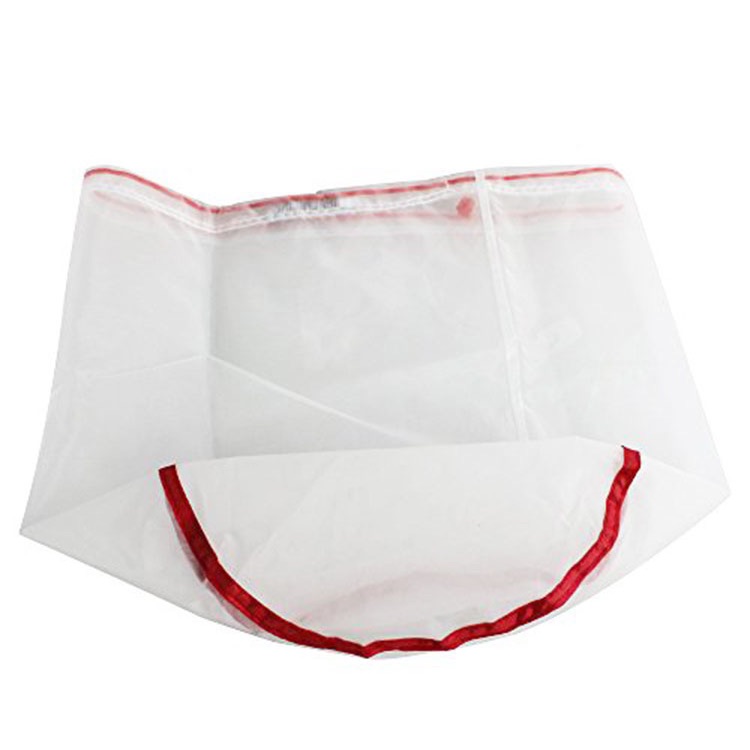
Bag size is not just capacity on paper; it is dirt-holding behavior, basket fit, lid clearance, change-out rhythm, operator strain, stock commonality, and replacement risk rolled into one operating decision, which is why I get suspicious whenever a page mentions bag size without talking about housing geometry and service access. Why pretend Size 1 versus Size 2 is merely a dimension field?
Your site already has the right support pages for this. Bag filter housing basics for industrial buyers keeps hammering on ring type, housing fit, pressure rating, footprint constraints, and service envelope, while the product page for Size 1 and Size 2 stainless steel bag filter housing explicitly centers standard Size 1 and Size 2 bags, fast change-outs, felt and mesh media compatibility, and applications spanning process water, chemicals, paints, inks, food, and wastewater. That is the kind of internal alignment Google understands and procurement teams respect.
| Decision point | What a disciplined buyer checks first | The lazy shortcut | What usually happens next |
|---|---|---|---|
| Micron target | Downstream sensitivity, solids profile, viscosity, clean/dirty ΔP | “Use the smallest bag we can afford” | Fast blinding, unstable flow, angry operators |
| Media material | Chemistry, temperature, fiber-shedding tolerance, sanitation needs | “Use the same material as last time” | Premature attack, contamination, short bag life |
| Bag size | Installed housing, batch length, dirt load, change-out labor | “Bigger bag must be better” | Bad fit, wasted capacity, service headaches |
| Ring and seal | Basket fit, bypass risk, fluid compatibility | “Standard ring is fine” | Leakage, bypass, mystery solids downstream |
| Replacement trigger | Baseline ΔP, flow trend, product clarity | “Change it when it looks bad” | Line interruptions and inconsistent quality |
And here is the hard truth many suppliers will not say: a bigger housing or multi-bag setup does not rescue a bad selection logic. It can hide it for a while. That is not the same thing.
The Internal Links That Actually Pull Their Weight
Links need jobs.
I would not publish this page as a lonely article, because the strongest internal architecture on your site is already visible: selection guide content should hand readers into technical definition pages, application pages, maintenance pages, and then product/housing pages once the buying question becomes concrete, and that path matches how industrial users actually think under deadline. Why let a good H1 die as a dead end?
Here is the internal sequence I would use inside this article, exactly because it matches user intent rather than CMS habit: send definition-seeking readers to filter bag micron rating explained; route general liquid service readers into nylon liquid filter bags for water, paint, ink, and resin; move aggressive-chemistry readers into PTFE filter bags for corrosive and high-temperature service; connect every bag-size discussion to bag filter housing basics for industrial buyers and the product-level Size 1 and Size 2 stainless bag filter housing; then close the maintenance loop with why filter bags collapse and how to prevent it. That is not decorative interlinking. That is intent sequencing from query to problem to product to failure prevention.
My opinion is stronger than that, actually. Most industrial blogs overlink sideways and underlink forward. This page should not just “support SEO.” It should qualify the reader, pre-answer the RFQ, reduce vague inquiries, and move the serious buyer closer to a usable spec.

FAQs
What is a liquid filter bag?
A liquid filter bag is a replaceable porous filtration element installed inside a supported housing to remove suspended solids from process liquids by particle size and media structure, and it is selected by micron target, chemistry, temperature, flow rate, and bag size rather than by price alone.
In plant terms, the bag is never acting alone. The housing, basket, seal, fluid, solids profile, and replacement practice decide whether that bag behaves like useful process control or just a consumable that gets blamed when the line starts misbehaving.
How do I choose the right micron rating for liquid filter bags?
The right micron rating is the smallest retention target that protects downstream equipment or finished-product quality without pushing differential pressure, change-out frequency, and consumable cost into nonsense, which means it must be matched to solids load, particle shape, viscosity, and the real purpose of the step.
I start with the thing that gets damaged or rejected next. If downstream is fragile, tighten the rating. If this is mostly prefiltration, do not overbuild it. A bag that lasts one shift less than planned can erase any paper savings from a finer spec.
What is the difference between nominal and absolute micron filter bags?
A nominal micron filter bag is a broader, less exact retention class used for economical solids reduction and upstream load control, while an absolute-style micron requirement is a tighter, more deterministic retention choice used when downstream sensitivity, compliance, or product clarity leaves much less room for particle escape.
That difference matters because buyers often compare prices as if the terms mean the same thing. They do not. One is usually buying acceptable reduction. The other is usually buying tighter particle discipline. Confusing them is how RFQs look neat and plants get messy.
Which material is better for liquid filter bags, nylon or PTFE?
Nylon is usually the better-value material for general-duty water, paint, ink, and resin service with manageable chemistry and moderate temperature, while PTFE is the safer material when heat, aggressive acids or solvents, low fiber shedding, or cleanliness-sensitive production make material failure more expensive than media cost.
I would not call one “better” in the abstract. I would call one more honest for the job. Nylon wins plenty of industrial duty. PTFE wins the ugly duty. The hard part is admitting which duty you actually have, not which one your purchase order wishes you had.
Should I choose Size 1 or Size 2 liquid filter bags?
Size 1 and Size 2 liquid filter bags are standard industrial bag formats, but the better choice is the one that matches the installed housing, service envelope, solids load, and labor plan, because bag size changes dirt-holding capacity, change-out frequency, and operator effort rather than simply changing physical dimensions.
My rule is plain: never choose bag size in isolation. Confirm housing fit, basket support, ring style, seal logic, and the space needed to open, lift, and replace the loaded bag. The wrong size can look fine in the catalog and still be wrong in the plant.
When should a liquid filter bag be replaced?
A liquid filter bag should be replaced when differential pressure trend, flow loss, product-quality drift, or scheduled sanitation requirements show the media is loaded enough to threaten process stability, because waiting for full blockage is the most expensive way to prove a cheap bag can stop a costly line.
I prefer trending a clean baseline ΔP and acting before the bag becomes a production event. Operators do not need heroics. They need a predictable interval or a trustworthy trigger that prevents surprises during a live run.
Your Next Step
Stop guessing now.
If you want this page to convert serious B2B readers instead of collecting casual traffic, build every selection conversation around five fields before quotation starts: fluid chemistry, operating temperature, target particle range, solids load, and installed housing format. Then map micron rating, media material, bag size, ring style, and clean/dirty ΔP against those five facts in one clean spec line. That is how professionals buy liquid filter bags. That is also how this article earns rankings, links, and RFQs instead of polite pageviews.


