
Table of Contents

Most spec sheets fail before the quote even starts
Three words first.
I have watched too many industrial buyers send a “specification” that says little more than 5 µm, Size 2, please quote, then act surprised when suppliers come back with three different constructions, two incompatible rings, a fight over nominal versus absolute retention, and a delivery delay that should never have existed, because a bad filter bag specification is not a technical shortcut at all, it is a cost-transfer device that dumps uncertainty onto the seller and then drags the buyer back into the mess later. Why do so many teams still call that efficiency?
That is not just my attitude talking. NIST’s 2024 manufacturing economy report says downtime amounts to 8.3% of planned production time and about $245 billion for discrete manufacturing, while FAR 13.004 spells out that quotations live and die on what is actually submitted, and GAO decisions such as Kauffman and Associates and Guidehouse Inc. show exactly what happens when solicitation language is ambiguous or a quotation never reaches the specified inbox. I know these are government procurement precedents, not liquid filtration POs, but the logic carries over cleanly: unclear requests waste time, vague requirements invite bad comparisons, and sloppy submission habits kill otherwise good buying decisions.
And your own site already hints at the right architecture. Best Filter Bag has a usable content chain from the filter bag RFQ template to the liquid filter bag selection guide, the filter bag micron rating explained, the bag size standards guide, and the bag filter housing basics for industrial buyers. That is not random blogging. That is the skeleton of a serious filter bag specification system.
The fields I refuse to let buyers skip
Skip nothing.
A clear filter bag specification sheet should tell a supplier what the liquid is, what must be removed, what the bag must survive, what housing it must fit, and what paperwork the buyer expects back, because a supplier cannot quote performance, fit, and repeatability from a single micron number and a prayer. Want the blunt version?
Here is the comparison I would put in front of any procurement manager who still thinks a filter bag data sheet is “just the basics.”
| Specification Field | What You Should State | Why It Matters | What Goes Wrong When You Omit It |
|---|---|---|---|
| Process liquid | Water, solvent, resin, edible oil, ink, acid, alkali | Media compatibility starts here | Wrong bag material, swelling, fiber release |
| Chemistry / pH | Example: pH 2.5, NaOH wash, solvent blend | Decides nylon vs PTFE vs other media | Premature chemical attack |
| Operating temperature | Normal and peak, such as 60°C / 95°C | Heat changes media stability and seal choice | Bag distortion, short life |
| Solids profile | Type, approximate size, loading %, deformable or hard | Controls real retention behavior | Fast blinding or poor capture |
| Micron target | 1 µm, 5 µm, 25 µm, nominal or absolute | Stops fake apples-to-apples quoting | Supplier prices different performance levels |
| Bag size | #1, #2, 01, 02, 03, 04 | Must match housing geometry | Bypass, folding, ugly change-outs |
| Ring / seal style | PP ring, steel ring, sewn cuff, gasket expectations | Determines fit and sealing | Leakage, bypass, basket mismatch |
| Housing details | Housing model, basket condition, pressure rating, photos | Bag fit is a system issue, not a bag-only issue | Repeated “bag failure” that is really hardware failure |
| Flow and ΔP window | m³/h, clean ΔP, max dirty ΔP | Service life and replacement logic depend on it | Unstable flow, emergency change-outs |
| Documents required | COA, FDA statement, dimensional data, labeling, lot traceability | Speeds internal approval | Back-and-forth after the quote |
| Quantity and usage pattern | Trial lot, monthly use, annual demand | Changes price, stocking, and lead time | Misleading price comparison |
I do not trust a filter bag specification sheet that hides the installed hardware. If the bag sits in a tired housing with a bad basket, a bent seat, or a lazy seal, the bag becomes the scapegoat for a mechanical problem. That is why I would naturally push readers from this article into bag filter housing basics for industrial buyers and, when the installed unit is already standard, into the stainless steel bag filter housing for Size 1/2 bags page. The site’s own product language is right on this point: support basket, seal materials, connection type, and service access belong in the buying conversation early, not after a failure report.
Micron is not the spec, and I am tired of pretending it is
One number lies.
Not because micron rating is useless, but because suppliers and buyers both love treating it like a full engineering answer when it is really one variable inside a messy operating stack that includes fluid viscosity, particle shape, solids loading, seam construction, face velocity, acceptable pressure drop, and what the bag is actually protecting downstream. Why are we still pretending “1 micron” is a finished thought?
If you want readers to understand that fast, the best internal handoff is your filter bag micron rating explained page, then the liquid filter bag selection guide. Those pages already pull the conversation away from brochure talk and back toward particle-size target, nominal versus absolute language, flow stability, bag size, material choice, and replacement logic. That is exactly where a proper liquid filter bag specification should live.
My rule is simple. State the micron target, then state what that target is protecting. If the bag is guarding a membrane, a spray nozzle, a filling head, or a cartridge stage, say so. If it is doing coarse prefiltration ahead of storage or transfer, say that too. The best filter bag specification template is not the one with the most boxes. It is the one that makes the bag’s job impossible to misunderstand.
And if your process touches regulated product, the paper trail matters more than many sellers admit. FDA equipment guidance says equipment should be designed to facilitate intended use and cleaning and maintenance, while 21 CFR 211.67 requires equipment to be cleaned and maintained at appropriate intervals to prevent malfunctions or contamination. That means your spec sheet should not just say “PTFE bag, 1 µm.” It should also say what documentation, cleanability, and contact-surface expectations the supplier must meet.
Material and bag size are where bad specs get expensive
Chemistry wins first.
I have seen buyers obsess over filter bag micron rating and then quietly bury the real error, which was that the media could not handle the solvent, the temperature, or the cleanliness expectation, so the plant paid for “tighter filtration” and got faster failure instead. Who benefits from that fiction?
Best Filter Bag’s own product cluster is stronger than most supplier sites here. The nylon side is clearly tied to water treatment, paint, ink, resin, mesh choices, and standard housings through pages like nylon mesh filter bags for water, paint, ink, and resin, while the PTFE side is tied to aggressive chemistry, low-fiber-shedding duty, FDA-grade options, 0.1–100 µm ranges, and even 260°C service through PTFE filter bags for aggressive chemicals and the PTFE category. That gives you a natural internal split inside this article: nylon for broad general duty, PTFE for corrosive and high-temperature service.
Size matters too.
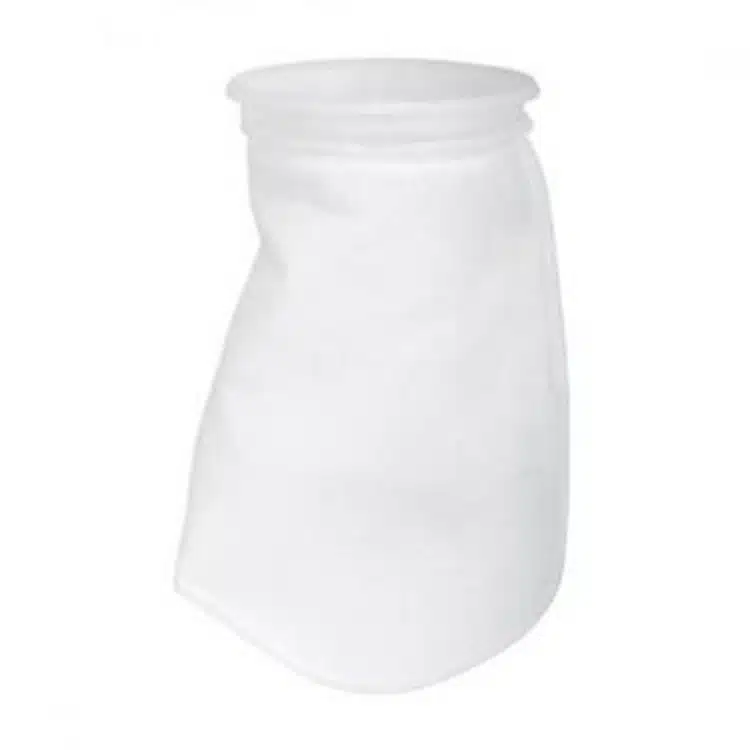
And I do not mean in the lazy SEO way. I mean in the operator-with-a-wrench way, where Size #1 and Size #2 decide bag area, service interval, liquid hold-up, lid clearance, and whether a replacement actually sits correctly in the basket. Your bag size standards for #1, #2, 01, 02, 03, and 04 page gets this right: it ties size directly to housing code, physical dimensions, and flow expectations instead of treating size like admin trivia.
Here is the hard truth I would publish even if some vendors hate it: if your filter bag specification sheet does not name the bag size, ring style, and housing fit, it is incomplete. And if it does not separate nylon from PTFE by chemistry, temperature, and cleanliness duty, it is not a technical document. It is a buying delay.
The filter bag specification sheet I would actually send
Copy this.
Document Title: Filter Bag Specification Sheet
Application / Line:
Process Step:
Buyer / Plant:
Revision No. / Date:

1. Process Liquid
- Liquid name:
- Chemistry / pH:
- Solvent or oxidizer present:
- Food / pharma / electronics duty: Yes / No

2. Operating Conditions
- Normal temperature:
- Peak temperature:
- Flow rate:
- Clean ΔP:
- Maximum dirty ΔP:

3. Solids / Contaminant Data
- Contaminant type:
- Approximate particle size range:
- Solids loading or concentration:
- Particle hardness / deformability:

4. Required Filtration Performance
- Target micron rating:
- Nominal or absolute:
- Purpose: coarse capture / prefiltration / polishing / downstream protection
- Protected downstream asset:

5. Bag Construction
- Bag size: #1 / #2 / 01 / 02 / 03 / 04 / custom
- Media: nylon / PTFE / other
- Ring style:
- Seam or weld preference:
- Surface requirement: low fiber shedding / reusable / standard

6. Housing Compatibility
- Housing brand / model:
- Basket condition:
- Connection type:
- Pressure rating:
- Photos attached: Yes / No

7. Compliance / Documentation
- COA required: Yes / No
- FDA or food-contact statement required: Yes / No
- Lot traceability required: Yes / No
- Packaging / labeling requirement:

8. Commercials
- Trial quantity:
- Annual quantity:
- Required delivery:
- Direct match only, or alternates allowed:
That template looks boring. Good.
Boring wins because it blocks the two biggest spec-sheet lies in this business: the lie that a micron number equals a full specification, and the lie that “standard size” tells the supplier enough to quote correctly. It does not. A real filter bag data sheet names the process, the duty, the fit, and the documentation.
And if you work anywhere near water treatment, the regulatory mood has changed. EPA’s PFAS rule announcement and Reuters’ coverage of the final rule put hard numbers on that shift: PFOA and PFOS at 4.0 ppt, PFNA/PFHxS/HFPO-DA at 10 ppt, with public water systems given three years to monitor and five years to reduce exceedances. No, a bag filter alone does not solve PFAS. But once treatment trains get more expensive and more visible, sloppy solids control and sloppy specs become harder to excuse.
FAQs
What is a filter bag specification sheet?
A filter bag specification sheet is a one-page technical purchasing document that defines the liquid, contaminant, micron target, media, bag size, ring style, housing fit, operating limits, and documentation requirements, so a supplier can quote the right product without guessing or burying risk in vague assumptions.
I use it to force clarity before pricing starts. If the sheet cannot tell a supplier what the bag must catch, survive, fit, and prove on paper, it is not a real specification.
What should be included in a liquid filter bag specification?
A liquid filter bag specification should include process liquid, chemistry, pH, operating temperature, flow, solids profile, target micron rating, nominal or absolute requirement, bag size, ring style, housing details, ΔP limits, compliance documents, and quantity assumptions, because those details decide retention, fit, service life, and quote accuracy.
The fast version is ugly but honest: tell the supplier what the liquid is, what the bag is protecting, what housing it fits, and what documents your QA team will ask for later.
What is the difference between a filter bag data sheet and a filter bag RFQ template?
A filter bag data sheet is a technical definition of the required bag and operating duty, while a filter bag RFQ template is the commercial request format that wraps that technical definition with quantity, delivery, alternates, packaging, and documentation instructions so suppliers can quote on the same basis.
I prefer using both. The data sheet defines the bag. The RFQ controls the buying conversation.
Should I specify nominal or absolute micron rating on the sheet?
Yes, you should explicitly state nominal or absolute micron requirement because the two terms signal very different retention expectations, testing logic, and price positions, and leaving that field blank is one of the fastest ways to collect quotes that look comparable on paper but behave very differently in service.
If you do not know which one you need, state the downstream asset being protected and force the supplier to explain the test basis in writing.
How do I choose between nylon and PTFE filter bags?
Nylon filter bags are usually the economical choice for general liquid service such as water, paint, ink, and resin under manageable chemistry and moderate temperature, while PTFE filter bags are usually the safer choice for corrosive chemicals, hotter service, low-fiber-shedding duty, and cleaner regulated processes.
My bias is simple. When chemistry is uncertain or failure costs are ugly, PTFE starts looking cheap very quickly.
Your Next Step
Do this next.
Take your current PO note, copied legacy spec, or half-finished filter bag RFQ template, and rewrite it into a real filter bag specification sheet today. Then pressure-test it against your own internal content path: filter bag micron rating explained, bag size standards for #1, #2, 01, 02, 03, and 04, nylon mesh filter bags for water, paint, ink, and resin, PTFE filter bags for aggressive chemicals, and bag filter housing basics for industrial buyers.
And be honest with yourself. If the sheet still leaves chemistry, housing fit, bag size, ring type, ΔP, or documentation fuzzy, do not send it yet. Fix it first. That is how you stop buying “a bag” and start buying a result.


