
Most specs lie. I have read too many RFQs where the buyer proudly lists “5 µm, PTFE, Size 2” and somehow leaves out acid concentration, actual operating temperature, solvent exposure, cleaning chemistry, ring type, and housing model, which is exactly how a tidy spreadsheet turns into a bad shutdown and an even worse supplier argument. Why do smart plants still buy filter bags like commodity socks?
And yes, buyers still search for Teflon filter bags, even though PTFE is the material term procurement teams should put on paper, and too many teams still confuse PTFE liquid filter bags with PTFE baghouse filter bags, which is a category mistake that leads to sloppy conversations before the process data has even been checked. If your reader still needs the sizing and capture basics before getting into corrosive-duty selection, the cleanest internal paths on your site are the liquid filter bag selection guide and what filter bag micron rating really means.
Table of Contents

Most Buyers Start With the Wrong Question
Wrong variable. I think the filtration industry has spent years training buyers to ask for a micron number first, because it feels precise and looks professional in a quote sheet, while the real decision usually sits somewhere between chemical formula, concentration, temperature, dwell time, solids profile, and housing geometry, which is why “spec-compliant” bags fail every single week in plants that were convinced they had bought carefully. Why are we still pretending that 1 µm is a strategy?
The regulatory pressure is not theoretical anymore. On April 10, 2024, EPA’s first national PFAS drinking-water standard set enforceable limits at 4.0 parts per trillion for PFOA and PFOS and 10 parts per trillion for PFNA, PFHxS, and GenX chemicals; Reuters reported that 3M’s PFAS settlement reached $10.3 billion in June 2023; and EPA’s 7th Drinking Water Infrastructure Needs Survey put U.S. drinking-water infrastructure needs at $625 billion over 20 years. That is the hard truth: filtration media choice now sits much closer to compliance, capex scrutiny, and legal exposure than many suppliers want to admit.
So when someone asks me how to choose PTFE filter bags for aggressive chemicals, I do not start with brand slogans or brochure adjectives. I start with failure cost. A PTFE bag is expensive only until one bad media decision contaminates product, blinds early, sheds fibers into a sensitive stream, or collapses because the housing and support logic were lazy.
What PTFE Actually Buys You
PTFE earns money. It earns it when the fluid is chemically hostile, when heat moves the process out of the comfort zone of cheaper media, and when product cleanliness matters enough that low fiber shedding stops being a nice sentence and becomes a procurement requirement. Isn’t that what buyers are really paying for?
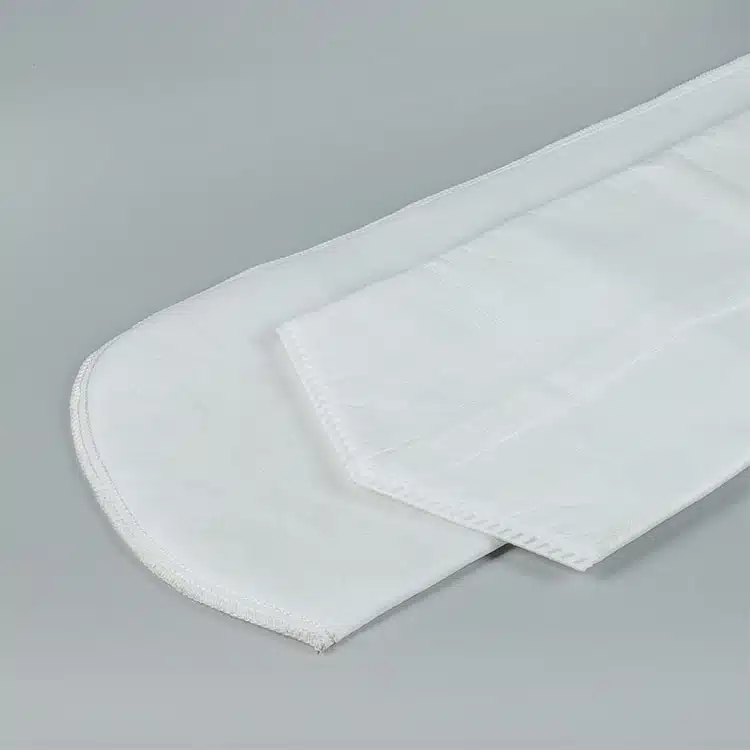
Your own PTFE category page already frames this correctly: PTFE filter bags for aggressive chemical service are positioned for aggressive media, corrosion-sensitive duty, acid/alkali service, pharma and electronics applications, FDA-oriented filtration, low-fiber-shedding surfaces, and product options including 0.1–100 µm and a 260°C acid/alkali variant. That is good positioning because it ties PTFE to process pain, not to vague “premium” language.
But here is the part many sales pages dodge: not every “chemical” job deserves PTFE. For broad water treatment, paint, ink, resin, and general liquid filtration, your nylon filter bags for general liquid filtration are presented as the practical option, and I agree with that framing because the best PTFE filter bags for corrosive chemicals are not the best bags for every line. Over-specifying media is still a form of bad engineering; it just sounds more sophisticated in the meeting room.
Chemistry first, not adjectives
Real chemistry matters. 10% HCl at 25°C, 30% NaOH at 60°C, and a hot solvent-rich stream are three very different buying problems, even if all three get lazily labeled “aggressive chemicals” in a quotation email, and PTFE filter bag chemical compatibility should be checked against exact formula, concentration, temperature, exposure time, and cleaning cycle rather than vendor poetry. Why do buyers still accept “chemical resistant filter bags” as if that phrase finishes the job?
I have seen this go wrong in coatings too. A 2024 ACS study on chemicals in water-based paints analyzed 40 products and found semivolatile organic compounds at 0.1% to 3.5% by weight, which is a useful reminder that “water-based” does not mean chemically simple, operationally forgiving, or friendly to lazy media choices.
Temperature and cleanliness come second, but not far second
Heat changes everything. A media choice that survives a mild loop at 25°C may soften, swell, blind, or lose mechanical confidence once the process gets hotter, and in cleanliness-sensitive lines the conversation shifts again because fiber shedding, surface stability, and downstream protection start to matter more than the cheapest price per bag.
That is why I would naturally move readers from this article into what filter bag micron rating really means. Micron rating is a tool, not a religion, and the wrong 1 µm choice in the right chemistry can still be a bad bag if pressure drop, solids loading, and bag area were ignored.
The Selection Framework That Survives Contact With Reality
Four checks first. I would force every buyer to write down the exact fluid, the exact temperature range, the exact solids problem, and the exact housing format before anyone is allowed to say the words “best PTFE filter bags for corrosive chemicals,” because that phrase means nothing unless it survives contact with the line itself. Why buy a premium media before you verify the premium failure mode?
The table below is the blunt framework I would use before signing any PO.
| Selection variable | What serious buyers specify | When PTFE is the honest answer | Common mistake |
|---|---|---|---|
| Chemical formula and concentration | Exact chemistry such as HCl, H₂SO₄, NaOH, oxidizers, solvent family, plus concentration and exposure time | The stream can chemically attack cheaper media or gradually destabilize it over repeated cycles | Writing “corrosive chemical” and assuming the supplier can guess the rest |
| Operating temperature | Normal range, startup spikes, CIP/SIP exposure, upset conditions | The process runs hot enough that cheaper media lose margin or deform faster | Quoting only the normal temperature and hiding the peak |
| Micron target | Actual particle size problem, downstream asset sensitivity, acceptable ΔP rise | Fine retention is needed and PTFE’s chemical/cleanliness advantages still justify the cost | Treating “1 µm” as the answer instead of the start of the argument |
| Product cleanliness | Fiber-shedding tolerance, pharma/electronics sensitivity, finish quality | Low fiber shedding and cleaner-process expectations matter to the finished product | Buying on chemistry alone and ignoring contamination from the media itself |
| Housing fit | Size 1 or Size 2, ring style, basket condition, seal surfaces, vessel model | PTFE media is selected as part of a correctly supported system | Blaming the bag when the basket, ring seat, or housing lip is wrong |
| Cost of failure | Scrap, downtime, labor, revalidation, customer complaint exposure | A premature failure costs far more than the price gap between nylon and PTFE | Comparing only bag price and ignoring plant economics |
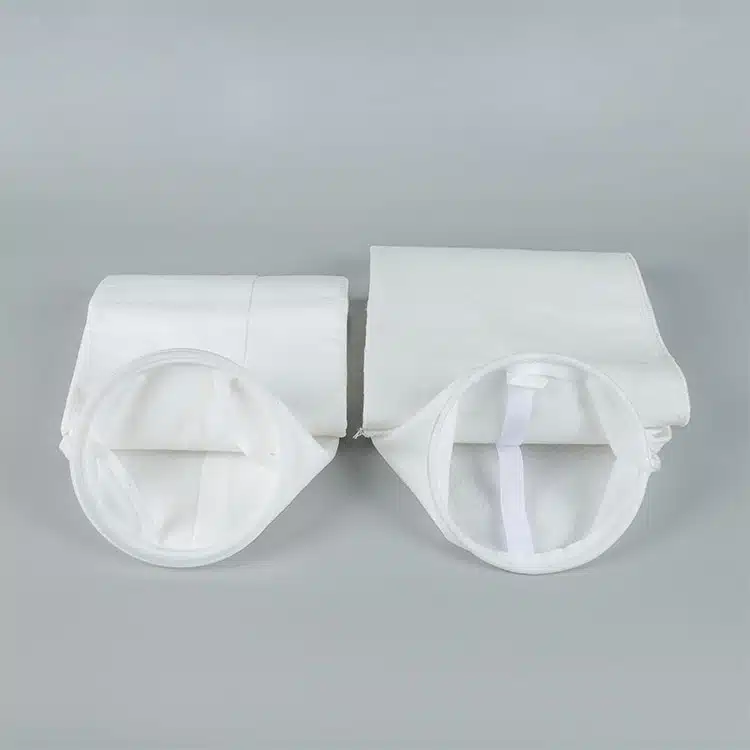
Housing kills good bags. I would not publish a PTFE buying guide without also moving readers into bag filter housing basics for industrial buyers, because bag media does not operate in a vacuum and the housing, basket, seal, venting, and service clearance decide whether the bag behaves like control equipment or just an expensive consumable.
And then there is the failure nobody wants to own. Your article on why filter bags collapse and how to prevent it gets the ugly part right: collapse is usually a system problem wearing a consumables mask, and I have seen more money wasted on arguing about media than on checking a bent basket, a wrong ring, a bad seat, or an ignored differential-pressure trend.
Where PTFE Wins, Where It Fails, and Why Suppliers Keep Overselling It
PTFE wins often. It wins in acid and alkali duty, in hotter loops, in streams where product cleanliness matters, and in applications where media stability matters more than shaving a little off the bag cost, which is why PTFE filter bags for aggressive chemicals remain a rational choice in electronics, pharma-adjacent, and corrosion-sensitive liquid service. But do you know where PTFE still loses?
It loses when buyers use it as a substitute for process diagnosis. A PTFE bag will not rescue a bad housing, an undersized area, a filthy startup, a viscosity surprise, a solids slug, or a wrong micron choice. And if the reader still needs a broader materials-and-size refresher before making the PTFE call, your liquid filter bag selection guide is the right internal route because it forces the conversation back toward micron, material, and bag size instead of leaving the buyer trapped inside one premium-material page.
I also would not let the industry keep repeating the myth that PTFE is automatically the “top-tier” option. Sometimes the smarter answer is staged filtration, a better housing, a more honest RFQ, or a nylon pre-stage followed by a tighter final step. That opinion annoys people who sell only one kind of upgrade. I can live with that.
FAQs
What are PTFE filter bags?
PTFE filter bags are chemically resistant filtration media made from polytetrafluoroethylene and used in liquid processes where acids, alkalis, solvents, oxidizing streams, high temperatures, or cleanliness-sensitive applications would degrade, swell, shed fibers, or contaminate more economical bag materials such as nylon or polypropylene.
In plain English, PTFE is the media you choose when the process is hard on ordinary bags and when a bad failure costs more than the premium media price. That is why buyers also search for them as chemical resistant filter bags or Teflon filter bags.
When should I choose PTFE over nylon filter bags?
You should choose PTFE over nylon filter bags when the process combines aggressive chemistry, hotter operating windows, stricter cleanliness demands, or longer exposure cycles that make nylon’s lower upfront cost irrelevant compared with premature failure, swollen media, unstable pressure drop, or product contamination.
If the service is broad general liquid filtration, nylon can still be the sane answer. If the stream is chemically harsher, hotter, or more sensitive to fiber shedding, PTFE becomes the more honest choice.
How do I choose micron rating for PTFE filter bags?
To choose micron rating for PTFE filter bags, define the contaminant size you must stop, the downstream asset you are protecting, the acceptable pressure-drop rise, the bag size and housing geometry, and the fluid’s viscosity, temperature, and solids load before you ever compare price.
I would never buy by micron number alone. A 1 µm PTFE bag can still be the wrong choice if the solids load is heavy, the bag area is too small, or the housing cannot support stable flow without punishing service life.
Can PTFE filter bags handle aggressive chemicals at high temperature?
PTFE filter bags can handle aggressive chemical service at elevated temperatures only when the exact chemical formula, concentration, dwell time, and operating temperature stay inside the supplier’s documented compatibility window, because “PTFE is resistant” is a starting assumption, not a blank check for every acid, solvent, or oxidizer.
That is the part sloppy suppliers hide. Always ask for actual compatibility confirmation tied to your chemistry, temperature range, and cycle profile, not just a generic statement about corrosive-duty service.
What information should I send before requesting a PTFE filter bag quote?
Before requesting a quote for PTFE filter bags, send the supplier the fluid chemistry, concentration, temperature range, flow rate, solids profile, micron target, bag size, ring style, housing model, differential-pressure limits, cleaning method, and annual usage volume so the recommendation reflects the process rather than a guess.
A thin RFQ creates a thin recommendation. The fastest way to get a useful answer is to send the ugly details up front, especially if the process includes acid/alkali service, high temperature, or product-quality sensitivity.
Your Next Step
Do this now. Take your current bag spec and rewrite it with the data most suppliers quietly hope you will not send: chemistry, concentration, normal temperature, upset temperature, solids load, target micron, bag size, ring material, housing model, and acceptable ΔP limit. Then force the conversation away from “premium media” and toward actual process fit.
If the line is mild, say so. If it is ugly, say exactly how ugly. That is how you choose PTFE filter bags for aggressive chemicals without paying for a myth, and it is how you separate serious suppliers from people who are just repackaging catalog language.


