
Table of Contents

Most plants ask the wrong question first
Most buyers guess.
I have watched engineers spend days arguing over 1 µm versus 5 µm while ignoring the uglier variables—solids loading, viscosity, bag area, pleat geometry, seal design, change-out labor, and the simple fact that a filter that looks elegant on a datasheet can still choke a line by Tuesday afternoon.
Which is better?
My answer is unfriendly but honest: bag filters are usually better at handling dirt, flow, and punishment; cartridge filters are usually better at tight retention, cleaner change-outs, and processes where contamination risk can end careers. That is why your site already has the right internal commercial cluster: filter cartridges for fine liquid polishing, polypropylene cartridges for DI water and process service, nylon filter bags for general liquid filtration, PTFE filter bags for aggressive chemicals, and duplex basket strainers for continuous coarse prefiltration. The structure is already there; the buying logic just needs to be stated without marketing perfume.
What bag filters and cartridge filters really are
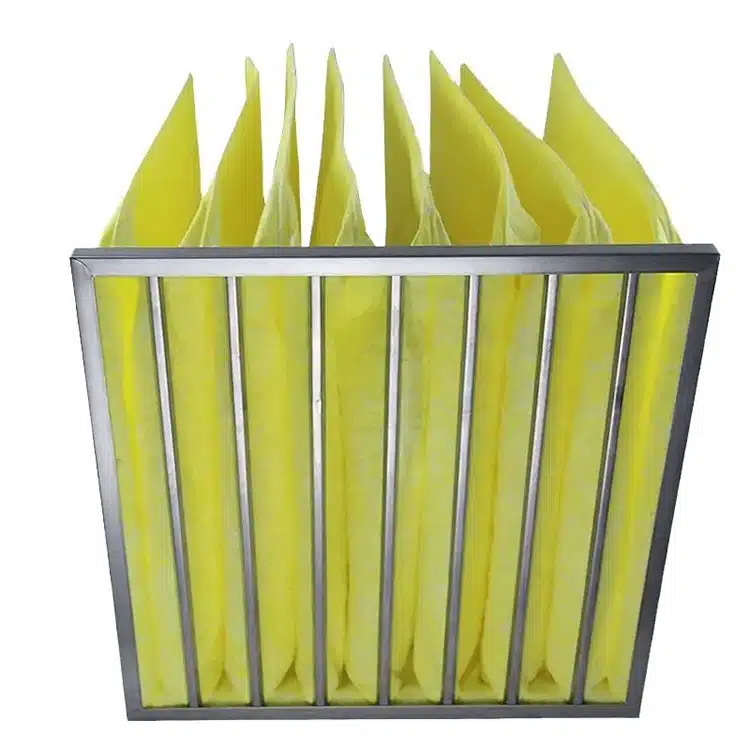
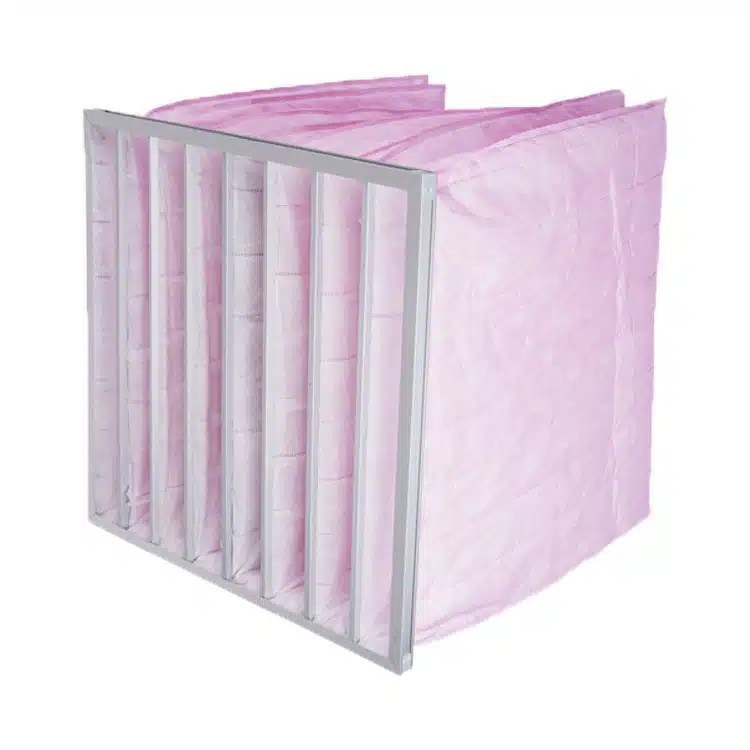
The legal definitions are plain. Bag filters are non-rigid fabric media in a pressure vessel, while cartridge filters are rigid or semi-rigid self-supporting elements in pressure vessels. That sounds boring, but it explains the operational split: the bag is a dirt hauler; the cartridge is a precision part. A water-treatment fact sheet from the National Drinking Water Clearinghouse also makes a point too many buyers miss: cartridge filtration is well suited to low-turbidity influent, and roughing stages such as bag filters are often used upstream to stop cartridges from fouling too fast.
I do not buy the one-filter-fits-all pitch.
When people say “bag filter vs cartridge filter,” they usually pretend the contest is about micron rating alone. It is not. It is about what kind of pain you can tolerate: frequent cheap change-outs, or fewer but more expensive elements; dirty service that needs loading capacity, or cleanliness-sensitive service that punishes bypass; broad prefiltration, or final polishing.
My blunt rule
If the stream is dirty, start with a bag.
If the stream must be clean enough to protect membranes, nozzles, filling heads, DI loops, UV, or sensitive product quality, finish with a cartridge. That logic also matches the way Best Filter Bag positions its own catalog: bags for high-flow service-life duty, cartridges for stable particle control, PTFE for corrosive or high-temperature duty, and duplex hardware for keeping upstream debris out of the expensive stages.
The decision table serious buyers actually use
Here is the comparison most procurement teams should have seen before their first RFQ.
| Process variable | Bag filters | Cartridge filters | My read |
|---|---|---|---|
| High solids loading | Usually stronger | Usually fouls faster | Bag wins |
| Fine filtration below roughly 5 µm | Possible, but not always economical | Usually stronger | Cartridge wins |
| High flow with lower consumables cost | Usually stronger | Mixed | Bag wins |
| Low-turbidity polishing | Mixed | Usually stronger | Cartridge wins |
| Dirty upstream protection for membranes/UV/nozzles | Very strong | Poor as first line | Bag first, cartridge second |
| Sanitary or cleanliness-sensitive change-out | Mixed | Usually cleaner and easier to standardize | Cartridge wins |
| Aggressive chemistry | PTFE bags can be excellent | PP or 316L cartridges can also work | Material matters more than format |
| Footprint constraints | Larger housings are common | Pleated cartridges are usually more compact | Cartridge often wins |
| Coarse debris removal | Excellent | Wasteful | Use bag or strainer |
The part I wish more suppliers would admit is this: bag filter pressure drop vs cartridge filter pressure drop is not a fixed law. On day one, a pleated cartridge can look brilliant. On a dirty line, it can also blind fast and turn “precision” into “maintenance overtime.” A bag can look less refined yet carry more solids per dollar and per shift. That is why staged filtration exists, and why upstream duplex basket strainers and high-flow bag filters keep showing up ahead of final cartridge filtration systems.
Where the outside evidence gets uncomfortable
Fine hazardous dust changed the math
Three words first.
Regulation got sharper.
In a 2023 NIOSH-backed field study on silica control at hydraulic-fracturing sites, a passive cartridge-filter system handled 600 to 1,300 cfm and reported 97% to 99% operating efficiency. Then the pressure tightened again: MSHA’s April 18, 2024 final silica rule set a 50 µg/m³ permissible exposure limit for a full-shift 8-hour TWA, with a 25 µg/m³ action level. That is the real lesson for fine, hazardous dust: when the particles are dangerous and the compliance threshold is explicit, cartridge-style collection stops being a brochure choice and starts being an exposure-control tool.
But.
That does not mean cartridge filters beat bag filters everywhere. It means cartridges earn their keep in fine, low-mass, high-consequence dust. In hot, heavy, ugly particulate service—cement, smelting, mineral handling, carbon black, foundry work—the baghouse still refuses to die because loading capacity, cake behavior, and large-flow economics still matter more than compactness.
Pharma does not forgive sloppy filtration logic
Contamination is expensive.
And regulators know it.
Reuters reported on June 27, 2024 that more than 36% of 400 inspected drug manufacturing units in India had been ordered shut. Four months earlier, Reuters also reported that the U.S. FDA planned to increase inspections in 2024 after conducting more than 200 inspections in India in 2023. In sterile, pharma, biotech, electronics, and high-purity water service, that scrutiny tilts the argument toward documented housings, cleaner change-outs, and tightly specified cartridge steps, not because bags are “bad,” but because auditability and reproducibility usually matter more than raw dirt capacity.
My view is blunt: if your line can be wrecked by fiber shedding, ambiguous retention claims, or messy change-outs, stop pretending a single cheap bag is brave engineering. Use the right staged train. Start dirty with nylon filter bags for general liquid filtration or an upstream duplex basket strainer, then finish with polypropylene cartridges for polishing duty. If the chemistry is nasty, move the chemical argument into PTFE filter bags for aggressive service instead of forcing nylon to die heroically.
Heavy industry still cares about emissions, not fashion
Baghouses are not old-fashioned.
They are stubbornly useful.
EPA’s May 13, 2024 final rule on primary copper smelting tightened emissions-control requirements, and EPA said the rule would cut toxic metal emissions—primarily lead and arsenic—by nearly 50% when fully implemented. The rule also uses particulate matter standards as a surrogate for metal HAP control at key sources. That matters because in high-temperature, high-dust industrial gas cleaning, a fabric filter is still often the adult choice. The process does not care that cartridge collectors look neat in sales decks. It cares whether the system survives heat, dust loading, and compliance audits.
So which is better for your process?
It depends. And yes, that answer annoys people.
But there is a sharper version:
Choose bag filters when the process looks like this
You are dealing with high flow, higher solids loading, prefiltration ahead of membranes or cartridges, lower-cost change-outs, or duty where the filter’s main job is to catch the ugly stuff before it reaches equipment that actually matters. This is exactly where filter bags and nylon filter bags make practical sense, and where an upstream duplex basket strainer can buy cheap protection for pumps, valves, and downstream filters.
Choose cartridge filters when the process looks like this
You need lower micron targets, cleaner element change-outs, repeatable performance in low-turbidity service, compact hardware, or a final polishing stage that protects product quality and downstream assets. This is the home ground of filter cartridges and especially polypropylene cartridges when DI water, process water, or fine liquid filtration is on the table. If corrosion, solvent exposure, or wash-down severity rises, then stainless steel cartridges become a real conversation instead of a fancy one.
Choose both when the process is real life
This is my favorite answer because it is usually the right one.
A bag stage removes the bulk solids cheaply. A cartridge stage handles the polishing. The plant gets longer cartridge life, fewer emergency swaps, saner pressure-drop behavior, and less drama. Buyers who skip staged filtration usually do it for one reason: the quote looked cheaper. It rarely stays cheaper.
The micron rating trap buyers walk into
One number lies.
Not because micron rating is fake, but because buyers abuse it. A “1 µm” request without solids loading, viscosity, bag size, housing model, flow rate, temperature, and chemistry is not a specification. It is a confession. Best Filter Bag’s own catalog quietly reflects that reality: PP cartridges are offered from 0.1–100 µm, PTFE bag options include 0.1–100 µm and even a 260°C acid/alkali variant, and the hardware side calls out 222/226 sealing formats because fit and sealing are part of filtration performance whether marketing admits it or not.
So when buyers ask me, “which is better bag filter or cartridge filter?” I answer this way:
A bag filter is often the better loading device.
A cartridge is often the better finishing device.
Neither is the better decision without process data.
FAQs
What is the difference between bag filters and cartridge filters?
Bag filters are high-capacity fabric elements built to capture larger solids loads at relatively low consumables cost, while cartridge filters are rigid or pleated elements designed for tighter retention, cleaner change-outs, and more repeatable performance in low-turbidity or cleanliness-sensitive service.
That is why bag filters usually dominate prefiltration and bulk solids removal, while cartridges usually dominate final polishing and tighter micron work.
Which is better for high solids loading?
Bag filters are generally the better choice for high solids loading because they offer more economical dirt-holding capacity, tolerate uglier influent, and are less painful to sacrifice upstream, whereas cartridge filters usually foul faster when they are asked to do bulk-dirt work they were never meant to handle.
If your line is visibly dirty, I would not start with a cartridge unless you enjoy buying cartridges.
Which is better for fine filtration or low micron rating?
Cartridge filters are usually better for fine filtration because their structure, sealing, and available media formats make tighter and more predictable retention easier to achieve, especially when the job is product polishing, membrane protection, or cleanliness-sensitive final filtration rather than cheap bulk solids capture.
Bag filters can still play here, but they often stop being the economical answer once the retention target gets tight and the change-out frequency climbs.
How do I choose between bag filters and cartridge filters?
The right way to choose between bag filters and cartridge filters is to compare six process facts at the same time: solids loading, target particle size, viscosity, chemistry, allowable pressure-drop rise, and the real labor cost of change-outs, cleaning, and downtime across a normal operating cycle.
That is the buying frame. Not the catalog photo. Not the first unit price.
Can bag filters and cartridge filters be used together?
Yes, bag filters and cartridge filters are often used together in staged filtration trains, where the bag stage removes bulk solids cheaply and protects the cartridge stage, while the cartridge stage delivers the tighter polishing needed for downstream equipment protection, product quality, or regulatory cleanliness expectations.
In my experience, this is where the smartest plants end up after trying to make one filter do two jobs badly.
Are PTFE bag filters or stainless steel cartridges better for aggressive chemicals?
Neither format wins by default because aggressive-chemical duty is decided first by material compatibility, temperature, concentration, exposure time, and cleaning method; after that, the real question becomes whether you need reusable rigid precision, or high-flow sacrificial media that survives the chemistry without destabilizing.
If the stream contains acids, alkalis, oxidizers, or harsh solvents, force the material decision first and only then argue about bag versus cartridge.
Your next step
Do this now.
Before you ask any supplier for a quote, send eight numbers and facts: fluid chemistry, temperature range, viscosity, solids loading, target micron range, flow rate, housing format, and allowed pressure-drop rise. Then make the one decision most teams dodge: is this a bulk-capture duty, a final-polishing duty, or a staged duty?
If you are building this page to convert serious buyers, link them in that same sequence: dirty service to filter bags and nylon filter bags, corrosive service to PTFE filter bags, fine retention to filter cartridges and polypropylene cartridges, and coarse upstream protection to the duplex basket strainer. That is not just cleaner SEO. It is cleaner sales engineering.


