
Table of Contents

Most buyers approve the wrong sample
Three checks first.
I have watched too many procurement teams approve a bag sample because it “looked fine” in a one-off trial, even though nobody locked down whether the real duty was 5 µm nominal or tighter, pH 12 caustic wash, 80°C CIP spike, 120 cP resin, Size 2 with a steel ring, or an old housing with a basket that already cheats the fit under surge. Why are so many approvals still built on a lucky afternoon?
I reviewed your site before writing this, and the bones are already there: the liquid filter bag selection guide frames the buying job around micron, material, and bag size; the filter bag micron rating explained page forces the nominal-versus-absolute question; nylon filter bags for general-duty liquid filtration and PTFE filter bags for corrosive and high-temperature service split chemistry the way serious plants actually split risk; bag filter housing basics for industrial buyers connects bag choice to fit and service access; and the filter bag RFQ template gives you the commercial handoff after technical approval. That is a real internal path, not decorative blog clutter.
My view is blunt. A sample approval checklist is not QA theater. It is the line between “this bag worked once” and “this bag can survive a year of repeat buys without turning maintenance into your unpaid test lab.” And yes, I think most industrial buyers are still too forgiving at the sample stage.
What a serious industrial filter bag sample approval checklist actually checks
Stop guessing now.
If I am approving an industrial filter bag sample, I am not asking whether it filtered something in a demo pot; I am asking whether the sample survives the real process window, seats correctly in the installed housing, holds its shape, keeps ΔP inside reason, arrives with a document trail that can survive procurement review, and can be repeated by the supplier without the usual “small batch variation” excuse. Isn’t that what approval is supposed to mean?
| Approval Checkpoint | What I want to see | Reject the sample when… | Why I care |
|---|---|---|---|
| Process liquid | Exact fluid name and use step | Supplier only writes “chemical” or “wastewater” | Chemistry drives media life |
| Chemistry / pH | pH range, solvent exposure, oxidizers, CIP chemicals | Sample is approved without chemical window | Nylon vs PTFE is not a cosmetic choice |
| Temperature | Normal and peak, e.g. 25°C normal / 80°C peak | Trial ignores heat spikes | Heat lies to buyers who test cold |
| Solids profile | Particle type, loading, shape, stickiness, e.g. 20–80 µm resin gels | Only a micron number is given | Real blinding starts here |
| Micron target | 1, 5, 10, 25, 50, 100 µm with nominal or absolute intent | “5 micron” is left undefined | Two 5 µm bags can behave very differently |
| Media material | Nylon 66, PTFE, PP, stainless mesh, felt vs mesh | Material is chosen by habit | Media failure gets mislabeled as “bad filtration” |
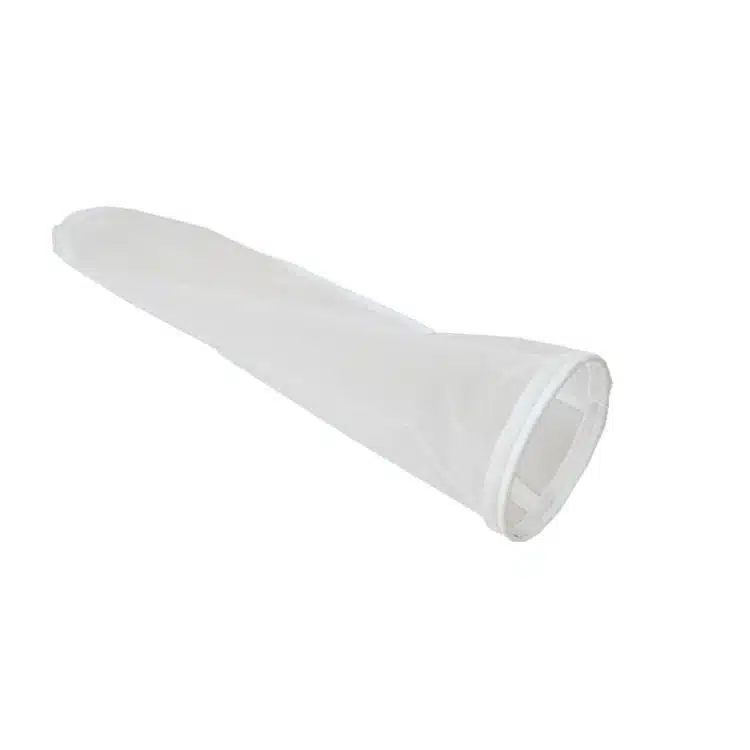
| Bag size and ring | Size 1 / Size 2 / custom, PP ring or steel ring | Buyer never checks collar and seating | Good bags fail in bad fit |
| Housing fit | Installed vessel, basket condition, seal material, nozzle size | Sample is tested outside the real housing | Approval without fit is fiction |
| ΔP behavior | Clean ΔP and loaded ΔP trend, e.g. 0.08 bar to 0.16 bar | Nobody records pressure drop | Consumable cost is hidden in pressure |
| Change-out rhythm | Trial life in hours, batches, or m³ | Sample works only for a short hero run | One good shift means nothing |
| Documentation | COA, datasheet, material declaration, SKU label rules | Supplier sends only a brochure | Repeat orders die on paperwork |
| Repeatability | Same lot logic, same sewing, same ring, same media spec | Trial sample is treated as unique | You are buying future sameness, not one sample |
Micron is where buyers get lazy.
Your own micron page says the quiet part out loud: nominal and absolute are not the same claim, and a lower micron rating is not automatically “better” once pressure drop, flow stability, fluid behavior, and test basis enter the conversation. I agree, and I would push even harder—if the supplier cannot explain the test logic behind “5 µm,” the sample is not ready for approval no matter how pretty the performance chart looks.
Chemistry decides fast.
Your site positions nylon as the practical choice for water treatment, paint, ink, resin, and other general liquid filtration work, while the PTFE side moves straight into acid/alkali service, pharma, electronics, low-fiber-shedding use, and even 260°C duty; that split is exactly how sample approval should work, because I do not care what is cheaper if the media is wrong for the liquid. Who wants to explain to production that the “approved” sample was only approved for the easy version of the job?
Fit still wins.
The housing content on your site keeps pulling buyers back to standard Size 1 and Size 2 logic, support basket, seal materials, and service geometry, and the stainless housing product page says the same thing in plainer English: common bag formats, easy change-outs, felt or mesh media, and options around connection style and support basket. That is not filler copy. That is the physical difference between a repeatable sample and an approval mistake.
The expensive part buyers pretend not to see
Bad approvals compound.
According to NIST’s Annual Report on the U.S. Manufacturing Economy: 2024, downtime amounts to 8.3% of planned production time and about $245 billion in discrete manufacturing, while defects add another estimated $32.0 billion to $58.6 billion. I bring that up because procurement teams still love to fight over a few cents per bag while ignoring the sample approval failure that causes early blinding, extra change-outs, unstable flow, rework, and emergency buys. What exactly did that “cheap” sample save?
And the procurement law examples are even less forgiving.
In GAO’s Kauffman and Associates decision, the issue turned on latent ambiguity and the need to clarify requirements; in Technatomy Corporation, the agency reasonably eliminated a quotation that used the wrong pricing template; and in Guidehouse Inc., GAO denied the protest where part of the quotation never reached the designated inbox in the required way. This is not industrial filtration, obviously. But the buying lesson transfers perfectly: vague requirements, wrong templates, and sloppy submissions kill deals before anyone argues about product performance.
Then there is the enforcement angle.
In September 2024, EPA’s settlement with Federal Cartridge said the company would pay $349,471 and operate new lead-controlling baghouses with secondary HEPA filtration, with EPA estimating cuts of more than 1,700 pounds of particulate matter per year and more than 400 pounds of lead per year; in June 2024, EPA’s action against Smith Foundry required continuous pressure-drop monitoring, recording equipment, bag-leak detection, and an updated operations and maintenance plan. Different filtration segment, yes. Same ugly truth: when filtration discipline slips, the problem leaves maintenance and enters enforcement.
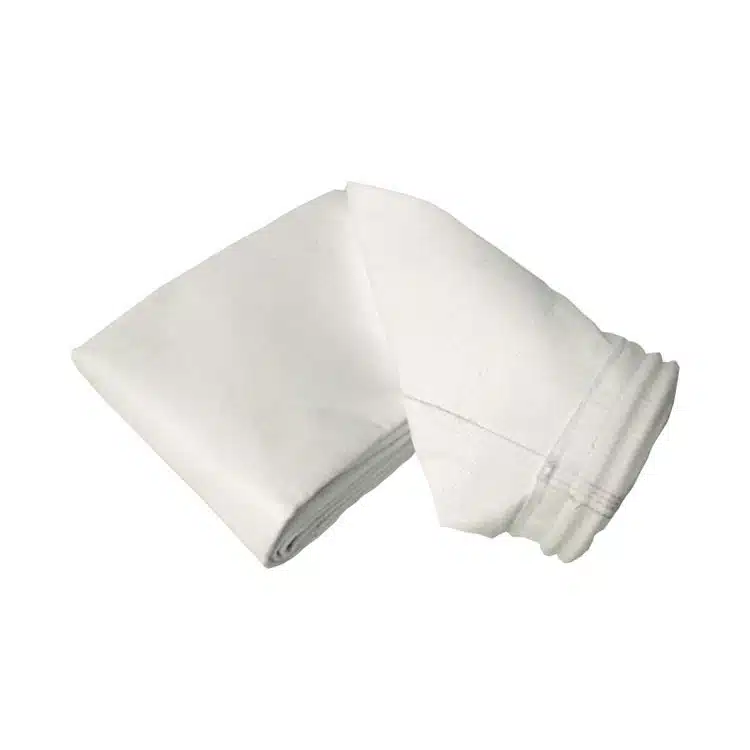
The approval workflow I would actually trust
Start with the duty, not the sample
Three words only.
Write the process first, because the sample should be tested against the job rather than the other way around, and that means fluid name, chemistry, pH, temperature window, viscosity, solids profile, target retention, housing model, bag size, ring type, and acceptable ΔP all belong on page one before anyone starts talking about “approval.” Why let the sample define the spec when the process should define the sample?
Compare the sample to the installed hardware
I have no patience for off-line approvals where the supplier sends a Size 2 felt bag with a steel ring, the buyer nods, and nobody checks the actual basket, collar seat, gasket condition, or lid clearance in the plant housing. A bag that performs outside the real vessel has not passed. It has auditioned.
Approve the batch, not the hero piece
This one matters.
One sample can flatter a supplier, especially when the trial is short, solids loading is low, and the operator handling the test is the most careful person in the building, but commercial approval should be tied to repeatability: same media construction, same ring style, same sewing logic, same datasheet, same labeling, same tolerance, same document pack. Otherwise what are you approving, really?
Lock the approval into the RFQ and PO language
So do not stop at “approved.”
Once a sample passes, I would transfer the exact spec language into the purchasing file: media, micron basis, bag size, ring type, housing fit notes, trial ΔP range, change-out target, and required documents. Then I would force that language into the next RFQ or blanket order so the supplier cannot quietly “optimize” the approved sample into something cheaper later. That is where your filter bag RFQ template becomes useful, because approval without purchasing control is just optimism in office clothes.
Where your internal links should do real work
Links need jobs.
If this page is going to rank and convert, I would not dump random product links into the footer and call it strategy, because the best use of your existing site structure is to move readers from confusion to tighter technical intent in a sequence that mirrors how industrial buyers actually think under pressure. Why waste a good H1 on dead-end traffic?
Here is the sequence I would trust inside the body copy itself: use the liquid filter bag selection guide when the buyer is still sorting micron, material, and size; send spec-sensitive readers to filter bag micron rating explained when the nominal-versus-absolute fight starts; route general-duty liquid service toward nylon filter bags for general-duty liquid filtration; push hostile chemistry, higher heat, or cleanliness-sensitive duty into PTFE filter bags for corrosive and high-temperature service; use bag filter housing basics for industrial buyers whenever fit is uncertain; and end with the filter bag RFQ template once approval becomes a commercial event. That is not just SEO. That is buyer control.
FAQs
What is a filter bag sample approval checklist?
A filter bag sample approval checklist is a buyer-side control document that confirms the trial bag’s micron retention, media chemistry, size, ring fit, pressure-drop behavior, paperwork, and repeat-order consistency before commercial approval, so procurement does not turn one lucky sample into a bad annual contract.
I use it to stop vague sign-offs. If the supplier cannot pass the checklist in writing, I do not care how smooth the trial looked.
How do you approve a filter bag sample properly?
You approve a filter bag sample by matching the tested bag against the actual process duty—fluid, pH, temperature, viscosity, solids profile, housing fit, clean and dirty ΔP, change-out interval, and document pack—then rejecting any sample that only works under hand-picked trial conditions or vague supplier claims.
In plain English, I want the process to approve the bag. Not the sales rep. Not the demo. Not the mood in the meeting.
Should industrial buyers choose nylon or PTFE for sample trials?
Nylon is usually the smarter sample choice for general-duty water, paint, ink, and resin service when chemistry is manageable, while PTFE is the smarter sample choice when acid, alkali, solvent, temperature, or low-fiber-shedding requirements make a cheaper bag too risky to trust in production.
I do not call PTFE “better” by default. I call it more honest when the duty is ugly and failure costs more than media.
Why is micron rating alone not enough for sample approval?
Micron rating alone is not enough because two bags labeled 5 µm can behave very differently once viscosity, solids loading, particle shape, seam design, nominal-versus-absolute retention, and housing bypass enter the picture, which means a sample can pass a bench trial and still fail in the plant.
This is where buyers lose money. They approve a number, then discover they never approved a performance basis.
What documents should a supplier provide before sample approval?
Before sample approval, the supplier should provide a datasheet, certificate of analysis if applicable, material declaration, size and ring details, test basis for the micron claim, labeling rules for repeat orders, and any housing-fit notes needed to keep the approved sample identical in future deliveries.
If the documents are weak, the approval is weak. I would rather delay approval one day than spend six months arguing over what was “supposed” to ship.
Your next move
Do this today.
Take your current trial sample and score it against the table above using real numbers: pH, °C, cP, µm, ΔP, Size 1 or Size 2, PP ring or steel ring, housing model, solids profile, and document pack. Then rewrite the approval note so it defines the approved configuration in language purchasing can actually enforce. Why keep approving samples that cannot survive their first repeat order?
My final take is simple. The best industrial filter bag sample approval checklist is not the longest one. It is the one that makes a bad sample impossible to approve.


