
Table of Contents

Most RFQs die in the blank spaces
Three words first.
I have seen too many industrial buyers send a filter bag quote request that says little more than “5 micron, please quote,” then act shocked when the supplier stalls, asks ten questions, or prices the wrong thing, because even formal procurement rules say an RFQ has to include enough information for suppliers to develop quotations and should tell them how the award will be judged instead of forcing them to guess. Why would any serious supplier quote fast when the buyer has not even defined chemistry, flow, fit, or delivery logic? Acquisition.gov’s FAR Subpart 13.1 and FAR 13.004 on the legal effect of quotations make that logic plain.
And the legal precedents are not subtle. In Kauffman and Associates, GAO sustained a protest because the RFQ was latently ambiguous about what vendors had to submit; in Technatomy Corporation, GAO backed rejection where the vendor failed to use the required pricing template; and in Guidehouse Inc., GAO reiterated that if the quotation never reaches the specified inbox, the agency does not have to consider it. I know these are government cases, not filter bag POs, but the hard truth carries over perfectly: vague RFQs waste time, incomplete RFQs get bounced, and sloppy delivery kills quotes that buyers think were “basically done.” Who is that helping?
My opinion is blunt. A filter bag RFQ template is not paperwork. It is your speed tool. If it cannot let a supplier decide nylon vs PTFE, nominal vs absolute, Size 1 vs Size 2, PP ring vs steel ring, and standard housing fit vs custom workaround in one read, it is not a real RFQ template. It is a delay notice wearing office clothes.
What suppliers actually need before they quote
Stop guessing first.
Best Filter Bag already has the bones of the right internal content cluster for this topic: the liquid filter bag selection guide explains how micron, material, and bag size interact; the micron rating guide for filter bags forces buyers to separate nominal from absolute thinking; the nylon filter bags category is positioned around water, paint, ink, resin, mesh options, and standard bag sizes; the PTFE filter bags category is aimed at aggressive media, acid/alkali duty, pharma/electronics, low-fiber-shedding surfaces, 0.1–100 µm options, and even 260°C service; and the bag filter housing basics for industrial buyers plus the stainless steel bag filter housing for Size 1/2 bags pages connect bag selection to fit, support basket, seals, and service access. That is exactly how an industrial buyer thinks when the RFQ is real, not theoretical.
Here is the comparison I would force every buyer to complete before asking for an industrial filter bag quote:
| RFQ Field | Weak Entry | Quote-Ready Entry | Why Suppliers Ask |
|---|---|---|---|
| Fluid / process | “wastewater” | “Rinse water with iron fines after phosphating” | Media and corrosion risk start here |
| Chemistry | “chemical line” | “pH 12 caustic wash, occasional solvent carryover” | Nylon, PTFE, and seal choices change fast |
| Temperature | “hot” | “65°C normal, 80°C peak CIP” | Media life and ring stability depend on it |
| Viscosity | “normal” | “120 cP at operating temperature” | Flow and pressure-drop behavior change |
| Solids profile | “some particles” | “150 ppm sticky resin gels, mostly 20–80 µm” | Dirt-holding and blinding risk decide bag style |
| Retention target | “5 micron” | “5 µm nominal upstream of 0.45 µm cartridges” | Nominal vs absolute is not a small detail |
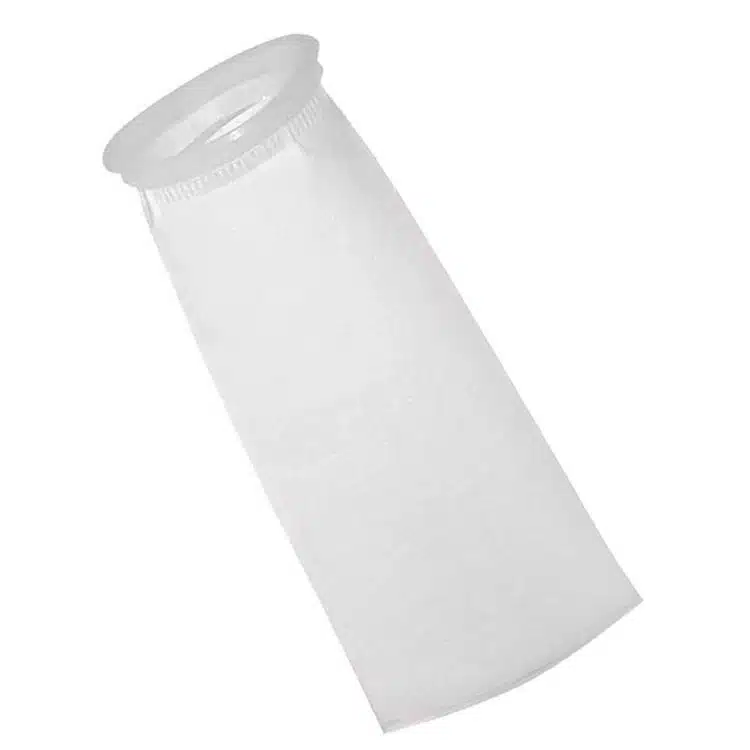
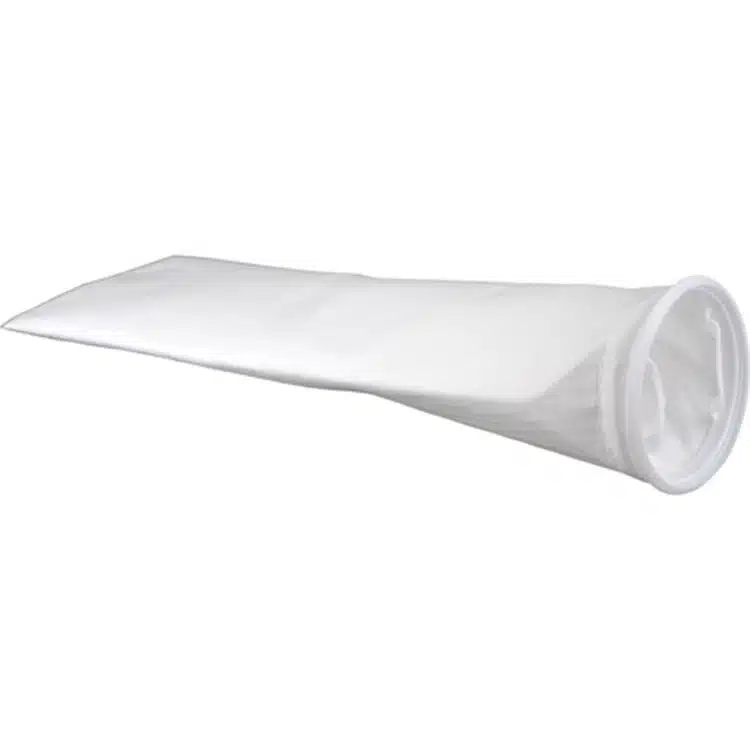
| Bag format | “standard bag” | “Size 2 felt bag, steel ring preferred” | Fit and bypass live here |
| Housing | “existing vessel” | “Single-bag housing, Size 2 basket, 2 in. flange” | Good bags fail in bad housings |
| Flow | “about 20” | “18 m³/h normal, 22 m³/h peak” | Bag area and ΔP margin need numbers |
| Quantity | “best price” | “100 pcs initial PO, 600 pcs/year” | Price breaks and lead times change |
| Documents | “none” | “COA, material declaration, carton label by SKU” | Approval speed often depends on paperwork |
That table is boring on purpose. Boring closes faster. Isn’t that the whole point of a supplier quote template?
The fields I refuse to let buyers skip
Not optional. Ever.
If the line is general-duty water, paint, ink, or resin, I would push the buyer toward the nylon filter bags pages because that is where mesh choices, ring configurations, and standard replacement logic belong. If the duty involves acid, alkali, solvent exposure, low-fiber-shedding requirements, pharma, electronics, or hot service, I would send them straight into the PTFE filter bags section before they pretend a cheap bag is brave engineering. And if they do not know the installed hardware, I would force them through bag filter housing basics for industrial buyers and the stainless steel bag filter housing for Size 1/2 bags product page, because bag size, ring seating, support basket, and seal condition decide whether the “right” bag runs or folds. If the process cannot stop for cleaning, the duplex basket strainer for continuous liquid filtration belongs in the same RFQ conversation, not as a late-stage rescue plan.
I will say the rude part out loud. A filter bag RFQ form without bag size, ring type, housing fit, and retention intent is half a form. A request for quotation template that says “quote your best price” but never states annual usage, required documents, or acceptable alternates is not serious buying. It is outsourcing thinking to the supplier.
The RFQ template I would actually send before lunch
Copy this.
Subject: Filter Bag RFQ – [Process / Line Name]

1) Application / process step:
2) Fluid being filtered:
3) Chemistry / pH:
4) Operating temperature:
   - Normal:
   - Peak:
5) Viscosity (if known):
6) Solids / contaminant description:
   - Type:
   - Approx. size range:
   - Concentration / loading:
7) Required retention target:
   - Micron:
   - Nominal or absolute:
8) Filter bag format:
   - Size: #1 / #2 / custom
   - Media requested: nylon / PTFE / other
   - Construction: felt / mesh / monofilament / other
   - Ring type / collar:
9) Existing housing details:
   - Housing model / photo attached:
   - Basket / support details:
   - Connection size/type:
   - Seal / gasket material:
10) Flow rate:
   - Normal:
   - Peak:
11) Pressure conditions:
   - Inlet pressure:
   - Clean ΔP:
   - Max allowable ΔP:
12) Duty style:
   - Continuous / batch
   - Change-out target:
13) Quantity:
   - Trial lot:
   - First PO:
   - Estimated annual usage:
14) Delivery:
   - Required ship date:
   - Ship-to country/location:
15) Documentation needed:
   - Datasheet
   - COA
   - Material declaration
   - Packing / labeling requirements
16) Commercial requirements:
   - Are alternates allowed? Yes / No
   - Quote by piece / case / annual agreement
   - Currency / Incoterms if required
17) Special notes:
   - Downstream equipment being protected
   - Photos of failed bag, housing tag, basket, and solids if available
That template works because it lets a supplier decide the real things fast. Media. Micron logic. Fit. Lead time. Alternate options. Documentation. No brochure fog. No fake urgency. No five-email archaeology project.
What fast quoting really looks like
Here is the ugly truth.
A fast quote is not the quote that arrives first. It is the quote that does not collapse after the first technical call, first startup, or first complaint from maintenance. The buyer who sends chemistry, temperature, viscosity, solids profile, housing model, bag size, ring type, and annual usage usually gets one solid answer and maybe one alternate. The buyer who sends “please quote filter bag RFQ template urgent” gets questions, hedges, or a price padded for risk. Would you quote tightly if the other side made you guess the failure mode?
I have worked around enough filtration procurement to know where the time actually goes. Not in typing the price. In backing into missing facts the buyer should have declared on page one.
The money problem buyers hate admitting
Bad RFQs bleed cash.
NIST’s Annual Report on the U.S. Manufacturing Economy: 2024 cites downtime at 8.3% of planned production time and about $245 billion for discrete manufacturing, and the FRED synthetic fibers PPI series, sourced to the U.S. Bureau of Labor Statistics, shows the synthetic fibers index rising from 163.753 in January 2026 to 168.531 in February 2026, about 2.9% month over month. That is why I laugh when buyers obsess over shaving a few cents off bag price while sending a vague RFQ that increases downtime risk and forces suppliers to price uncertainty into the quote anyway. What exactly did you save?
And yes, regulated industries make this harsher. If your line touches pharma, electronics, food, or anything with a nasty audit trail, incomplete specs are not just slow. They are reckless. I would rather overstate the process duty than understate it. I would rather ask for alternates with reasons than accept one blind substitute. And I would absolutely rather define nominal versus absolute on the RFQ than have that argument after the PO is cut.
The best RFQ template also controls the sales conversation
This matters.
Suppliers move faster when the buyer tells them what kind of answer is acceptable. Do you want a direct match only, or a direct match plus one lower-cost alternate? Do you need a lead time quote for 100 pieces, 1,000 pieces, and annual blanket demand? Do you want COA and carton labeling in the first quote, or later? Are you trying to protect a membrane, a spray nozzle, a filling head, or just catch ugly solids before transfer? If you leave those questions unstated, the supplier will still answer them. Just more slowly. And usually on your time.
That is why I would use keyword-rich internal anchors inside this article, not decorative ones. I would send general-duty readers to nylon filter bags for water, paint, ink, and resin, chemistry-sensitive readers to PTFE filter bags for corrosive and high-temperature service, confused spec writers to filter bag micron rating explained, and hardware-level buyers to bag filter housing basics for industrial buyers plus the Size 1/2 stainless steel bag filter housing page. That sequence fits search intent and it fits real procurement behavior.
FAQs
What is a filter bag RFQ template?
A filter bag RFQ template is a structured request-for-quotation document that gives suppliers the operating, dimensional, commercial, and documentation facts they need to price the correct bag, housing fit, lead time, and compliance package in one pass, instead of dragging the buyer through repeated clarification emails.
I use it to force discipline. If the buyer cannot fill in chemistry, temperature, micron intent, bag size, ring type, housing details, and quantity, the supplier is being asked to guess. That is not speed. That is risk transferred upstream.
What should be included in a filter bag quote request?
A filter bag quote request should include the liquid, chemistry, pH, temperature range, viscosity, solids profile, target micron, nominal-or-absolute expectation, bag size, ring type, housing details, flow, differential-pressure limits, quantity, delivery window, and any document requirements, because suppliers cannot quote speed from blank space.
The fastest RFQs also state whether alternates are allowed. I like seeing “direct match only” or “direct match plus one alternate with explanation” because it stops useless side conversations before they start.
How do I request a quote from filter bag suppliers fast?
The fastest way to request a quote from filter bag suppliers is to send one complete RFQ with the process duty, fit data, target performance, annual usage, and approval requirements already defined, so the supplier can choose media, ring, size, and alternates without guessing at your line conditions.
If the buyer is unsure on media, route them first through the liquid filter bag selection guide and the micron rating guide, then send the RFQ the same day. That is a clean handoff.
Should I specify nylon or PTFE in the RFQ?
You should specify nylon in the RFQ when the service is general-duty liquid filtration such as water, paint, ink, or resin and the chemistry is manageable, while PTFE belongs in the RFQ when temperature, corrosive media, cleanliness demands, or fiber-shedding risk make standard polymer bags a bad bet.
Best Filter Bag’s own product architecture supports that split, and it is the right one. Nylon is often the honest economic choice. PTFE is often the honest risk-control choice. Pretending they are interchangeable is how buyers get fake-comparable quotes.
What is the difference between nominal and absolute micron in an RFQ?
Nominal micron in an RFQ describes a broader, less exact particle-retention expectation used for economical solids reduction, while absolute-style micron language signals a tighter retention target tied to downstream protection, compliance, or product-quality risk, which is why two “5 µm” bags can price and perform very differently.
I do not let buyers skip this line. The minute you leave it vague, the supplier has to decide what you meant, and now the quote speed problem becomes a quote accuracy problem.
Your Next Move
Do this today.
Take the template above, fill it with real process numbers, attach photos of the housing tag, basket, ring seat, and any failed bag, then route the buyer through the pages that answer the next technical question in order: liquid filter bag selection guide, filter bag micron rating explained, nylon filter bags, PTFE filter bags, and bag filter housing basics for industrial buyers. If the line cannot stop, add the duplex basket strainer for continuous liquid filtration to the same buying thread. That turns one H1 into a real internal conversion path instead of another stranded blog post.
My final take is simple. The best RFQ template for filter bags is not the prettiest one. It is the one that makes a supplier say, “I can quote this now.”


