

Most Buyers Start With the Wrong Question
Three words matter.
I have watched too many industrial buyers ask for “the right micron” before they ask whether the housing can seal correctly, support the bag, survive the fluid, and come apart fast enough for a real operator on a bad shift, and that is backwards thinking because the vessel, basket, closure, gasket, and change-out routine decide whether the filtration step behaves like control equipment or just a stainless delay in the line. Why do so many teams still buy a number before they buy a system?
The pressure on filtration decisions is not theoretical anymore. On April 10, 2024, EPA finalized the first national PFAS drinking-water standard, and the final rule was published in the Federal Register; in 2023, Reuters reported 3M’s $10.3 billion PFAS settlement; and EPA’s 7th Drinking Water Infrastructure Needs Survey put U.S. drinking-water infrastructure needs at $625 billion over 20 years. I do not cite those numbers to sound dramatic. I cite them because filtration hardware is now being purchased inside a harsher world of compliance, capital scrutiny, and less patience for preventable failures.
And that is exactly why this H1 matters. Best Filter Bag’s own site is already telling buyers that housings, bags, cartridges, and quote-ready documentation belong in the same conversation, not in separate silos; the homepage, solutions page, and product architecture all lean into liquid filtration fit, material compatibility, housing details, and documentation for procurement teams. That is the right instinct, and frankly, most suppliers still botch it.
Table of Contents
What a Bag Filter Housing Actually Buys You
A bag filter housing is not “the metal part.”
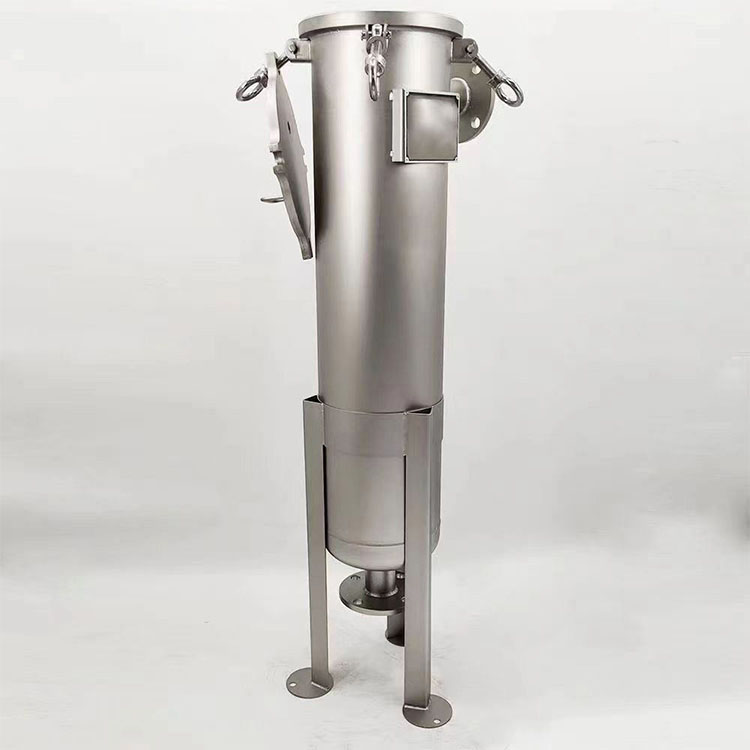
A liquid bag filter housing, or bag filter vessel if you prefer the old-school term, is a pressure-rated body that forces liquid through a supported filter bag, prevents bypass with the right sealing surfaces, gives the solids somewhere honest to collect, and lets your team remove loaded media without turning routine maintenance into an argument between production and maintenance. If the housing is wrong, the bag gets blamed for sins it did not commit.
Best Filter Bag’s most relevant product page here is the stainless steel bag filter housing for Size 1/2 bags. It frames the unit around standard Size 1 and Size 2 bags, fast change-outs, broad media choices, and applications ranging from process water to chemicals, paints, inks, and wastewater. That is useful because industrial buyers usually do not need more adjectives; they need confirmation that the housing format matches the bag ecosystem they can actually source next quarter.
The shell is visible. The support system is where the truth lives.
I get suspicious fast.
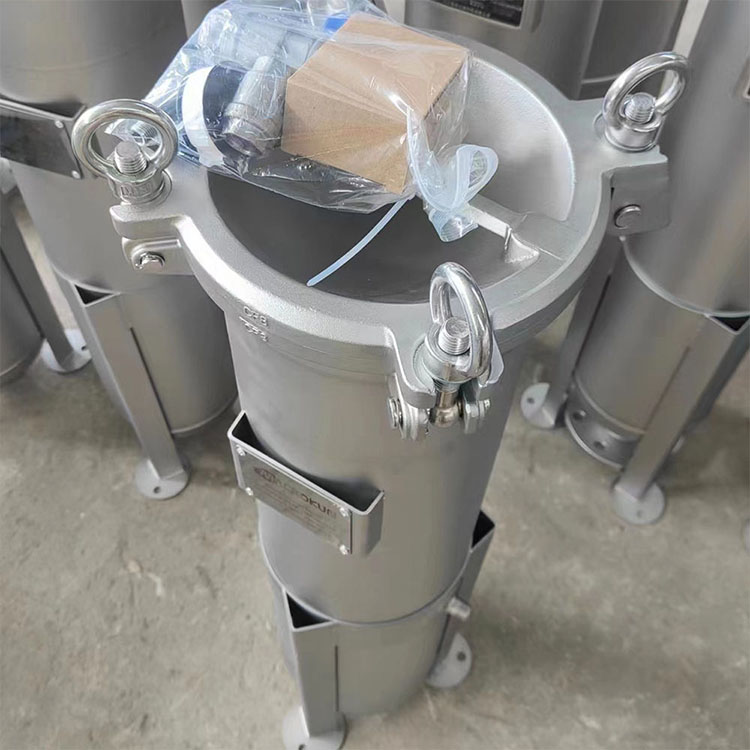
When a supplier talks only about polished stainless and never talks about basket support, seal materials, ring fit, venting, drain logic, or service clearance, I assume they are selling photography, not filtration. Best Filter Bag’s own maintenance content says filter bag collapse is usually a housing-fit problem, a support-basket problem, a chemistry mistake, or a pressure-drop problem ignored too long. That is a hard truth, and I agree with it.
This is why I would not publish a page like this without naturally pushing readers toward what filter bag micron rating really means and why filter bags collapse and how to prevent it. One page handles capture logic. The other handles failure logic. Together, they stop the buyer from pretending the bag filter housing is just a commodity canister.
Single Bag Filter Housing vs Multi Bag Filter Housing
Most comparison charts are soft.
A single bag filter housing is usually the right answer when footprint, budget, batch duty, or modest flow makes fast and simple more valuable than parallel capacity, while a multi bag filter housing earns its keep only when continuous flow, lower intervention frequency, and operational redundancy are worth the extra valves, more complicated venting, heavier vessel logic, and larger maintenance envelope. So why do buyers keep upgrading to multi-bag hardware before they have even fixed their solids profile?
Here is the comparison I actually use when an industrial buyer asks me for “basics.”
| Buyer Reality | Single Bag Filter Housing | Multi Bag Filter Housing | My Blunt Read |
|---|---|---|---|
| Pilot skid or point-of-use station | Usually the cleaner fit | Often overbuilt | Buy simple first |
| Batch process with moderate flow | Often enough | Sometimes unnecessary | Do the run-time math |
| Continuous high-flow line | Can become labor-heavy | Usually stronger fit | This is where multi starts to make sense |
| Dirty service with unstable solids loading | Easier to diagnose | Can hide bad upstream design longer | Do not use parallel bags to mask a bad process |
| Tight maintenance access | Better | Harder | Space matters more than brochures admit |
| Procurement wants common consumables | Strong if using standard Size 1/2 bags | Also viable, but more hardware complexity | Standard bag formats win |
Bag filter housing sizes are where buyers get sloppy. Best Filter Bag repeatedly points buyers back to standard bag sizing, ring type, housing fit, connection type, pressure rating, and footprint constraints, while its product pages stay grounded in Size 1/2 bag housings and standard interfaces rather than fantasy customization talk. That is how industrial content should read.
How to Choose a Bag Filter Housing Without Fooling Yourself
Start upstream.
If you want to know how to choose a bag filter housing, do not start with catalog photos. Start with fluid chemistry, temperature, target flow, solids loading, particle size, clean and dirty ΔP, connection type, and the housing details of anything already installed. Best Filter Bag’s RFQ guidance literally asks for fluid or media type, process description, flow target, inlet pressure, operating temperature, solids loading, target micron rating, current housing or model details, connection type, space constraints, quantities, and documentation needs. That is not overkill. That is adult filtration buying.
1 Match the bag to the job, then match the housing to the bag
I hate the lazy sequence where procurement buys a vessel first and asks engineering to “make a bag fit.” The site’s industrial filter bags page leans into service life, dirt-holding capacity, and stable performance, while the nylon filter bags and PTFE filter bags pages split general-duty liquid service from more aggressive chemistry and higher-temperature work. That split matters because media choice and housing choice are married whether buyers like it or not.
2 Respect change-out labor
The best bag filter housing for industrial filtration is not the prettiest vessel. It is the one your operators can open, drain, isolate, clean, reseal, and restart without swearing at the clamp, lifting blindly over hot liquid, or improvising around a basket that never fit the bag ring correctly in the first place. Maintenance pain is not a side issue. It is the bill you pay for a bad buying decision.
3 Stop pretending micron rating answers everything
It does not.
A 1 µm, 5 µm, 10 µm, 50 µm, or 100 µm bag says something. It does not say everything. The site’s micron-rating article makes the right point: media type, face velocity, viscosity, solids loading, seam construction, and differential pressure decide whether a rated bag behaves well in the field. Buyers who reduce housing selection to “just give me a finer bag” usually buy shorter life and higher ΔP, then call it bad luck.
4 Think in process paths, not isolated parts
This is where internal linking does real work.
If the reader is evaluating prefiltration in water service, the natural bridge is water treatment prefiltration with nylon mesh bags. If the reader is buying for a larger skid or repeatable plant program, the next click should be filtration solutions for replacement supply and engineered projects. And if the buyer is an importer, distributor, or brand owner trying to lock down repeat specs and packaging, the logical path is OEM and private label filtration products. Good internal linking is not decorative. It moves the buyer from curiosity to procurement readiness.
The Hard Truth About Industrial Bag Filter Housing Buying
Most mistakes are boring.
They are not usually exotic metallurgy failures or once-in-a-decade chemistry surprises. They are standard mistakes: wrong bag size, wrong basket support, bad seal choice, vague RFQs, no room to service the lid, no baseline ΔP, and wishful thinking about solids load. Buyers love to blame the consumable because it is replaceable. I have found that the housing decision is often where the real mistake was made.
And that is why “basics” still matter. In this market, basics are the expensive part.
FAQs
What is a bag filter housing?
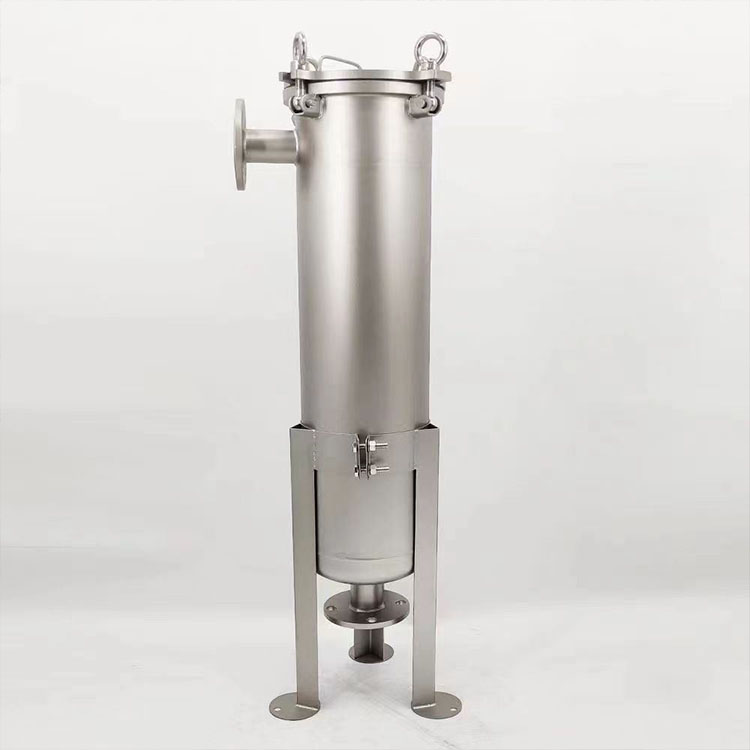
A bag filter housing is a pressure-rated liquid filtration vessel that holds one or more replaceable filter bags inside a support basket, seals the flow path with the correct gasket and closure, and forces contaminated liquid through media sized to capture target solids before downstream equipment sees them. In practice, that means you are buying containment, support, sealing, and maintenance access at the same time, not just a stainless shell.
How do I choose a bag filter housing?
A bag filter housing is chosen by matching fluid chemistry, operating temperature, flow rate, solids load, allowable pressure drop, bag size, seal compatibility, connection type, and maintenance access, because the right vessel is the one that protects uptime without creating change-out pain or bypass risk. I would also force every RFQ to include current housing details, available space, and documentation needs before pricing starts.
What is the difference between a single bag filter housing and a multi bag filter housing?
A single bag filter housing is a compact vessel for lower-flow, batch, or space-limited duty, while a multi bag filter housing is a parallelized vessel arrangement for higher continuous flow, longer runs, and fewer operator interventions, assuming the manifold, isolation, and venting design are handled correctly. My rule is simple: do not buy multi-bag hardware to hide a weak process design or unstable solids profile.
What bag filter housing sizes should industrial buyers pay attention to?
The bag filter housing sizes that matter most are the bag format itself, the support basket fit, vessel volume, nozzle size, and service envelope around the lid, because “size” in industrial buying is never just diameter or height; it is the whole maintenance geometry of the unit. Best Filter Bag’s own product content keeps returning to standard Size 1 and Size 2 bag formats for a reason: standardization lowers sourcing friction and replacement risk.
When should I use nylon bags versus PTFE bags in a liquid bag filter housing?
A nylon bag inside a liquid bag filter housing fits broad general liquid service, while a PTFE bag is better reserved for more aggressive chemistry, higher temperatures, or low-fiber-shedding demands; the housing still has to match seal materials, basket support, and cleaning practice or the media upgrade will not rescue the system. I would never discuss media selection without also discussing the vessel that carries it.
Your Next Step
Do this now.
If you are serious about buying the right industrial bag filter housing, send your team to Contact Best Filter Bag with six data points: fluid, flow, temperature, solids load, target micron rating, and existing housing details. Then make them add one more thing most RFQs omit: how the operator will actually service the vessel on a real line, under real time pressure. That single detail separates smart buyers from busy buyers.


